Narrative Experience Systems Design
Role: Narrative Designer / Interaction Designer
Focus: Emotional storytelling, spatial experience design, and audience interpretation
Context: Graduate Studio Project, Parsons, 2017
Focus: Emotional storytelling, spatial experience design, and audience interpretation
Context: Graduate Studio Project, Parsons, 2017
Overview
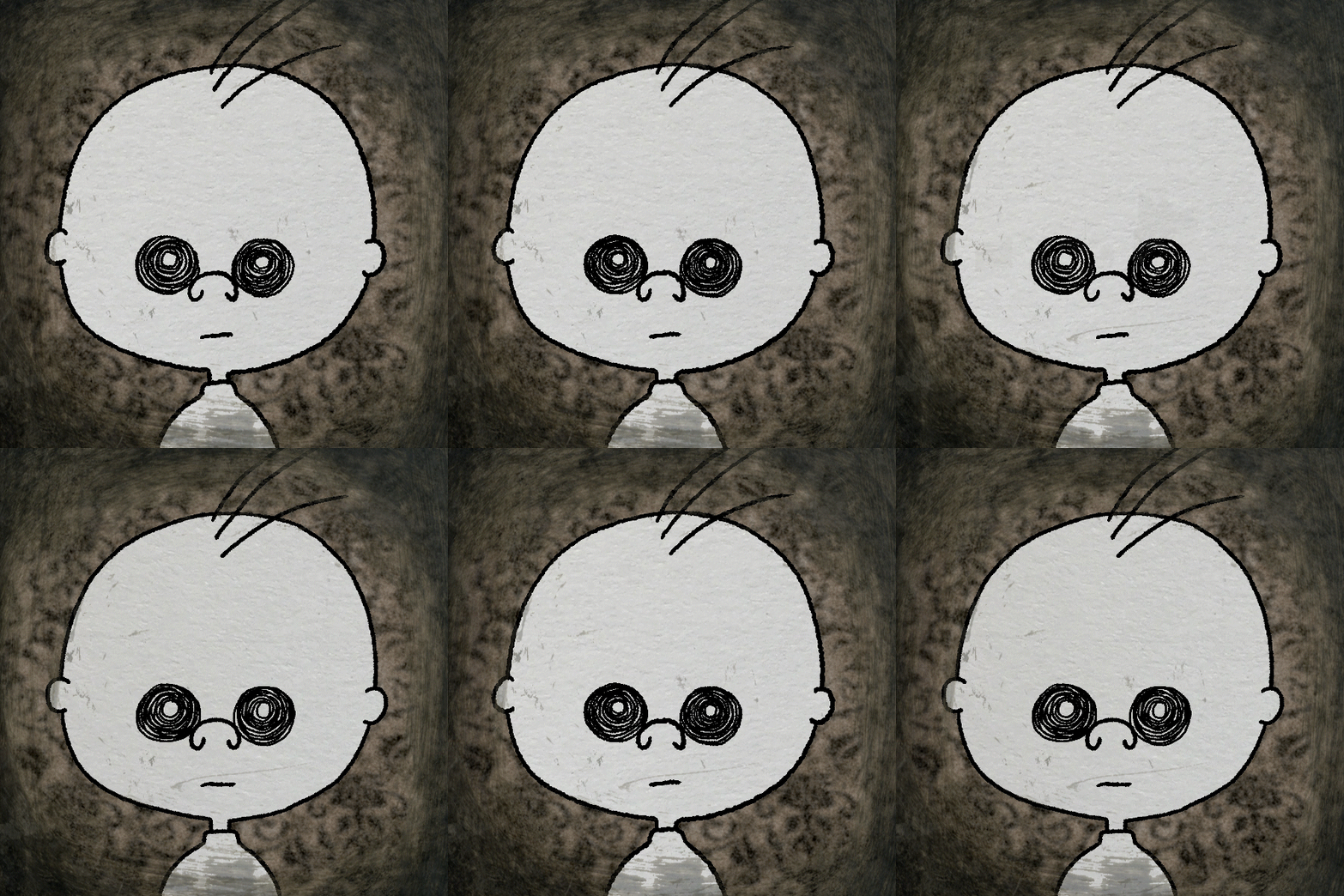
Lorne is an animated installation that explores loneliness, abandonment, and emotional isolation through the life of an orphaned boy. The project uses framed animated vignettes, a visual representation of fragments of memory, to invite viewers to observe Lorne’s inner world and reflect on the real emotional experiences of orphaned children.
Rather than relying on dialogue, Lorne communicates through movement, pacing, and visual composition, encouraging viewers to emotionally engage and interpret meaning through observation.
Design Intent
My goal was to create an emotionally resonant narrative experience that felt intimate and human, despite its fantastical presentation. While I could not solve the global issue of childhood abandonment, I approached the project as a designer using my strongest tool: storytelling.
The project was influenced by installation-based animation works by Motomichi Nakamura, particularly his ability to place expressive characters into real-world spaces while maintaining emotional clarity without dialogue. This reinforced my interest in non-verbal storytelling and environmental narrative.
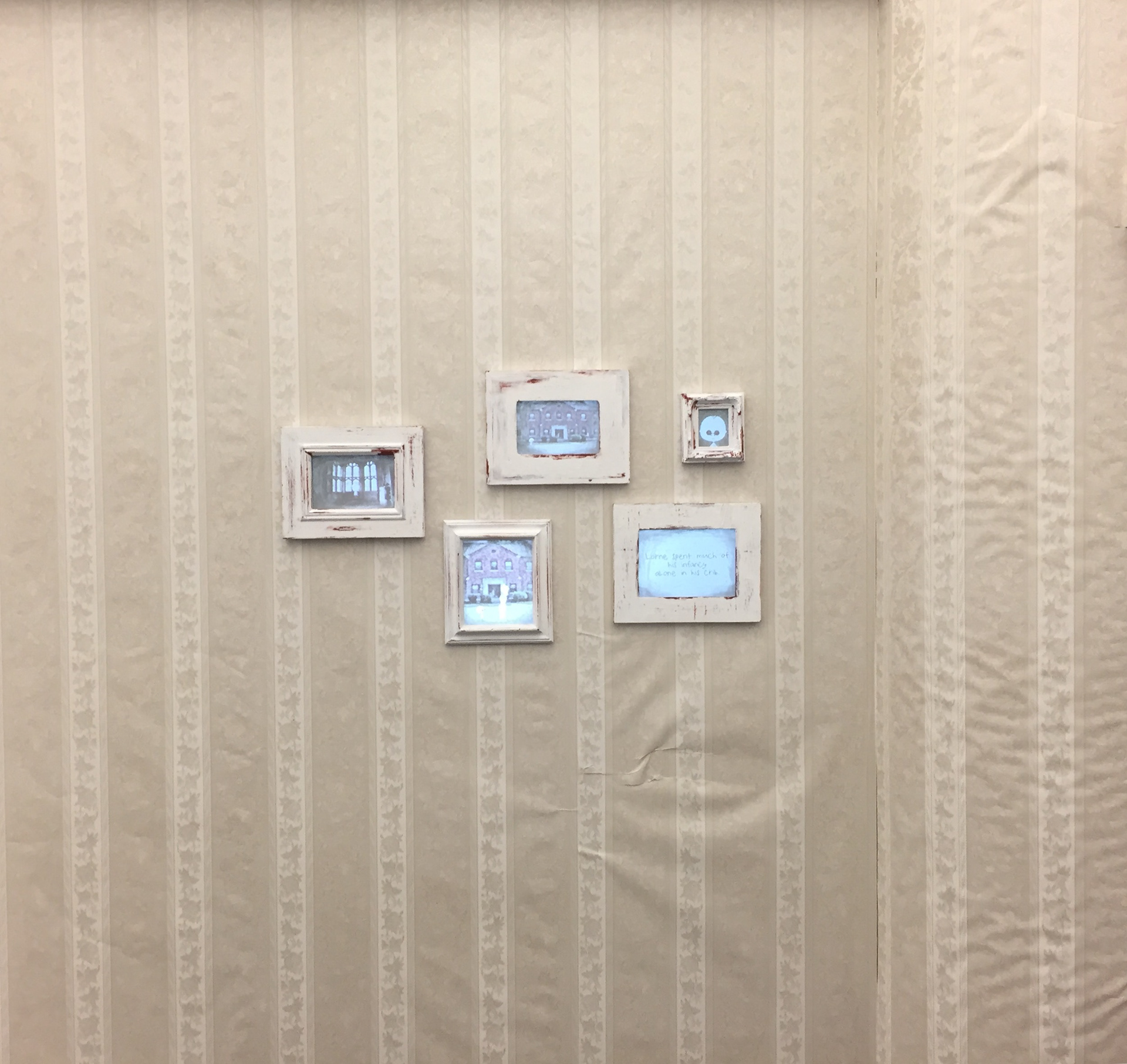
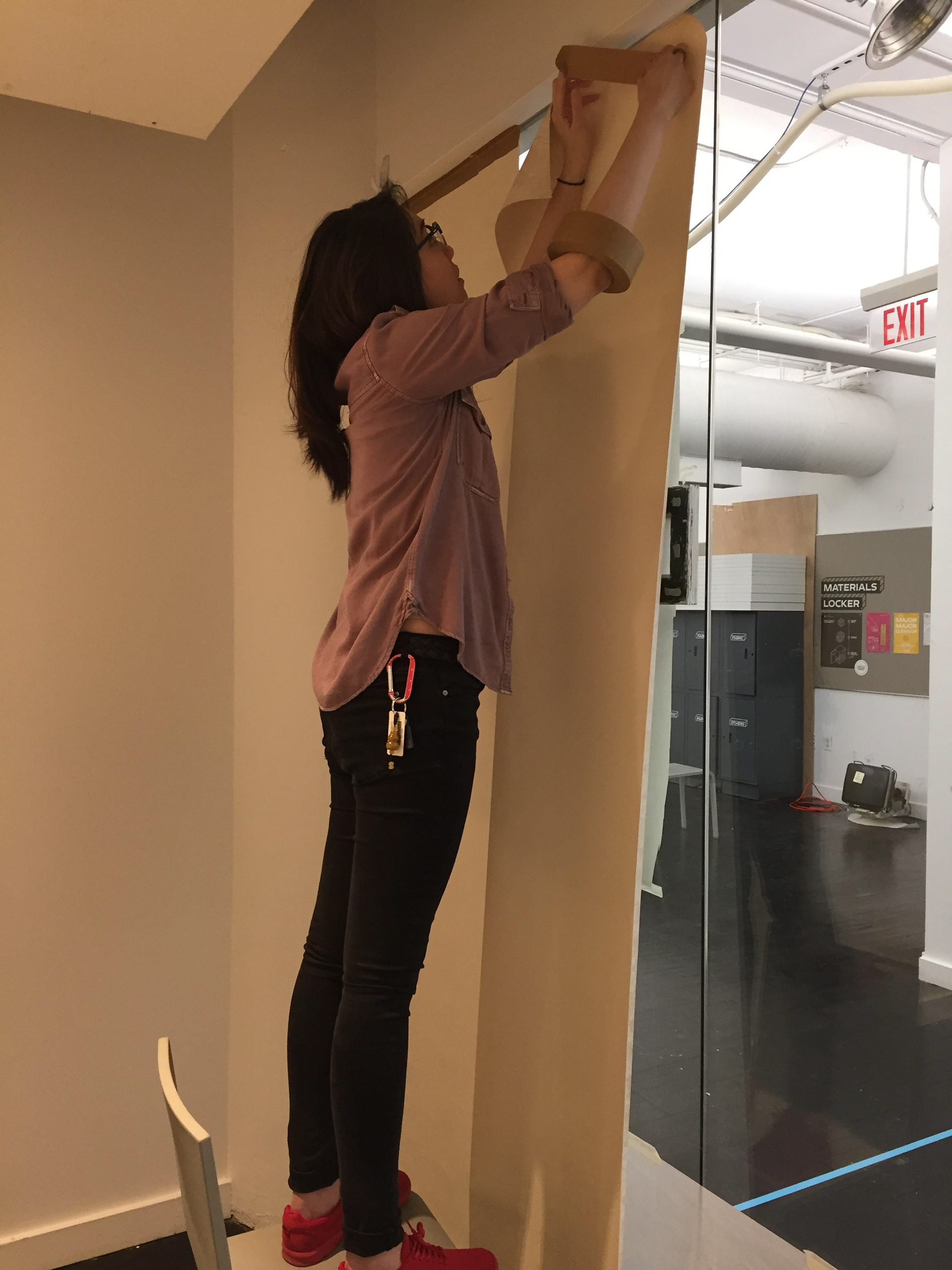
A space which mimics vintage hallway inside a home
Narrative & Experience Design
The installation presents Lorne’s life as a series of framed memories. Each frame functions as a moment in time, small, incomplete, and quiet, mirroring the way trauma and isolation fragment personal memory.
Key design decisions:
• Framed vignettes to reinforce emotional distance and observation
• No dialogue, allowing animation and motion to carry emotional weight
• Muted pacing to emphasize loneliness rather than dramatization
• Physical installation format to create intimacy and invite close viewing
The experience is intentionally restrained. Rather than guiding the viewer explicitly, the installation leaves space for interpretation, encouraging empathy through stillness and subtlety.
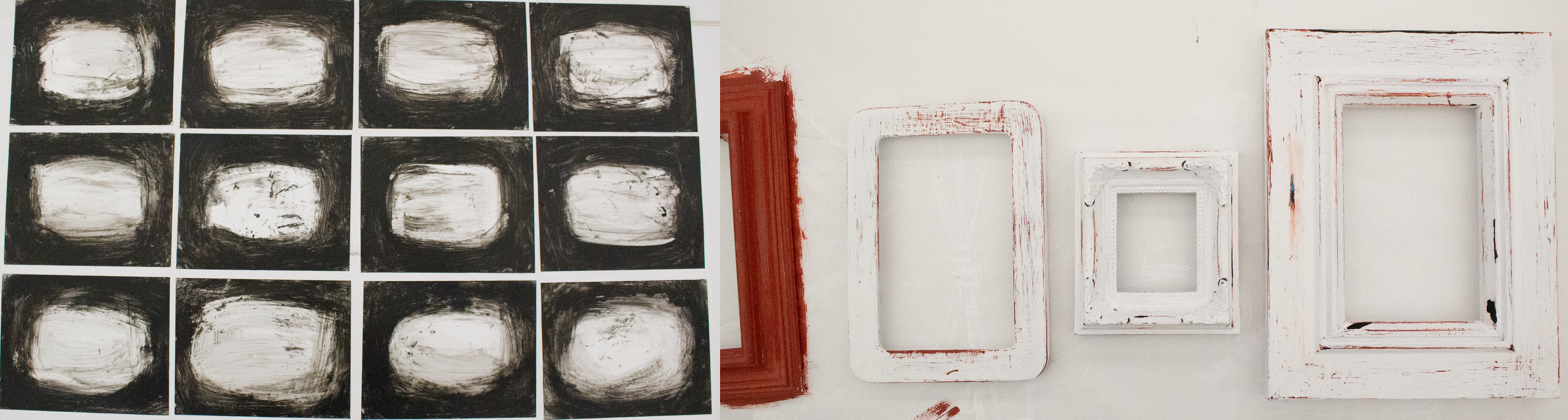
Left: vignettes Right: frames
Why This Project Matters
Although created before my transition into game UX and systems design, Lorne reflects core skills that continue to inform my work today:
• Emotional UX thinking
• Narrative clarity without exposition
• Designing for audience interpretation and empathy
• Using constraints (no dialogue, limited time) to sharpen intent
This project represents an early foundation of my interest in designing experiences that respect player/viewer intelligence while prioritizing emotional impact.
What I’d Do Next
With more time, I would explore:
• Interactive elements that allow viewers to influence pacing or perspective
• Spatial sound design to further reinforce mood
• Translating the narrative into an interactive or playable format