Information Influence System Design
Role: Game Designer
Focus: Misinformation systems, social decision-making, player behavior, and experiential learning
Context: Commissioned by the United States Holocaust Memorial Museum - Graduate Studio Project, Parsons (2018)
Focus: Misinformation systems, social decision-making, player behavior, and experiential learning
Context: Commissioned by the United States Holocaust Memorial Museum - Graduate Studio Project, Parsons (2018)
Team: 3 Game Designers
INTRDODUCTION
Pressing Matters began as a graduate studio project responding to a brief issued by the United States Holocaust Memorial Museum in Washington, DC. The museum invited participating student teams to explore the question:
“How might play be used as a tool to facilitate learning around sensitive historical subject matter?”
Following an initial pitch and review process, Pressing Matters was selected for continued development and funded by the museum, allowing the team to further iterate on the concept under institutional guidance.
Project Overview
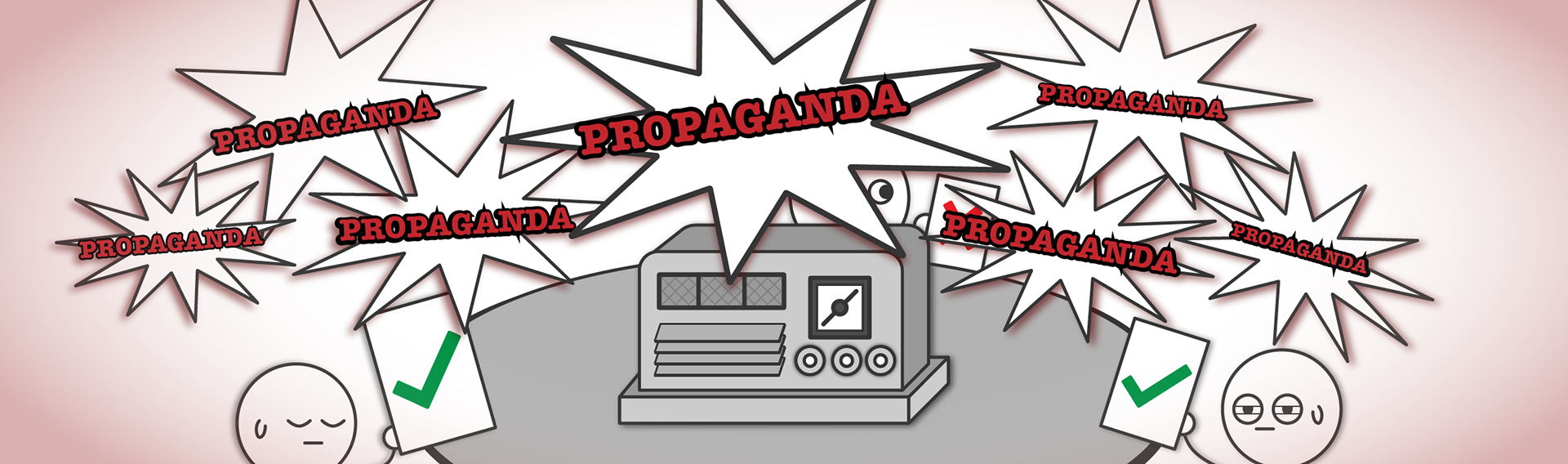
Pressing Matters explores how misinformation and propaganda influence group decision-making through structured play.
In an era of constant information flow, ideological manipulation is increasingly difficult to detect. Rather than reenacting historical events, the experience models systems of influence, allowing players to observe how narratives, agendas, and voting behaviors shape collective outcomes over time.
This project investigates how interactive systems can surface otherwise invisible dynamics, helping players recognize patterns of influence and reflect on their own decision-making.
Game Structure & Rules
Pressing Matters is a multiplayer tabletop game in which players are randomly assigned hidden roles at the start of the game. Each role represents a distinct ideology with a predetermined set of priorities.
Gameplay loop:
• Players take turns introducing issues to the group
• Issues are voted on collectively
• Passed or rejected issues affect ideological alignment and scoring
• Players must balance public persuasion with their private agendas to gain points
Victory is achieved not by moral correctness, but by successfully advancing one’s ideological objectives, sometimes at the expense of broader group understanding.
This structure intentionally mirrors real-world political and media systems, where outcomes are frequently shaped by messaging rather than truth.
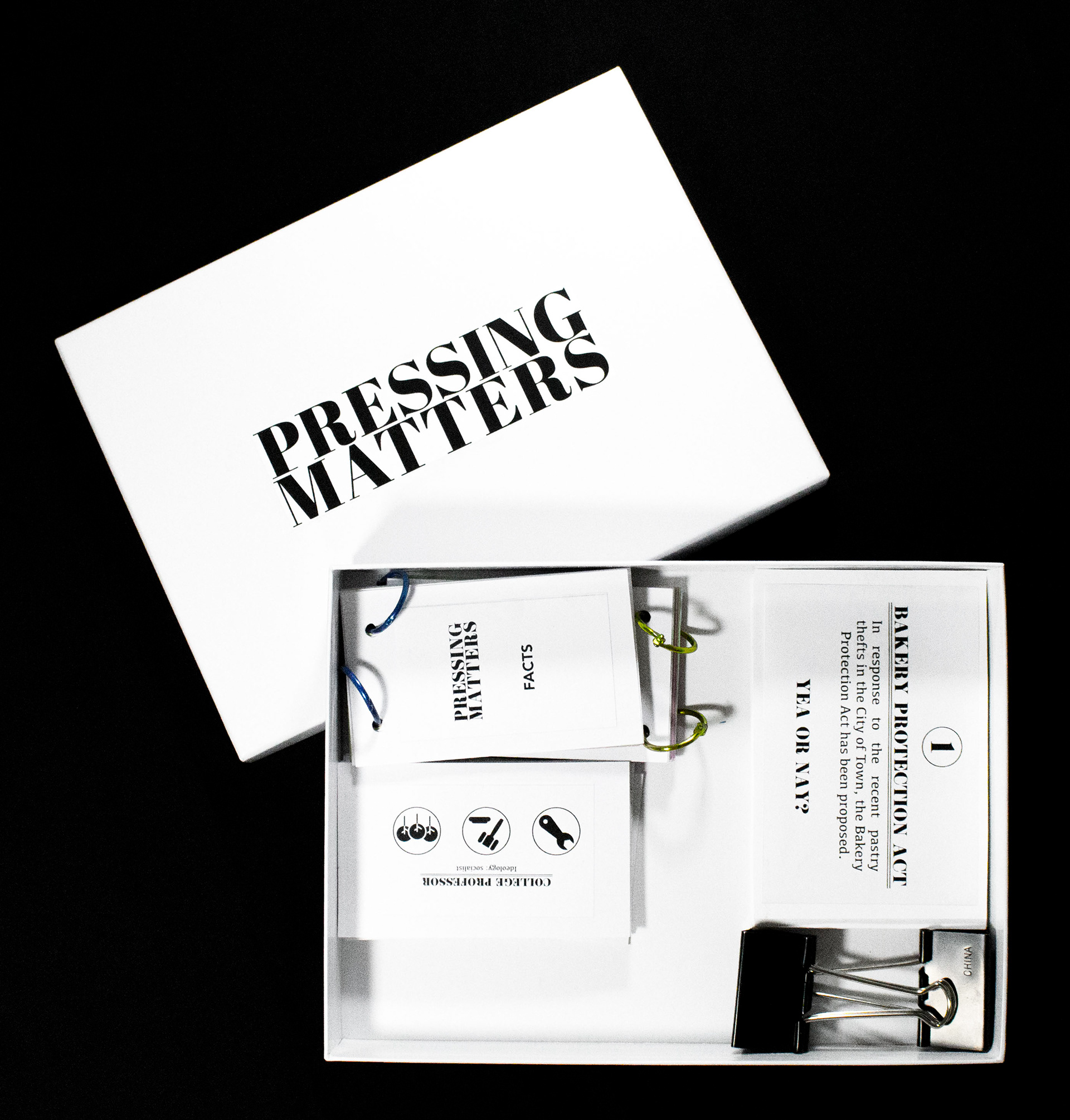
Final deliverables
Playtesting & Iteration
Over the course of six months, the game underwent repeated playtesting with multiple groups, including museum staff and external participants. Each iteration focused on reducing friction, improving clarity, and ensuring emotional safety for players.
Key design questions explored during testing:
• How can complex systems be explained clearly during onboarding?
• How can multiple elements, roles, such as ideologies, issues, and agendas, be presented without overwhelming players?
• How do we encourage critical reflection without emotionally burdening players with heavy historical content?
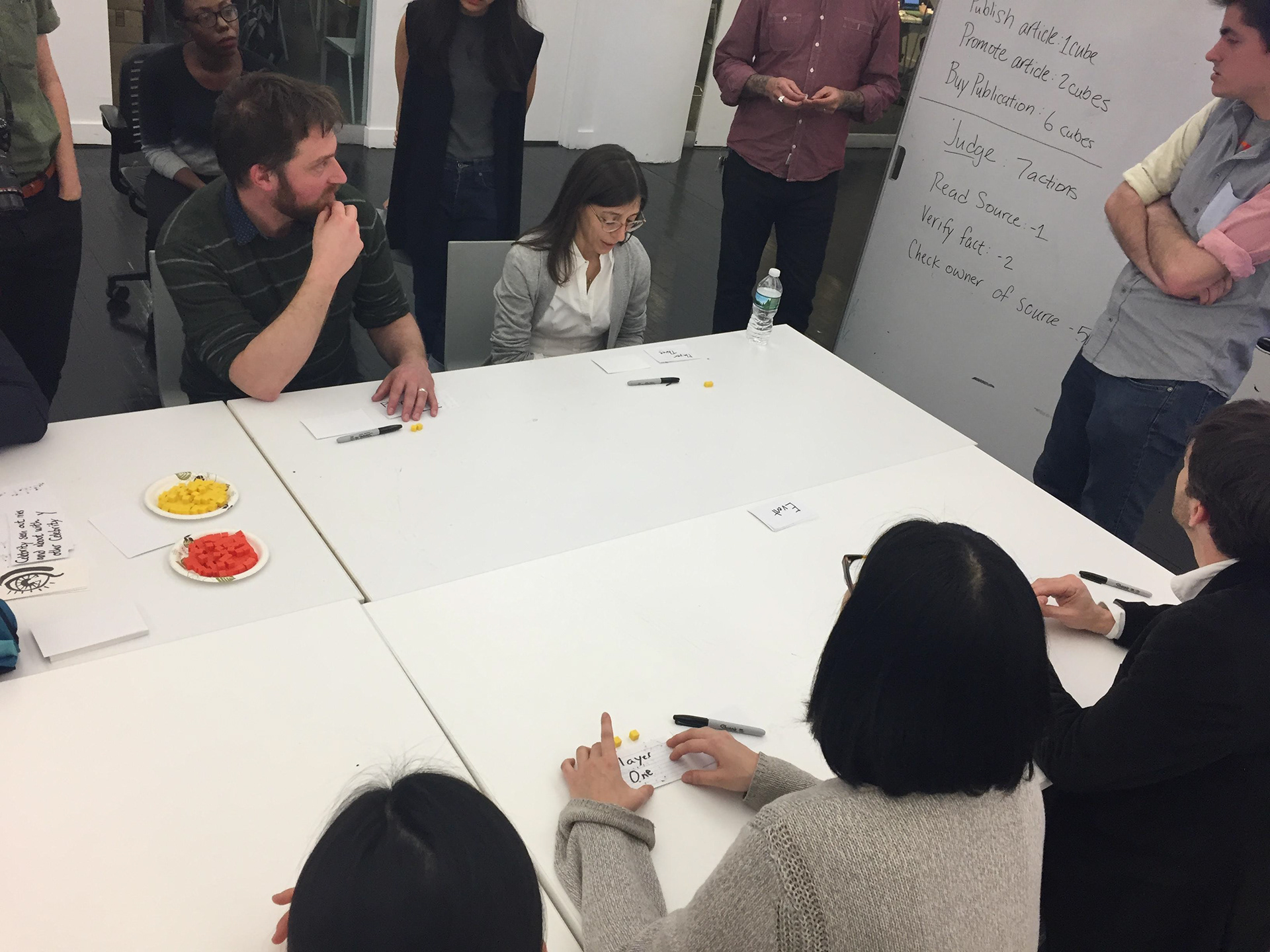
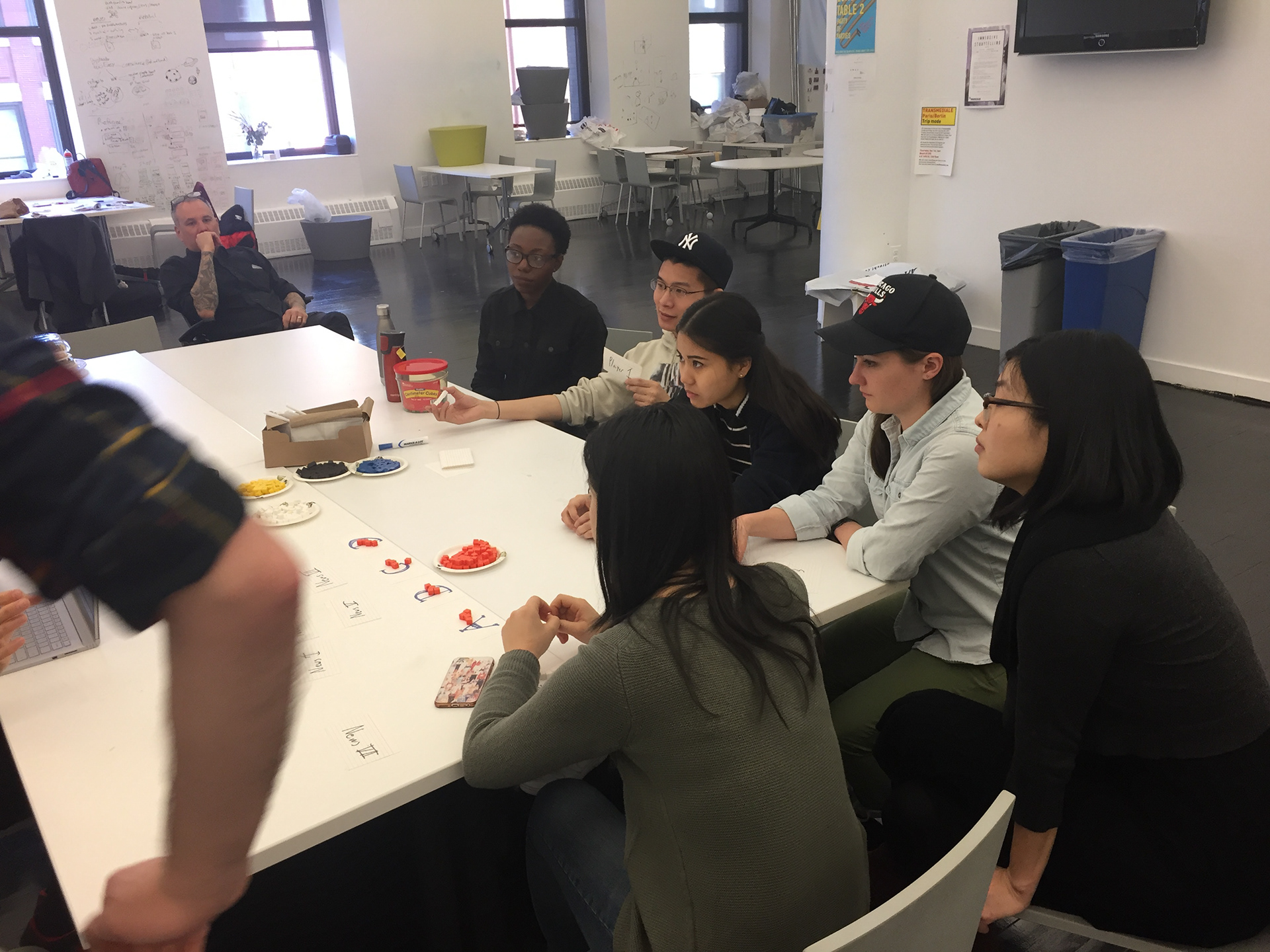
Early rounds of playtesting
Design Decisions
To mitigate confusion and cognitive overload:
• Game elements were differentiated using distinct card sizes and visual treatments
• Roles, issues, and agendas were visually and physically separable at a glance
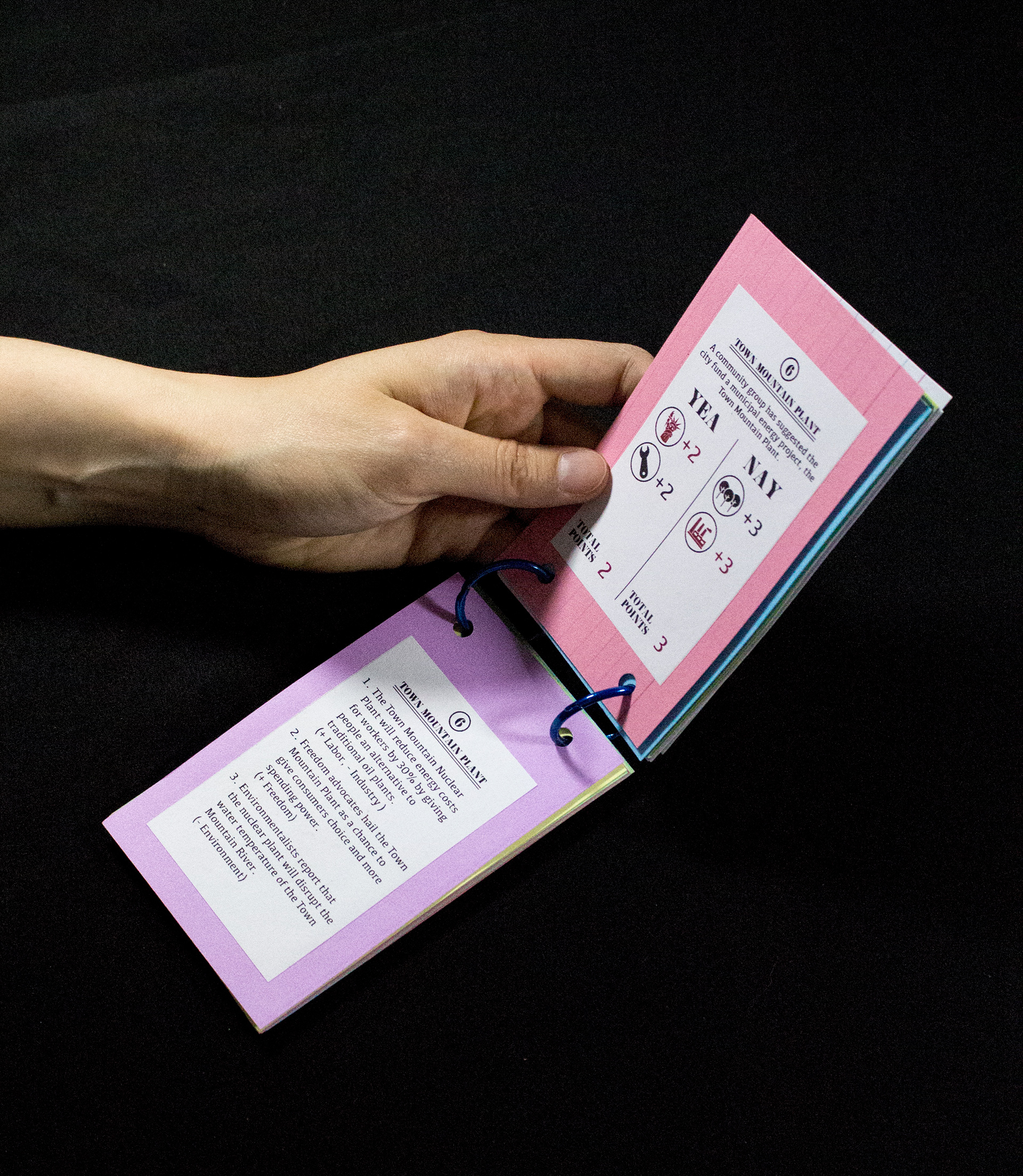
• Abstract and fictionalized issue themes (e.g. urban development, public safety, environmental preservation) were used to maintain emotional distance while preserving systemic relevance
This abstraction allowed players to engage critically with the mechanics of misinformation and persuasion without directly reenacting historical events.

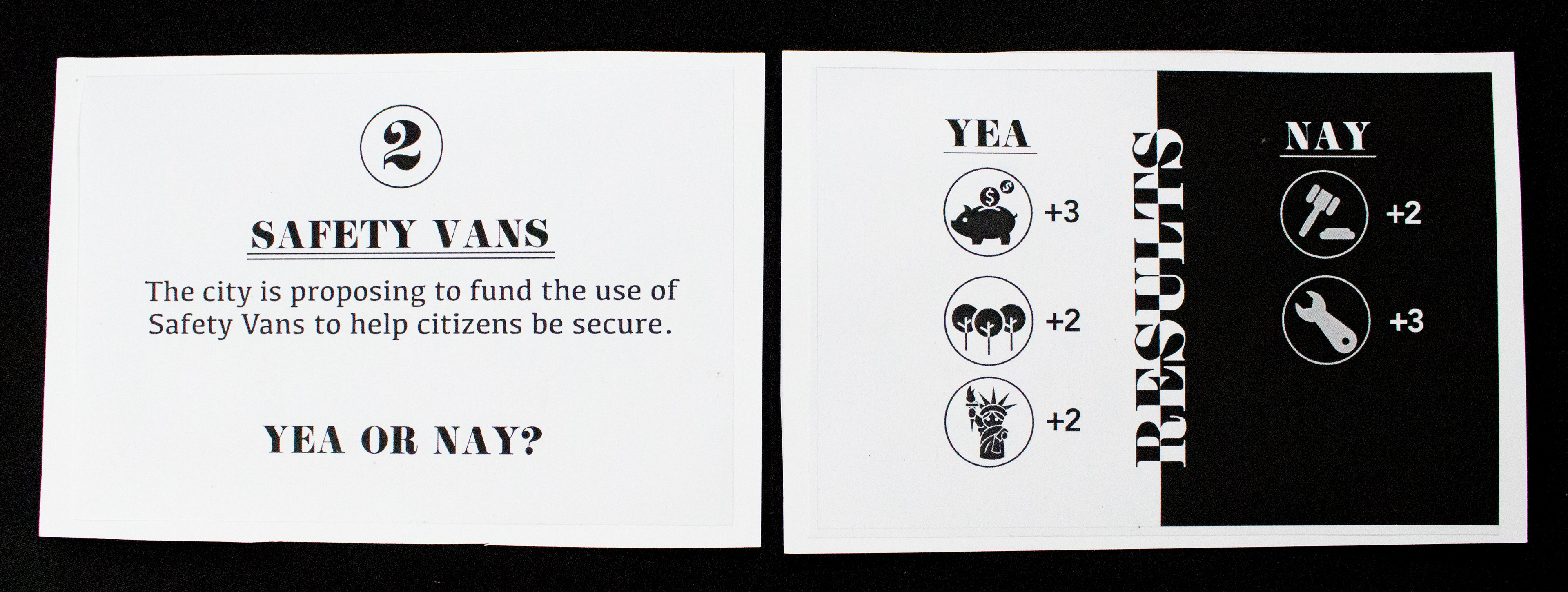
Examples of issues that the players must pass votes on
Why this project matters
Pressing Matters reflects my approach to UX and systems design in sensitive contexts:
• Designing for emotional safety without removing critical tension
• Using abstraction to preserve meaning while reducing harm
• Iterating through extensive playtesting to refine clarity and player experience
• Treating onboarding, information hierarchy, and pacing as core design problems, rather than afterthoughts
Reflection & Relevance
This project reinforced the importance of responsibility in design, particularly when working with real-world subject matter. It also highlighted how systems, rather than explicit narratives, can effectively communicate complex ideas about power, persuasion, and decision-making.
Pressing Matters remains a foundational example of my ability to:
• Design intentional player experiences
• Navigate ethical constraints
• Translate abstract learning goals into playable systems
• Iterate based on observed player behavior rather than assumptions