Resource Management Systems Design
Role: Product Designer
Focus: Resource management systems, progression design, decision support, and interaction architecture
Team: Solo
Focus: Resource management systems, progression design, decision support, and interaction architecture
Team: Solo
OVERVIEW
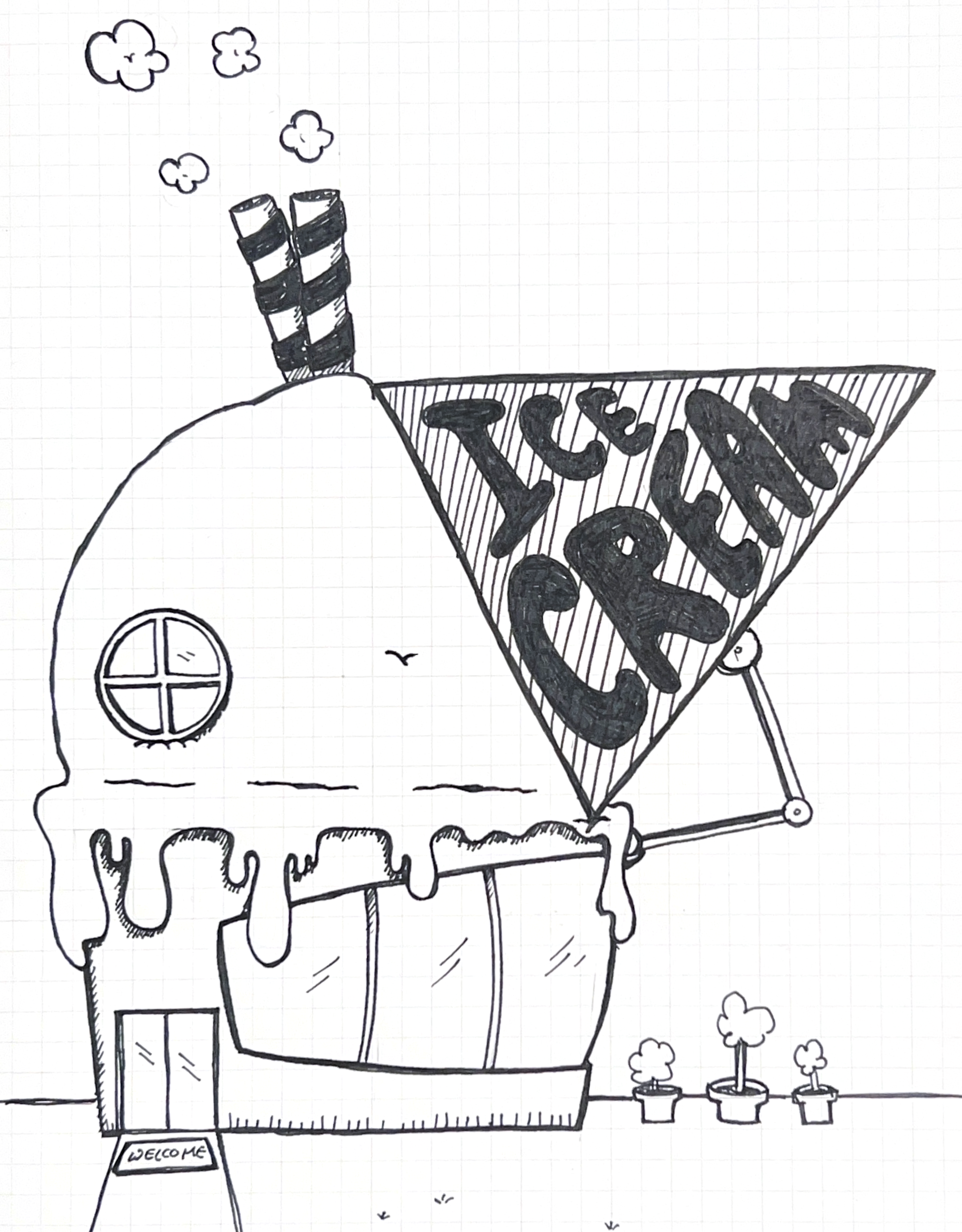
Scoops & Stardust is a resource management game centered on progression, time-based systems, and interconnected gameplay loops. Players raise intergalactic cows, craft and sell ice cream desserts, and expand their brand through layered production, inventory, and customization systems.
This solo systems UX case study explores how complex interactive systems can remain understandable during time-pressured play. The project focuses on structuring economy, inventory, progression, and interaction flows into a cohesive experience that supports readability, reduces cognitive overload, and helps players make informed decisions across multiple interconnected mechanics.

BACKGROUND
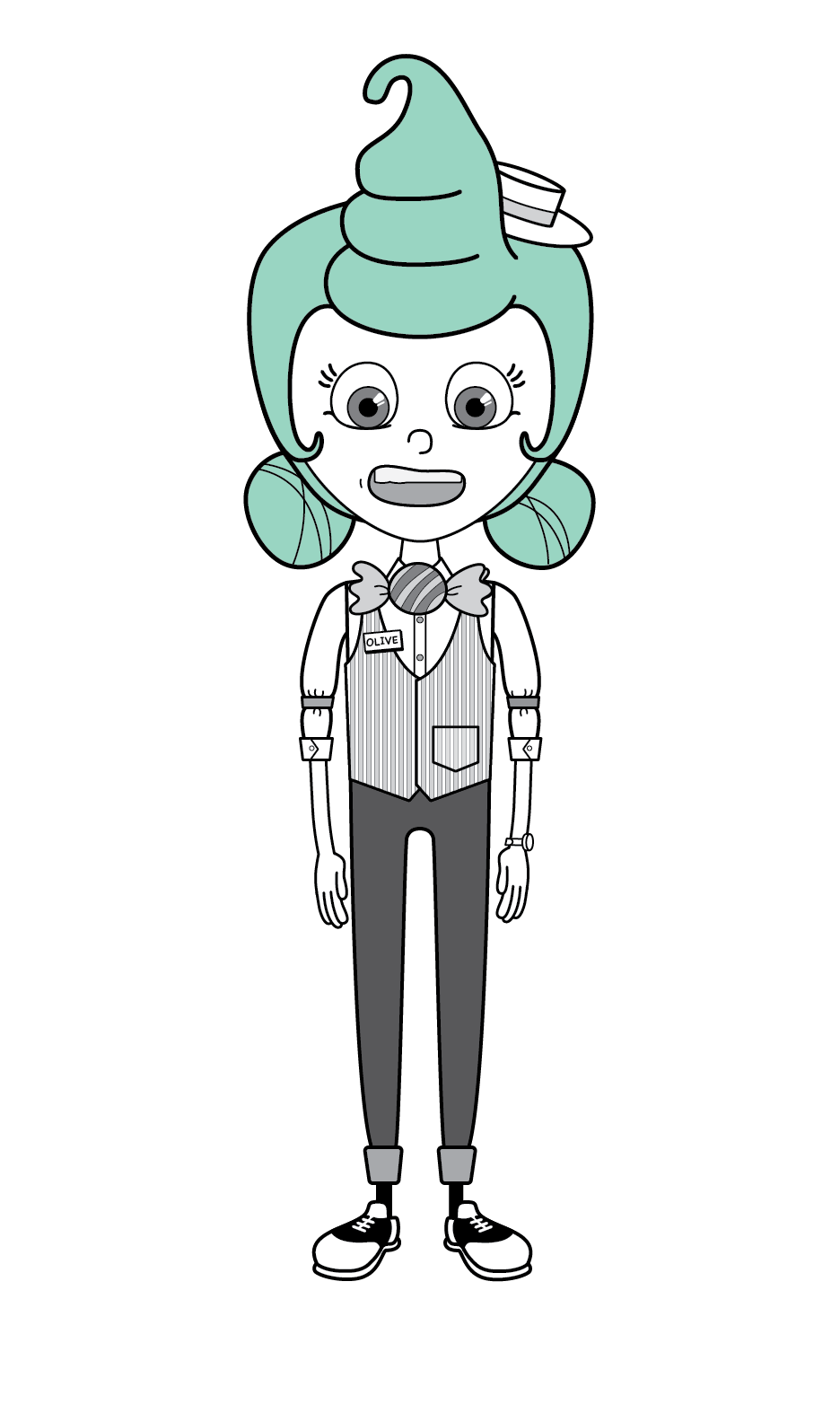
As a solo project, I focused on designing scalable systems that could be learned progressively without overwhelming players early in onboarding. The concept originated during my time working at Ben & Jerry’s during undergrad and later evolved into a short comic and mini-game featured at Maker Faire NYC (2017) while studying at Parsons.
From the beginning, the project emphasized structured onboarding, constrained information exposure, and consistent interaction patterns to support readability across multiple interconnected systems.
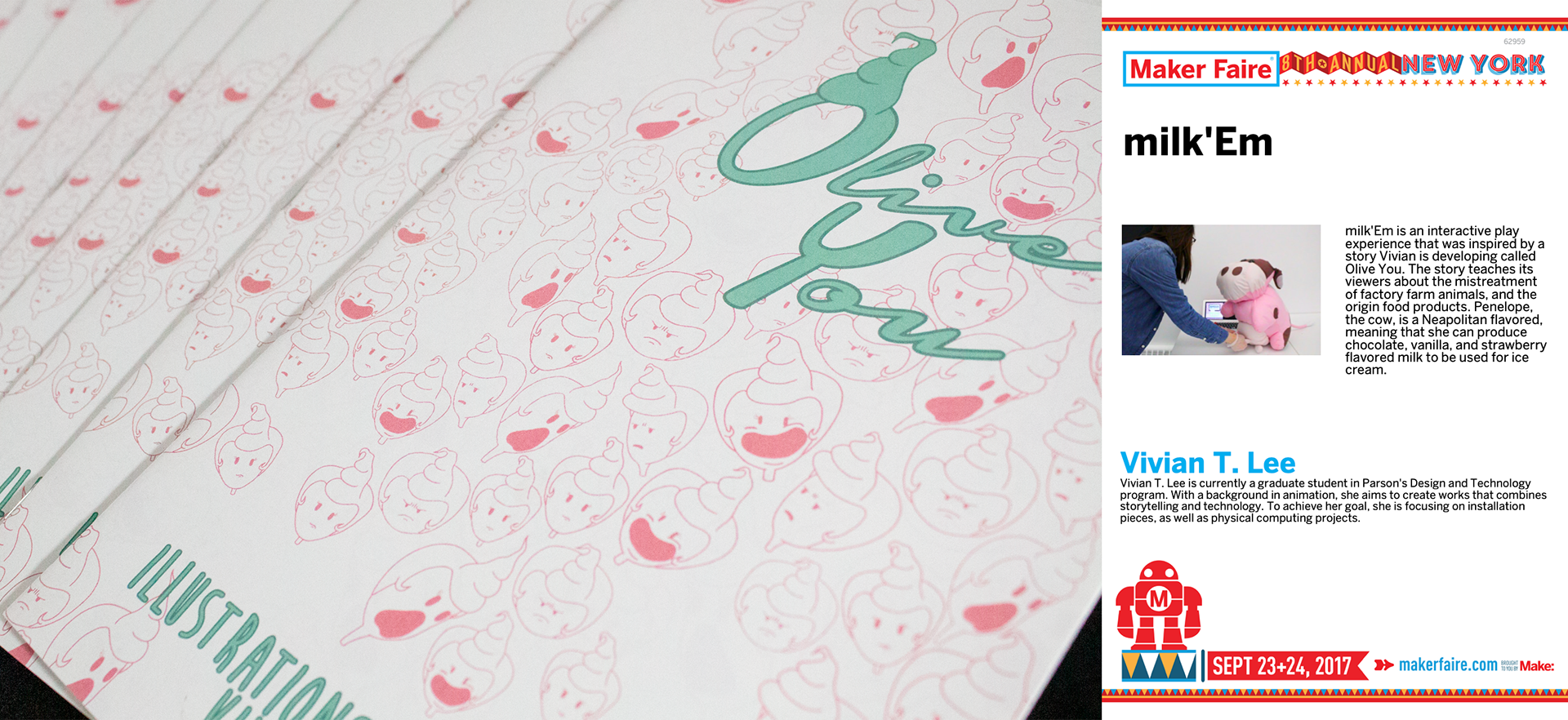
Left: Olive, You comic Right: Marker Faire (2017) display poster
CORE SYSTEM STRUCTURE
Design Question:
How can multiple progression and management systems be unified without overwhelming the player?
Reason:
Reduce cognitive friction while maintaining clear progression pacing and decision readability across time-sensitive interactions.
Solution:
The game loop was divided into distinct phases with constrained responsibilities and lightweight reminders to help players maintain orientation and avoid unintentionally skipping progression-critical actions.
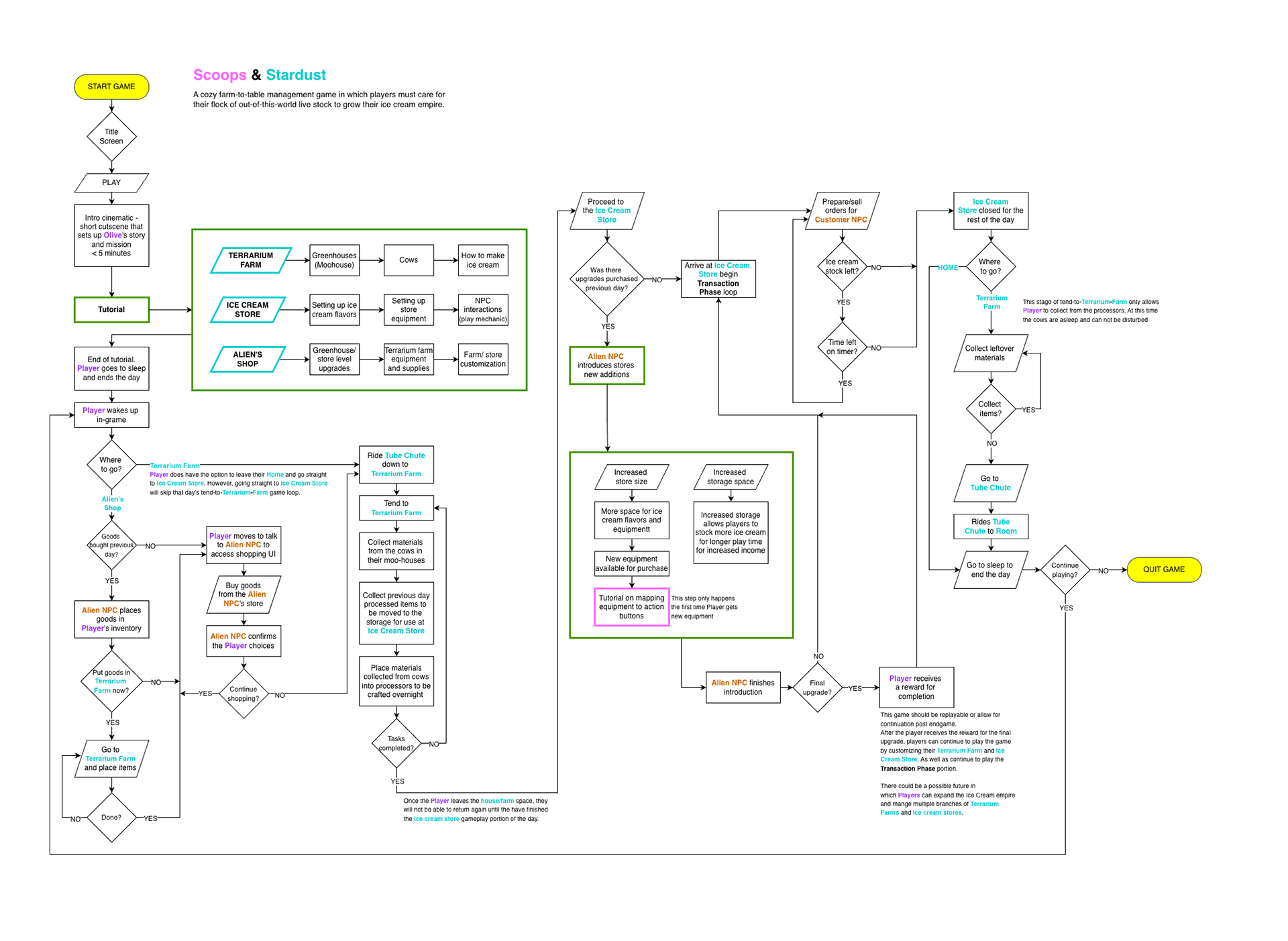
Gameplay loop flowchart
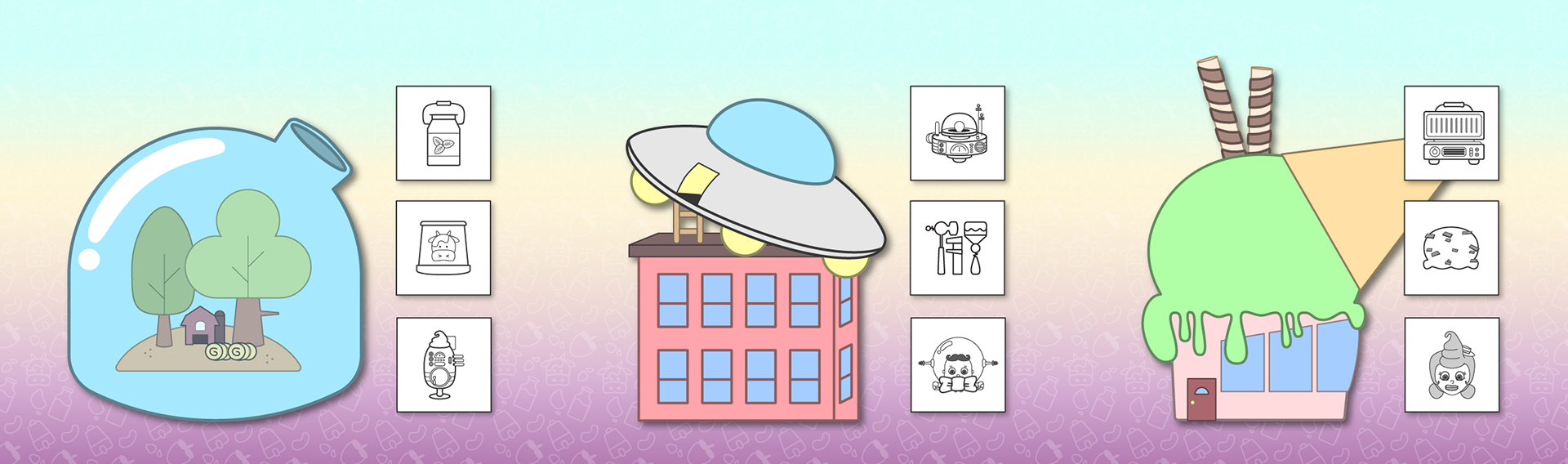
At the start of each new game, players experience three tutorial segments: Terrarium Farm, Ice Cream Store, and Alien’s Shop. Each tutorial is triggered at predetermined points in the day. Once regular gameplay begins, each day is divided into three phases: Preparation Phase, Transaction Phase, and Recovery Phase. Based on my own gaming experience, I chose not to use a real-world clock for the day loop, as it often disrupts immersion in management games.
Preparation Phase: Gather resources, manage inventory, and prepare production inputs.
Transaction Phases: Complete customer orders through the primary transactional gameplay loop.
Recovery Phase: Collect missed resources, reorganize systems, and prepare for the next cycle.
The primary progression driver is the transactional customer loop, where players convert available resources, equipment capacity, and production efficiency into economic progression. Earnings are reinvested into expanded inventory, new production capabilities, and store upgrades that unlock additional system complexity over time.
WORLD LOGIC & SYSTEM COHERENCE
Narrative decisions were used to reinforce system readability, progression logic, and environmental consistency across gameplay systems.

Design Question:
How can nonsensical elements be grounded in logic so they feel believable within gameplay?
How can nonsensical elements be grounded in logic so they feel believable within gameplay?
Reason:
Fantastical systems were grounded in consistent rules to improve player comprehension and reduce friction between narrative and gameplay expectations.
Solution:
Henry is an alien who crash-landed on Earth while transporting intergalactic cows to a nearby planet. After volunteering to stay behind with the livestock, he meets Olive and offers his equipment and cows to help her rebuild.
Henry is an alien who crash-landed on Earth while transporting intergalactic cows to a nearby planet. After volunteering to stay behind with the livestock, he meets Olive and offers his equipment and cows to help her rebuild.
Example:
When Henry arrives on Earth, he brings a small flock of cows. Players can order additional cows, or cows that produce different flavors of milk, through the Alien Shopping Network (ASN) using the Computer Pod.
When Henry arrives on Earth, he brings a small flock of cows. Players can order additional cows, or cows that produce different flavors of milk, through the Alien Shopping Network (ASN) using the Computer Pod.
Before Cow Pods can be ordered, players must build appropriate greenhouses on the Terrarium Farm. Cows can only survive in their designated climates. These greenhouses, called Moohouses, are equipped with HVAC systems that replicate specific environmental conditions.
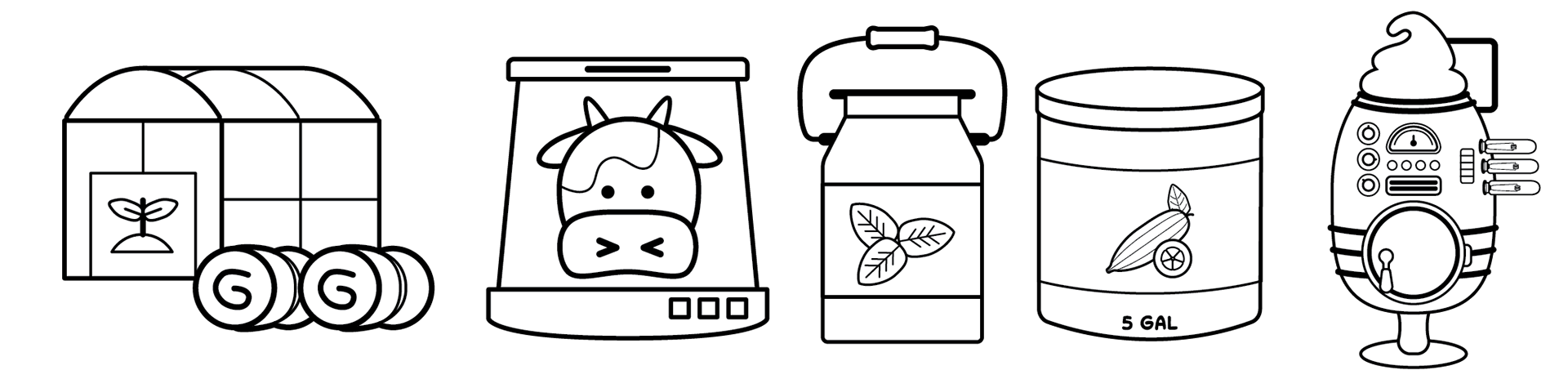
From left to right: Moohouse, Cow Pod, mint milk, chocolate ice cream, Milk Processor
Design Question:
How can Olive’s story remain believable from a narrative perspective?
How can Olive’s story remain believable from a narrative perspective?
Reason:
Grounding the character in realistic circumstances increases emotional impact.
Grounding the character in realistic circumstances increases emotional impact.
Solution:
Olive lives in a walk-up apartment building as a recent graduate struggling to reconcile her principles with her need for financial stability.
Olive lives in a walk-up apartment building as a recent graduate struggling to reconcile her principles with her need for financial stability.
Example:
Henry’s spaceship was moved from an early concept of being parked in Olive’s yard to the roof of her urban apartment building. This change better reflects Olive’s financial reality and clarifies the spatial relationship between key locations.
Henry’s spaceship was moved from an early concept of being parked in Olive’s yard to the roof of her urban apartment building. This change better reflects Olive’s financial reality and clarifies the spatial relationship between key locations.
This decision also influenced the evolution of Henry’s ship, which shifted from a flying saucer to a larger cargo-style vessel more appropriate for transporting livestock.
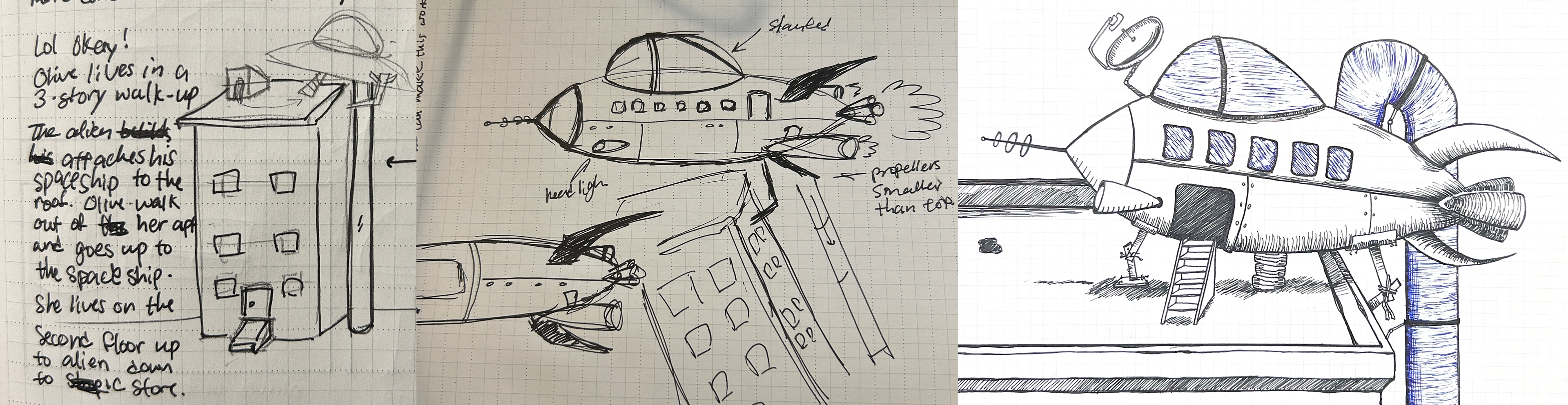
Evolution of Olive and Henry's living spaces
Interface Systems
Shopping
The shopping interface was designed around browser-like navigation patterns to leverage familiar interaction behaviors and reduce onboarding friction.
Key questions:
• How can information hierarchy be simplified?
• How can interaction steps be minimized?
• How can layout consistency be maintained?
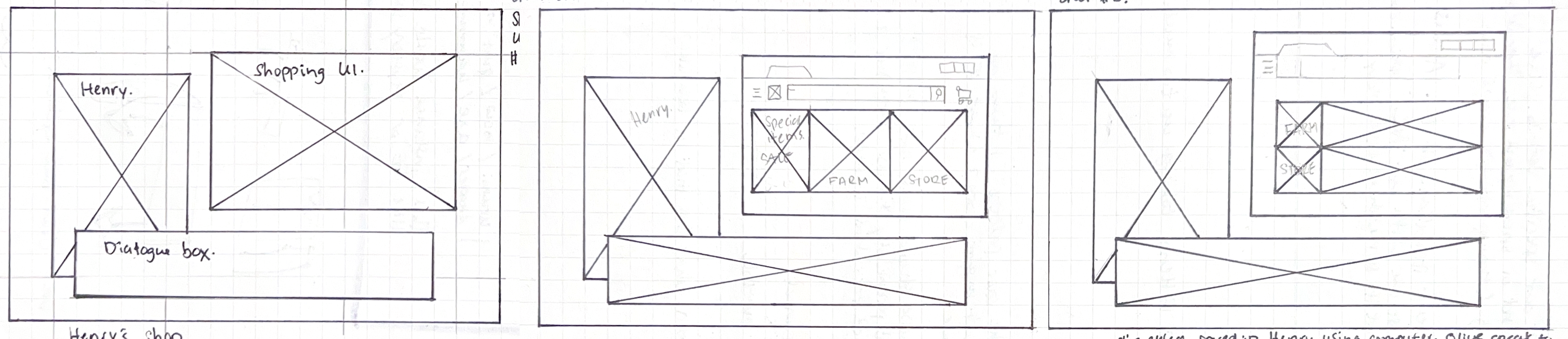
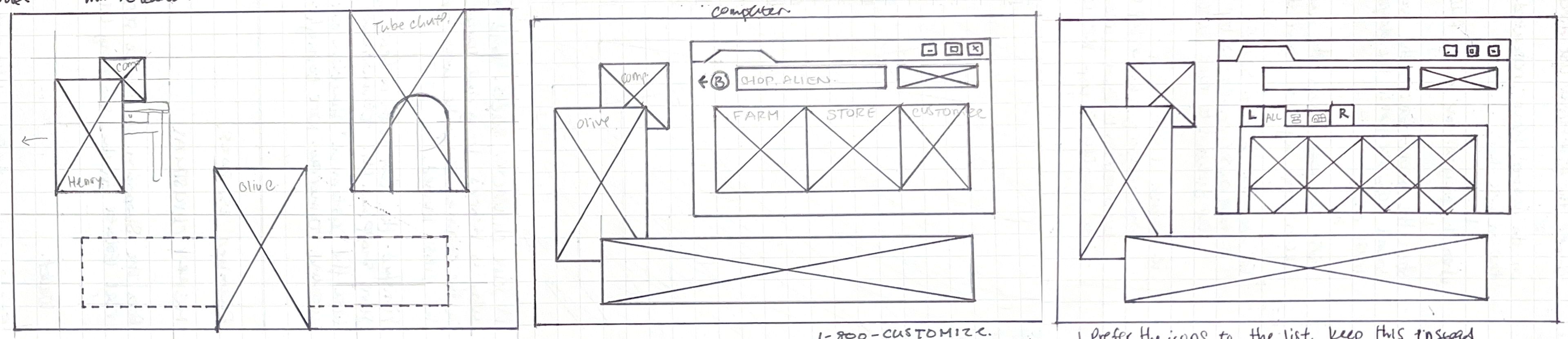
Top: Original UI Bottom: Current UI
Clickable prototype available
build configuration
Selecting customization options unlocks contextual customization workflows for the Terrarium Farm or Ice Cream Store.
Terrarium Farm
Players see a grid-based view of their farm, allowing them to rearrange placed assets.
Ice Cream Store – Cosmetics
Players can change the color scheme of the building and interior equipment, with the ability to save a limited number of preset combinations.
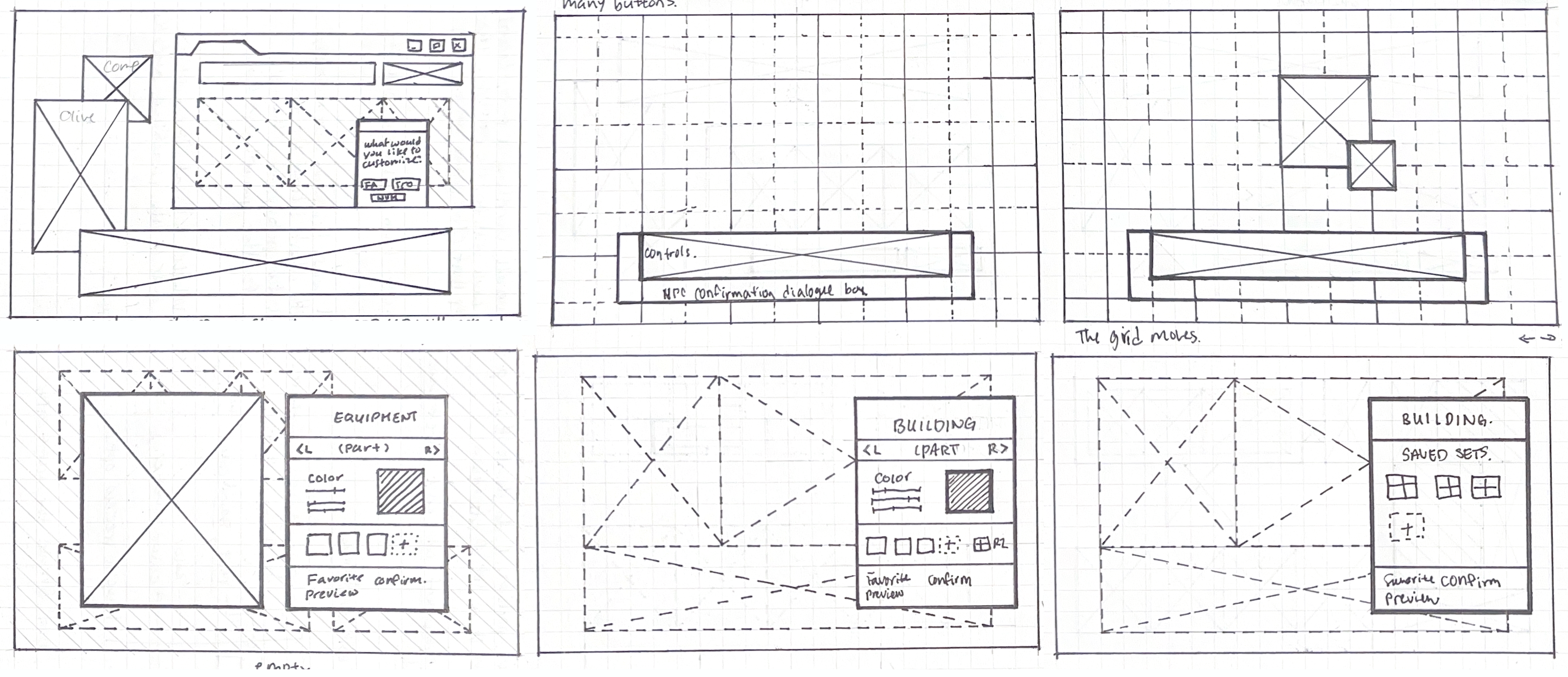
Customize UI through each steps
Ice Cream Store – Equipment
Equipment actions could be mapped to specific controller inputs, allowing players to reduce repetitive navigation and optimize interaction efficiency during high-frequency gameplay tasks.
Equipment can be mapped to specific action buttons during setup.
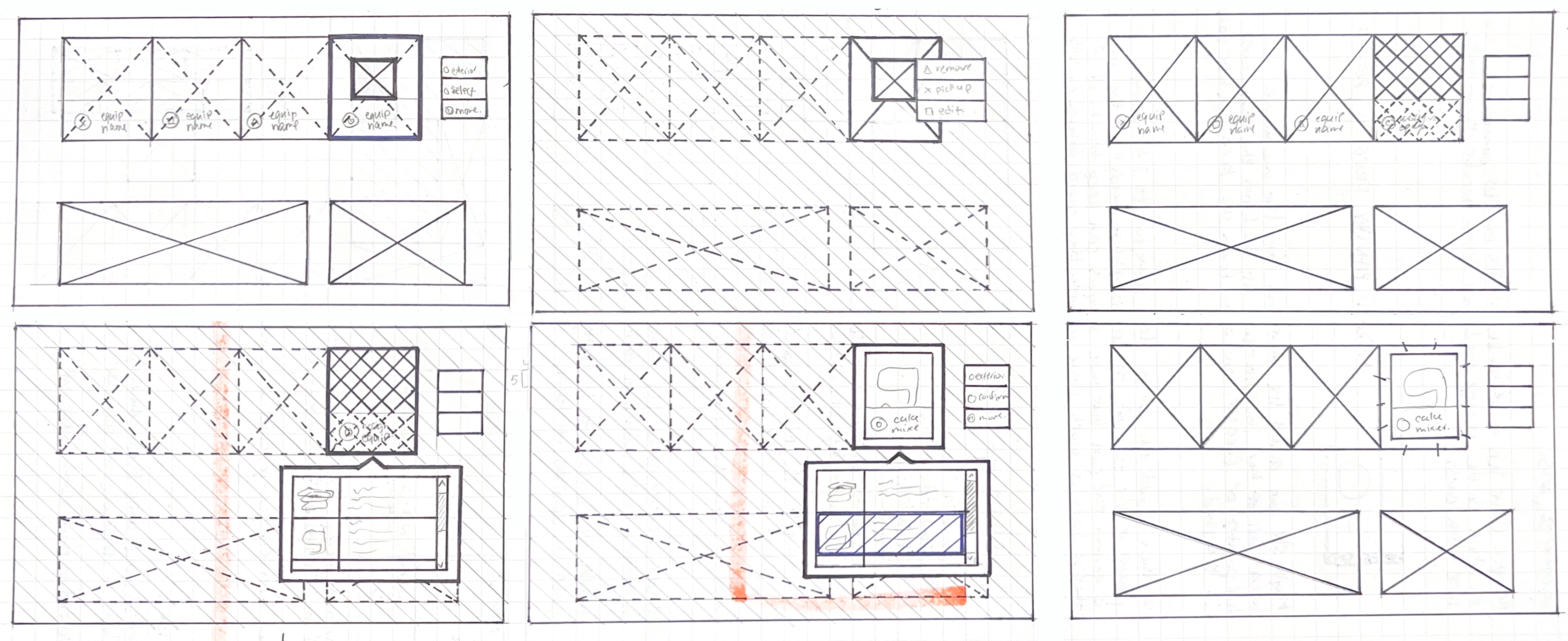
Equipment customization and button mapping UI
Ice Cream Store – Ingredients
The store upgrades through three levels: push cart, ice cream truck, and flagship store. At level one, players can stock three flavors; at level three, up to seven flavors.

Customize ice cream stock
inventory management
Inventory organization was structured around real-world storage logic to improve memorability and reduce retrieval friction during time-sensitive play.

Top left & center: inventory in over world. Top right: Storage UI. Bottom: Menu UI
DESIGN CONSTRAINTS & OPEN QUESTIONS
Ingredients
Problem:
For flavors like Strawberry Cheesecake or Cookie Dough, where do secondary ingredients originate?
For flavors like Strawberry Cheesecake or Cookie Dough, where do secondary ingredients originate?
• Buying them directly felt unengaging
• Baking introduced unnecessary mechanical complexity
Solution:A Sweets Processor, parallel to the Milk Processor, produces confections such as cake, cookies, and sprinkles. A sugarcane cow produces sugar milk, which serves as the base ingredient for these items.
Customization
Question:
Does cosmetic customization need to be this deep?
Does cosmetic customization need to be this deep?
Consideration:
The combination of equipment, flavor, and cosmetic customization may be overly complex. Reducing cosmetic depth would be an acceptable tradeoff if it improves clarity and player understanding.
The combination of equipment, flavor, and cosmetic customization may be overly complex. Reducing cosmetic depth would be an acceptable tradeoff if it improves clarity and player understanding.
core transactional System
The customer transaction loop functioned as the primary progression driver and highest-risk area for cognitive overload, making interaction clarity and input efficiency the central UX priorities.
The UI places equipment at the top, ingredient containers at the bottom, and the Order Ticket on the right.

Customer NPC play loop UI
Early layouts crowded the screen and minimized Olive’s presence. Splitting equipment across both sides improved visual hierarchy and interaction readability.
Players switch between the Ice Cream Display Case and Toppings Container using R2, navigate with the D-pad, and select with R1. The right joystick fills a progress bar to scoop ice cream, mimicking real-world motion.
Button Fatigue
Question:
Repetitive directional navigation introduced interaction fatigue during extended play sessions.
Solution:
Frequently used equipment actions were mapped directly to controller inputs to reduce unnecessary navigation steps and support faster decision execution under time pressure.
Tradeoff:
While this reduces fatigue, it increases the risk of mis-inputs during timed gameplay.
While this reduces fatigue, it increases the risk of mis-inputs during timed gameplay.
Next Steps:
Playtesting to measure input errors and player enjoyment.
Playtesting to measure input errors and player enjoyment.
decision support interface
The Order Ticket centralized time-sensitive information, including order requirements, pricing, environmental conditions, and customer state, into a single high-visibility interface region.
Ingredient visuals were paired with text labels to reduce ambiguity, improve accessibility, and support rapid recognition during high-pressure interactions.
CONCLUSION
Scoops & Stardust was developed as a systems UX case study exploring how complex, interconnected mechanics can remain readable during time-sensitive interactions. The project focused on structuring progression, economy, customization, and transactional systems into a cohesive experience that supports player comprehension without sacrificing depth.
The customer transaction loop emerged as the primary area of UX risk, leading design efforts to prioritize input clarity, information hierarchy, and cognitive load reduction during rapid decision-making. Key tradeoffs between responsiveness, readability, and interaction complexity were intentionally identified to guide future iteration.
Overall, this project reflects my approach to systems and interaction design: structuring complex mechanics around user comprehension, designing for behavior under constraint, and prioritizing clarity, consistency, and readable feedback across interconnected systems.