Adaptive AI Systems Design
Role: Game Systems Design / Interaction Designer
Focus: AI behavior systems, player modeling, adaptive difficulty, and information clarity
Team: Solo
OVERVIEW
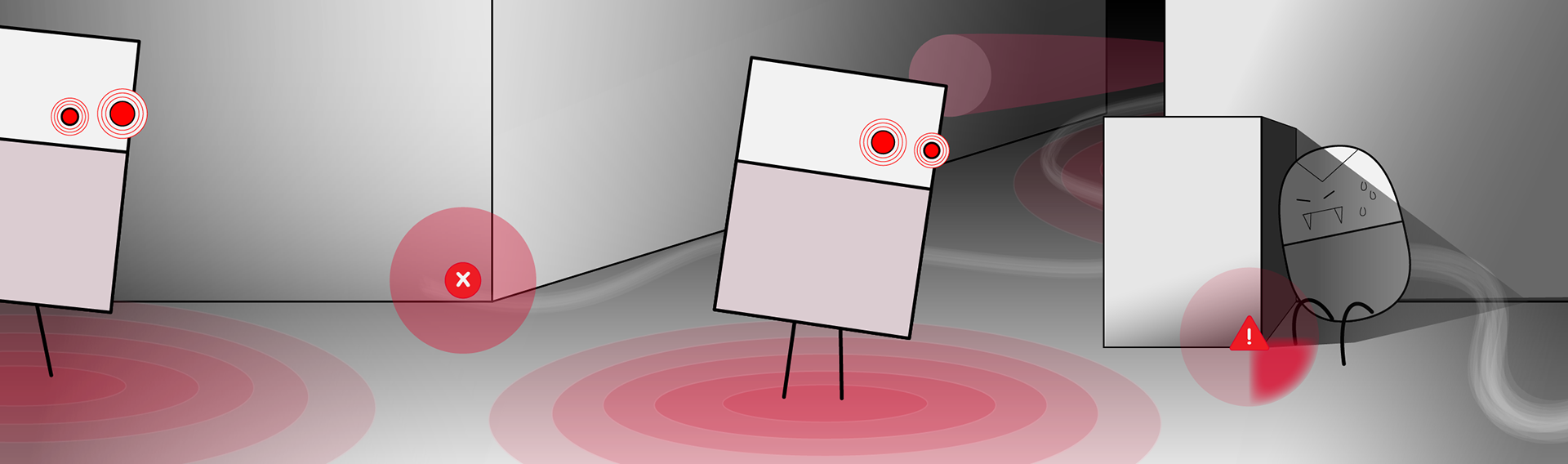
Stalking Prey is a stealth experience where players must continuously adapt their behavior as enemy AI learns and responds through pattern recognition.
Playing as a vampire defending its home from human-driven deforestation, the player infiltrates enemy camps undetected, converting members to their cause.
This solo-developed case study explores how AI-driven behavior systems can be translated into readable, player-facing mechanics that support informed decision-making, clarity, and tension.
AI STATE BEHAVIOR
AI behavior escalates through five states, increasing pressure by adapting to player behavior, exposing weak strategies when patterns emerge, and responding with greater speed and precision.
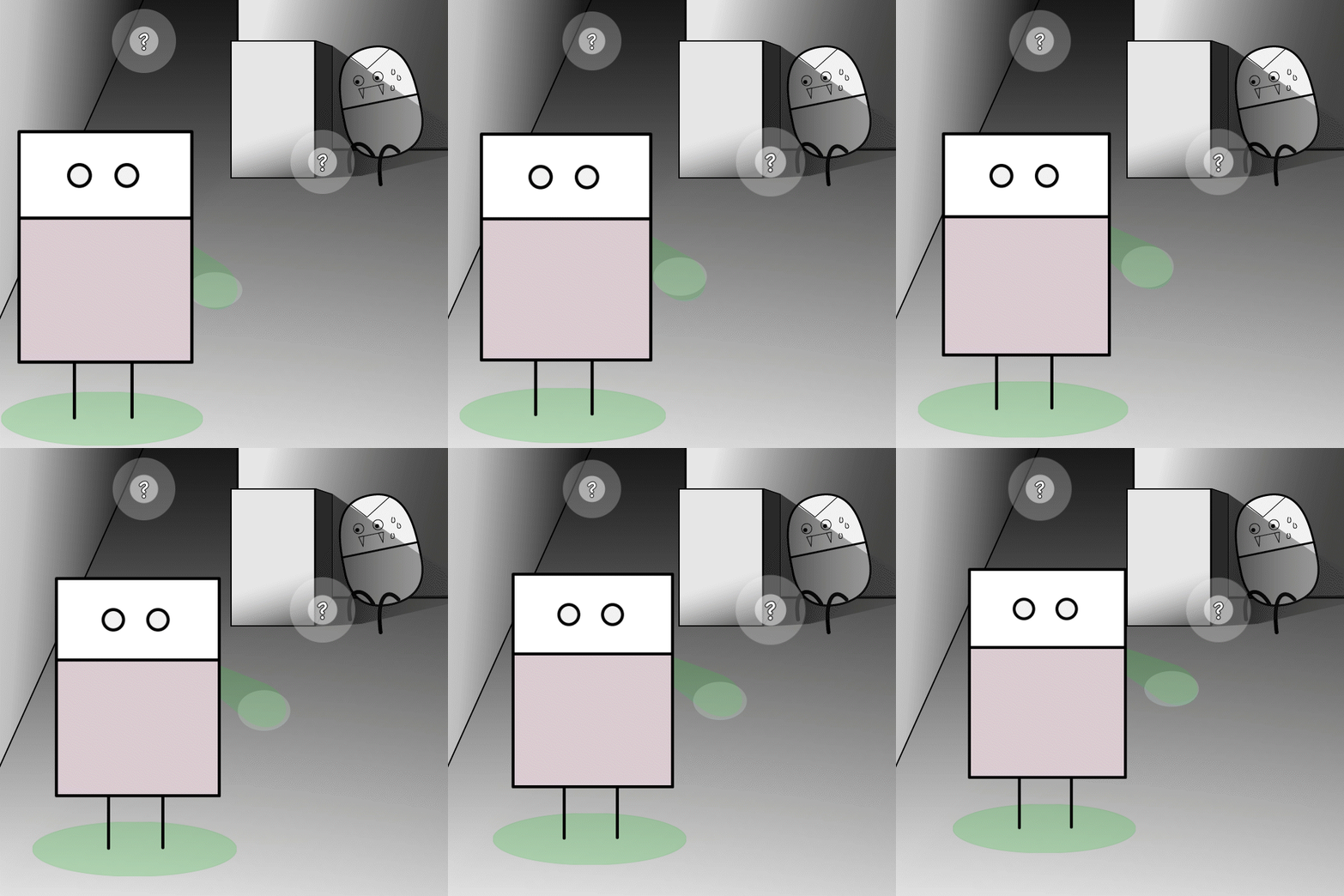
[ AI STATE ]
Neutral - baseline observation
[ CONTEXT ]
First encounter (Room 1)
[ Behavior Shift ]
Follows default patrol path
Observes without reacting
PLAYER-FACING VISUALIZATION
[ Vision Overlay ]
• Cone: green
• Radius: green, steady
• Patrol path: default
[ Mind-Read Overlay ]
• Observation phase
• Suspected(?) zones: faint pulsing
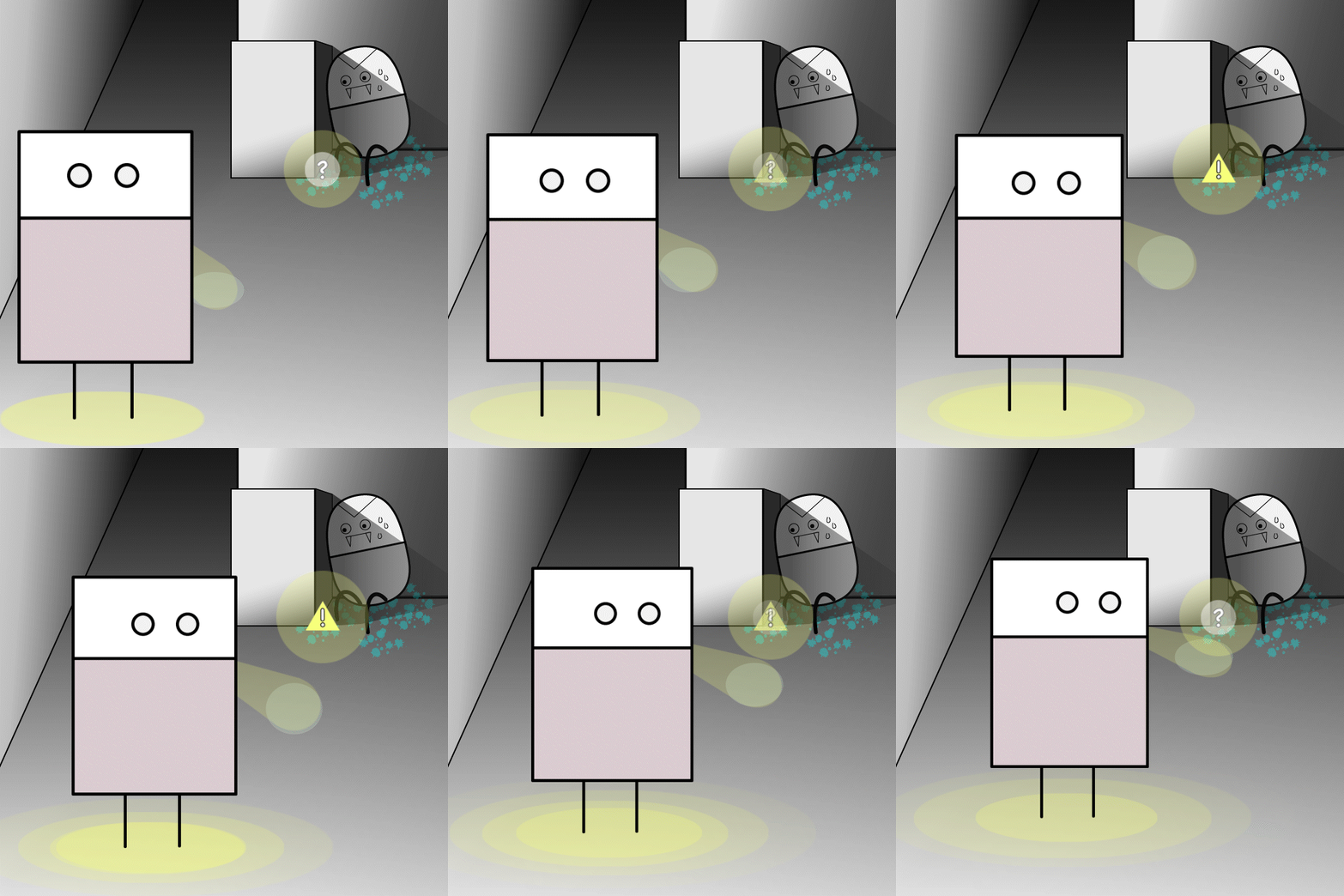
[ AI STATE ]
Skeptical - early detection and pattern formation
[ CONTEXT ]
Initial anomalies detected
[ Behavior Shift ]
Becomes sensitive to player presence
Escalates suspected(?) zones into problem(!) zones
PLAYER-FACING VISUALIZATION
[ Vision Overlay ]
• Cone: yellow
• Radius: yellow
• Patrol path: increased density on suspected(?) zones
[ Mind-Read Overlay ]
• Short-term memory engaged
• Defers response while evaluating behavior
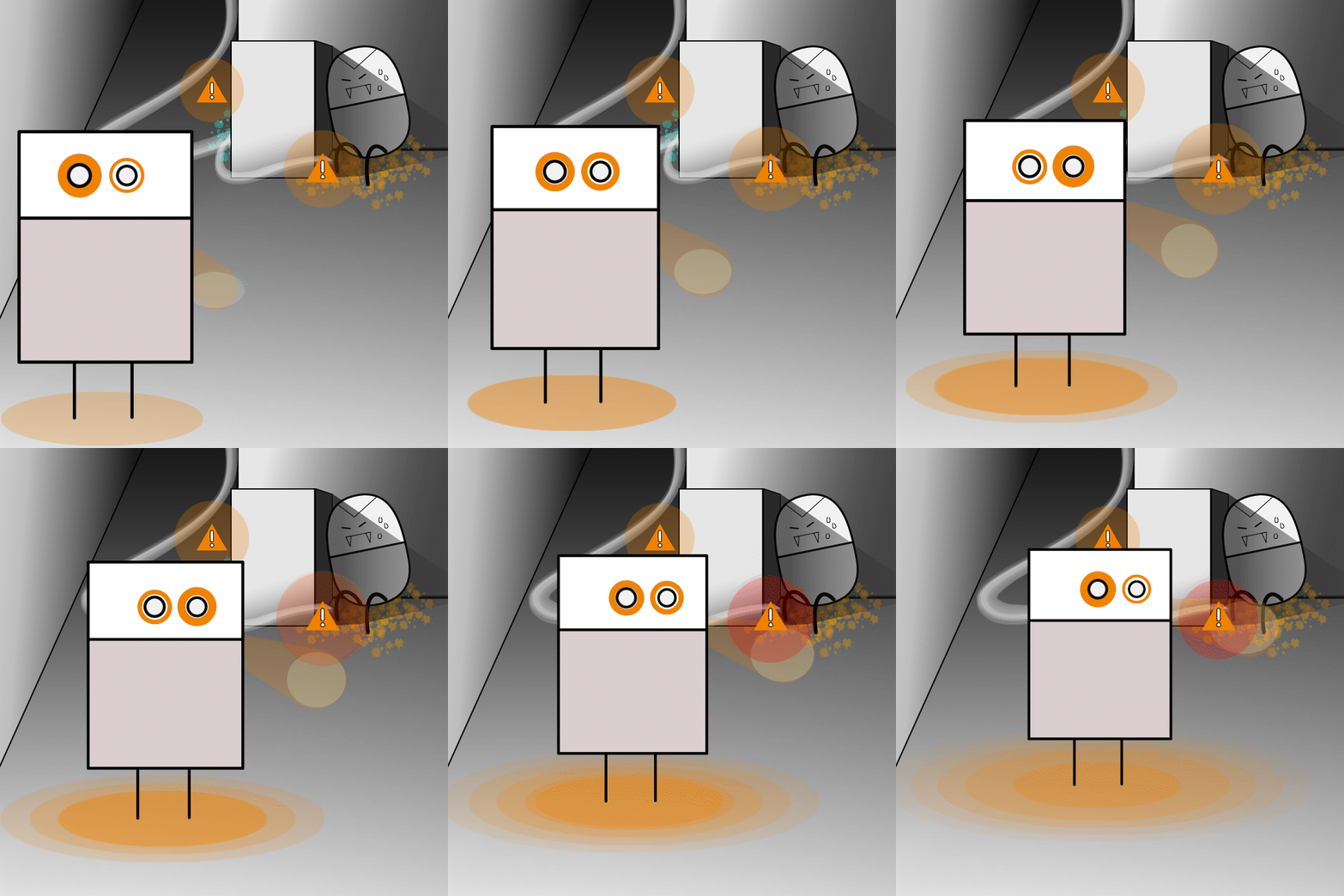
[ AI STATE ]
Suspicious - confirmed presence, passive pursuit
[ CONTEXT ]
Repeated encounters, player pattern emerging
[ Behavior Shift ]
Intensifies observation to analyze player pattern
Tracks player movement in real-time
PLAYER-FACING VISUALIZATION
[ Vision Overlay ]
• Cone: orange, expands in shadowed areas
• Radius: orange, shifts towards detected movement
• Patrol path: concentrated around problem(!) zones
[ Mind-Read Overlay ]
• Long-term memory engaged
• Problem(!) zones: orange radius
[ AI STATE ]
Alert - confirmed presence, active pursuit
[ CONTEXT ]
Pattern recognition threshold exceeded
[ Behavior Shift ]
Deploys additional patrol pressure
Engages in active, real-time pursuit
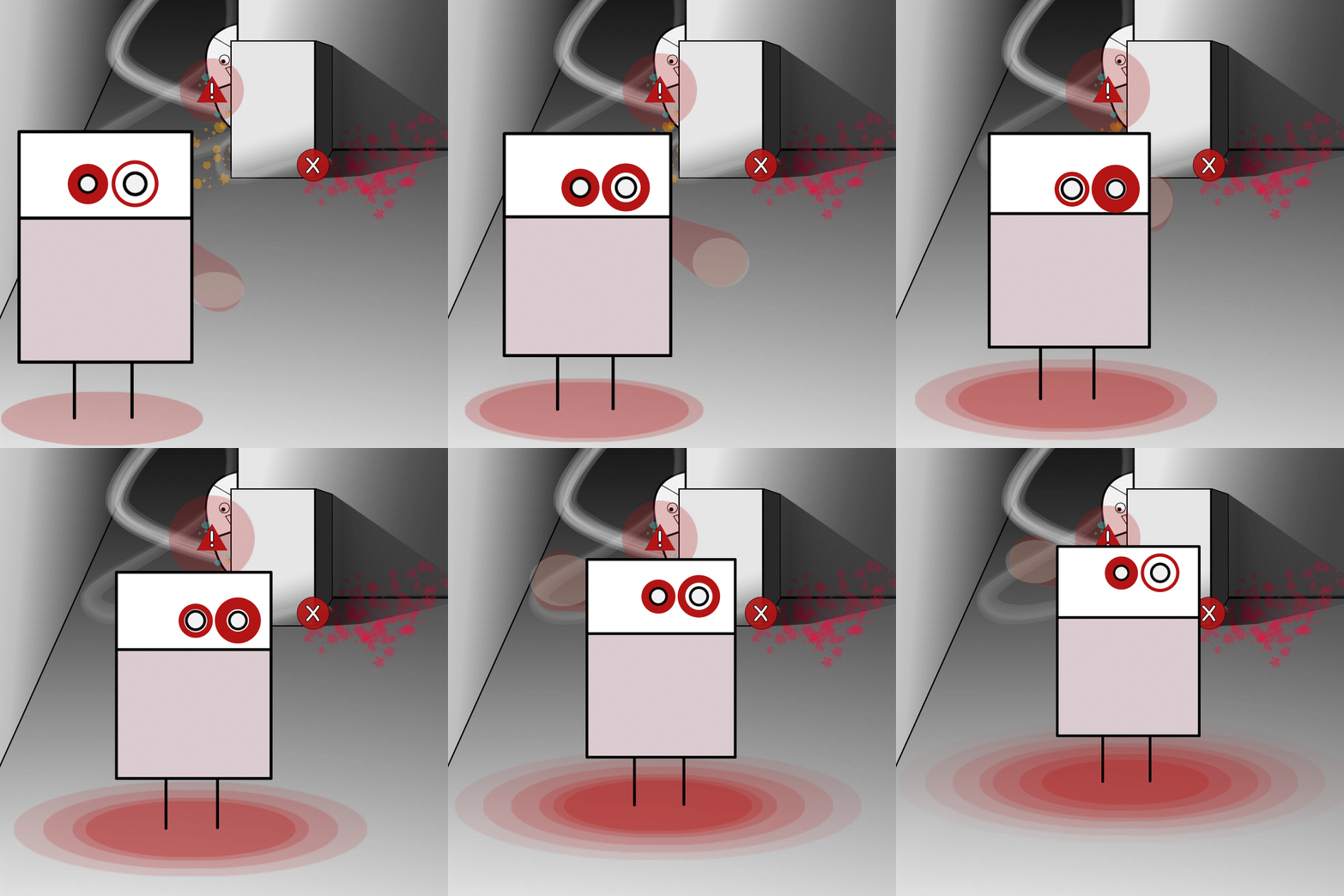
PLAYER-FACING VISUALIZATION
[ Vision Overlay ]
• Cone: red, controlled / directional
• Radius: red, clean expansion
• Patrol path: tracks current player path
[ Mind-Read Overlay ]
• Long-term memory persists with recency weighting
• Problem(!) and danger(X) zones: red radius
[ AI STATE ]
Panic - pattern breakdown, reactive pursuit
[ CONTEXT ]
Player behavior is inconsistent; no stable pattern detected
[ Behavior Shift ]
Reacts aggressively to immediate player stimuli
Patrol becomes erratic and unpredictable
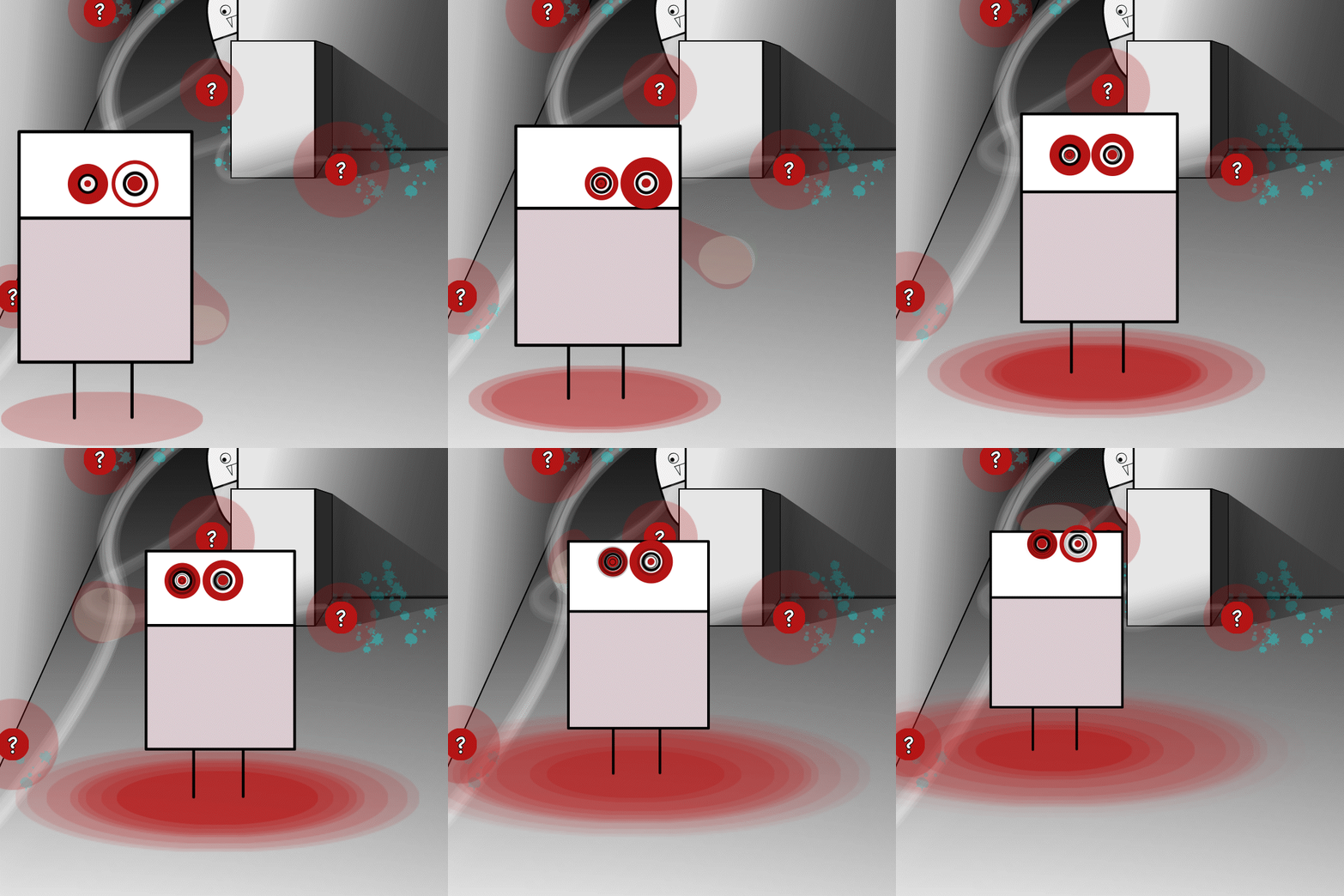
PLAYER-FACING VISUALIZATION
[ Vision Overlay ]
• Cone: red, unstable / noisy
• Radius: red, jittery, flicker, irregular pulses
• Patrol path: sporadic, driven by immediate stimuli
[ Mind-Read Overlay ]
• Long-term memory unreliable or absent
* Suspected(?) zones: red radius
MEMORY & ADAPTATION
The AI operates on two layers of memory:
• Short-term memory captures immediate player behavior within and across adjacent rooms
• Long-term memory accumulates player behavior over time- across spatial movement, traversal patterns, and repeated failures- to form persistent zones of interest.
Memory is applied differently depending on the AI’s awareness state:
• Lower awareness states (Neutral, Skeptical, Suspicious) rely on long-term memory, applying learned patterns between encounters
• Higher awareness states (Alert, Panic) leverage short-term memory in real time, responding dynamically within the current encounter
This allows the AI to both learn over time and react in the moment, reinforcing adaptive player behavior.
INPUT CATEGORIES
Spatial Behavior
• Linger time - identifies where players feel safe
• Trail - records player paths for pattern recognition
Movement Behavior
• Pacing - fast vs. slow movement
• Sneak type - short, long, shadow
• Travel mode - ground, flight
Stealth Strategy
• Shadow reliance - increases patrol intensity and expands vision cones
• Attack patterns - aggressive vs. cautious behavior influences AI reactivity
• Blind spot usage - generates suspected zones in AI memory
FINITE STATE MACHINE
AI FSM

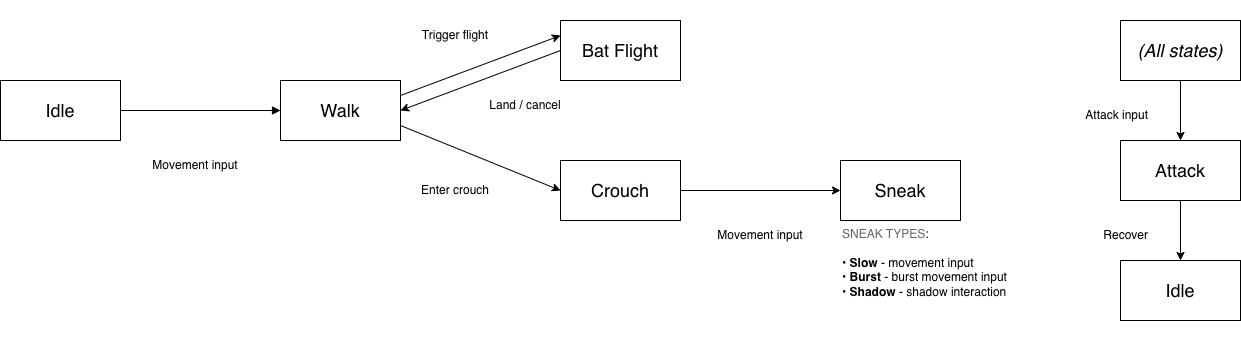
Player FSM
EDGE CASES
Players may attempt to manipulate the system by:
• Creating decoy paths
• Artificially generating problem zones
• Triggering intentional detection
In response, the AI escalates into a Panic state, leveraging short-term memory in real time and behaving aggressively to maintain challenge.
KEY DESIGN DECISION
Mind-Read Overlay
Translating AI learning into player understanding introduces a key tension:
too much information overwhelms, while too little obscures how the system behaves.
too much information overwhelms, while too little obscures how the system behaves.
Decision
Prioritize transparency—making the AI’s learning visible to reinforce behavior change and strategic adaptation.
Approach
Surface only actionable information (patterns, danger zones, recent failures), while reducing low-signal or purely descriptive data to prevent cognitive overload.
This ensures the system teaches through feedback, allowing players to understand not just what the AI is doing, but why it is behaving that way.
NEXT STEPS
• Implement a functional AI FSM in Unity
• Conduct user testing to evaluate the effectiveness of Vision and Mind-Read overlays
• Iterate on AI behavior and visualization based on findings