Strategic Interaction & Progression Systems Design
Role: Game Systems Designer
Focus: Reactive interaction systems, class identity design, and encounter progression
Context: Professional CCG systems design case study developed under studio-aligned design constraints
Team: Solo
OVERVIEW
This project explores structured interaction systems in digital collectible card game design, with a focus on gameplay readability, reactive decision-making, and player identity expression. Built within a Hearthstone-inspired framework, the project investigates how timing permissions, class behaviors, and encounter progression can shape strategic planning and long-term system comprehension.
This case study emphasizes interaction clarity, pacing tension, and layered system depth, particularly how players learn, adapt to, and navigate increasingly complex strategic states over time.
Reactive Interaction Permissions
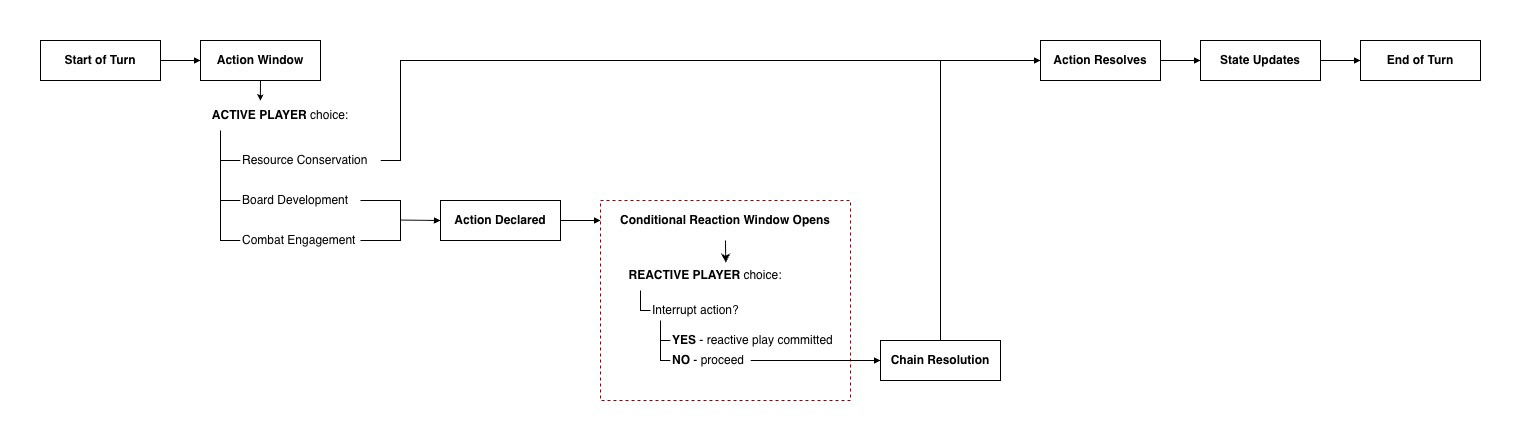
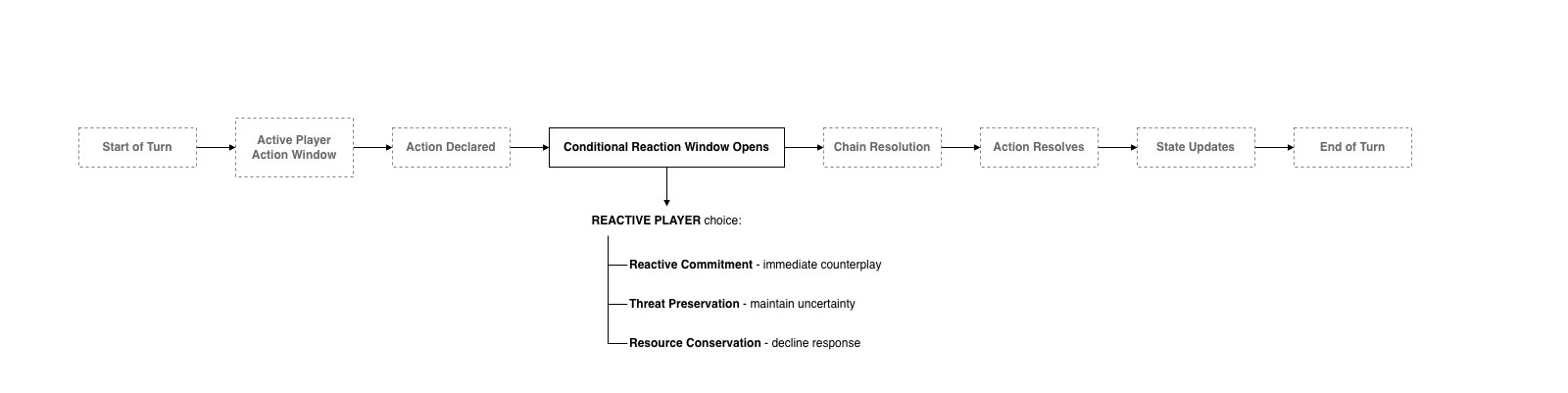
This system introduces explicit reactive interaction permissions, allowing players to perform resource-gated actions outside their standard turn flow. Rather than relying on implicit timing conventions, the design formalizes response windows to improve strategic readability and interaction clarity.
The system creates tension around resource allocation, requiring players to balance immediate board development against reserving resources for reactive counterplay. This shifts decision-making from isolated turn optimization toward continuous anticipation and behavioral prediction.
REACTIVE TIMING FLOW
Active Player
REACTIVE TIMING FLOW
Reactive Player
Class Identity & Behavioral Mapping
Class identities were structured around behavioral interaction patterns rather than thematic assignment alone. Each character’s abilities were translated into distinct gameplay roles to reinforce strategic readability, differentiated decision-making, and recognizable interaction expectations across the set.
Death Knight: Mongul
Demon Hunter: Reverse Flash (Eobard Thawne)
Druid: Poison Ivy
Hunter: Zod
Mage: Zatanna
Paladin: Green Lantern (Hal Jordan)
Priest: Martian Manhunter
Rogue: Batman
Shaman: Vixen
Warlock: John Constantine
Warrior: Bane
System Synergy & Sequencing Design
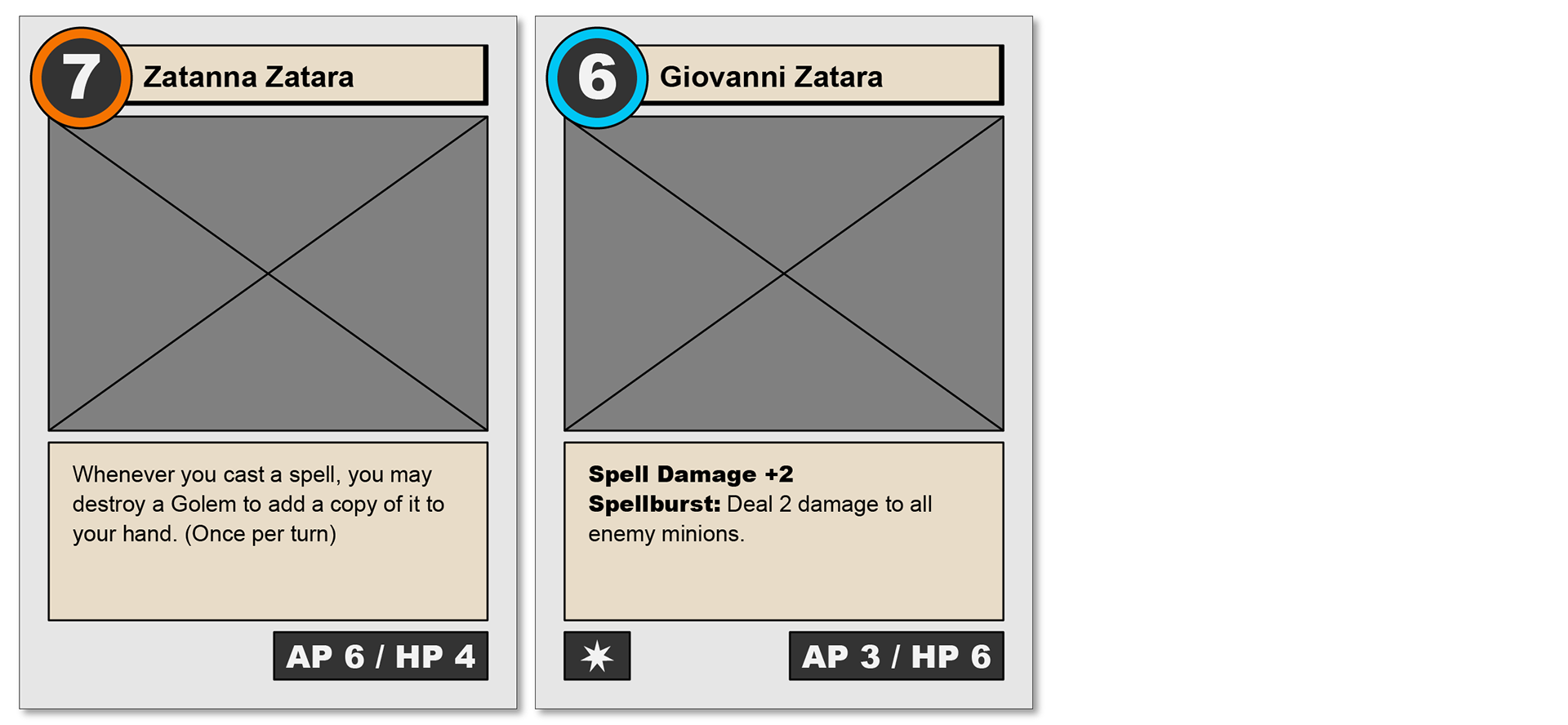
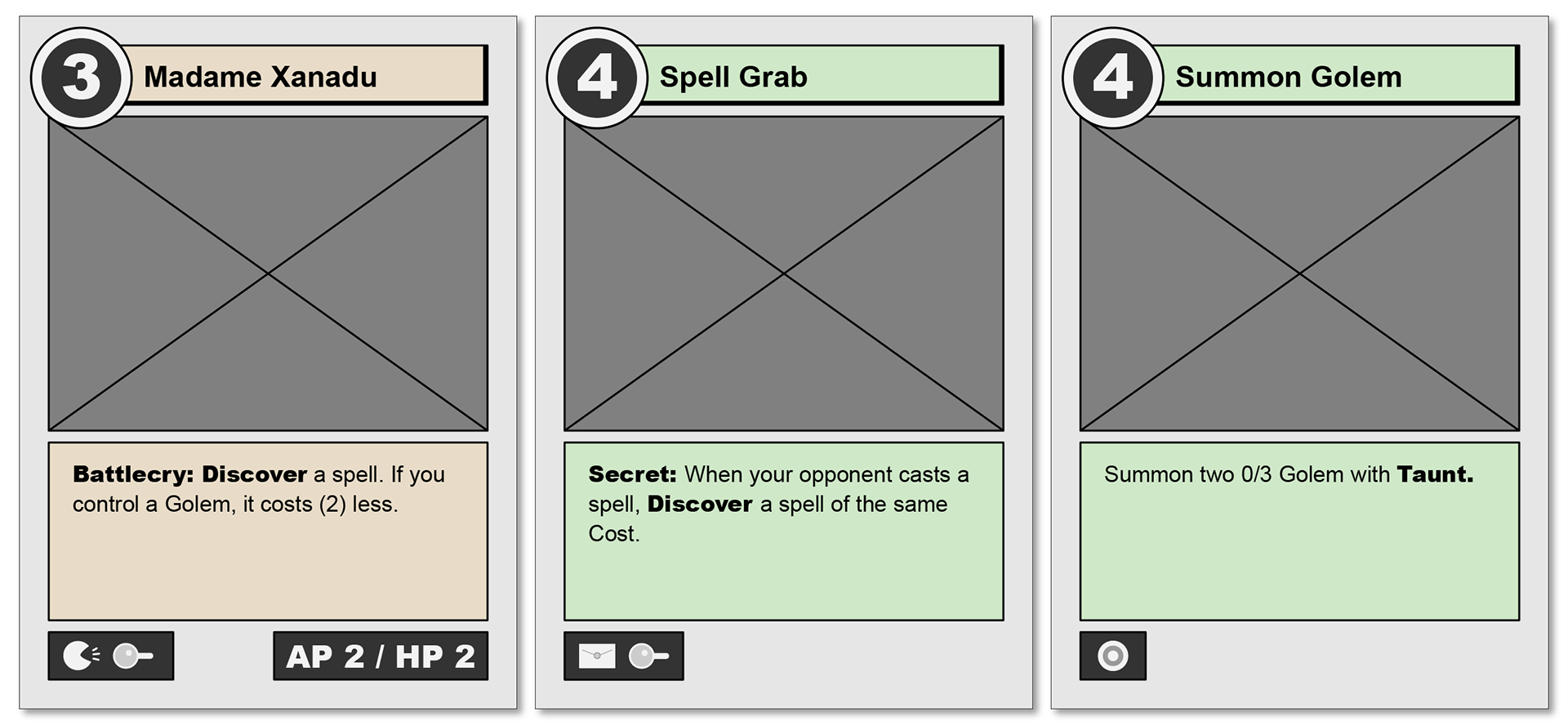
Zatanna’s Mage set emphasizes spell sequencing, recursive resource loops, and long-term interaction planning. The system distributes value across interconnected mechanics, where Golem generation, spell scaling, and sacrifice-based recursion reinforce a flexible control-oriented playstyle centered on strategic sequencing rather than isolated card strength.
Core Interaction Engine
Establishes the set’s primary gameplay loop through spell sequencing, Golem generation, and recursive resource interactions. These cards define the foundational interaction patterns that drive Zatanna’s long-term control and payoff structure.
Supportive Resource Systems
Reinforces spell access, board stabilization, and resource continuity, supporting the set’s recursive sequencing framework through consistency tools and sustained battlefield presence.
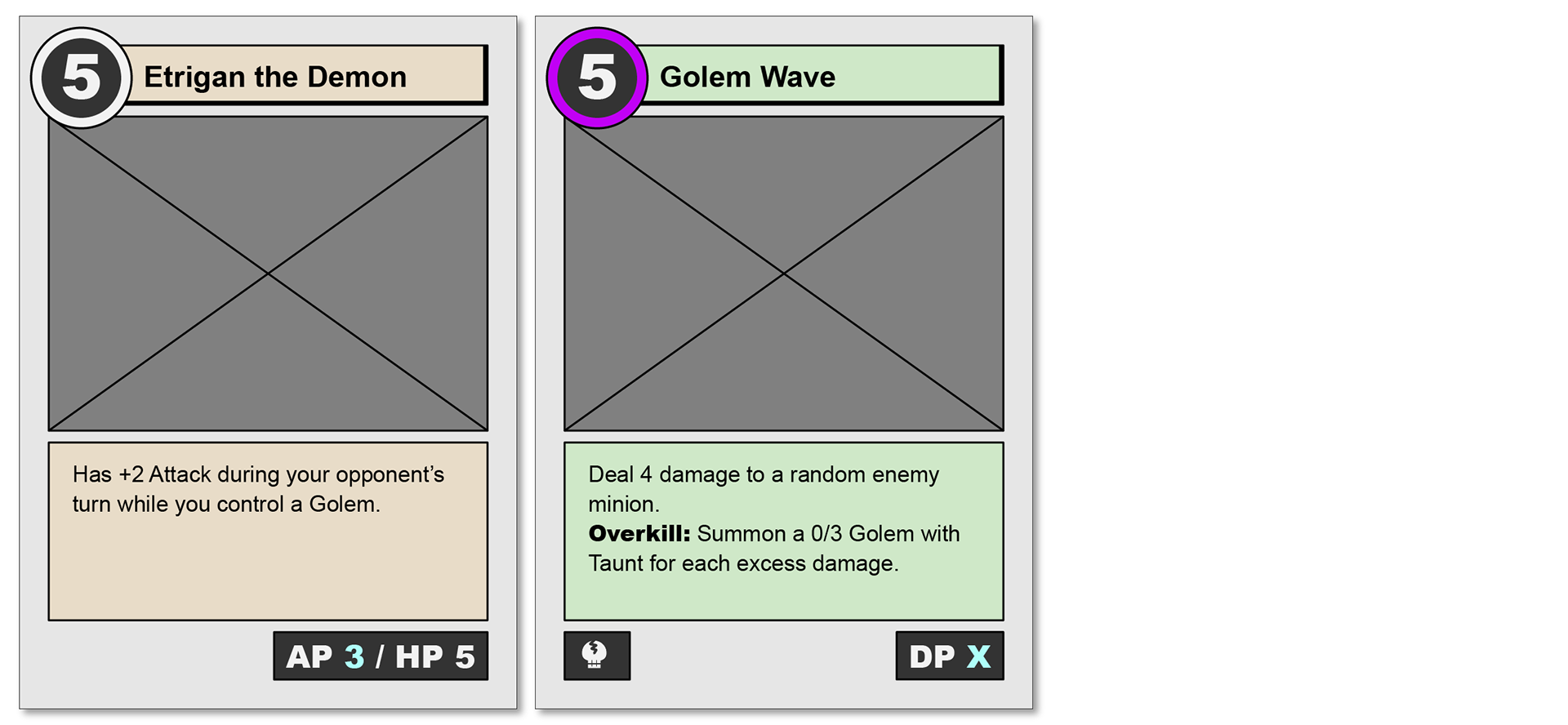
Board Pressure & Tempo Control
Introduces tools that regulate board pacing, maintain interaction pressure, and create openings for strategic sequencing shifts. These systems reinforce the set’s ability to transition between proactive board development and reactive control play.
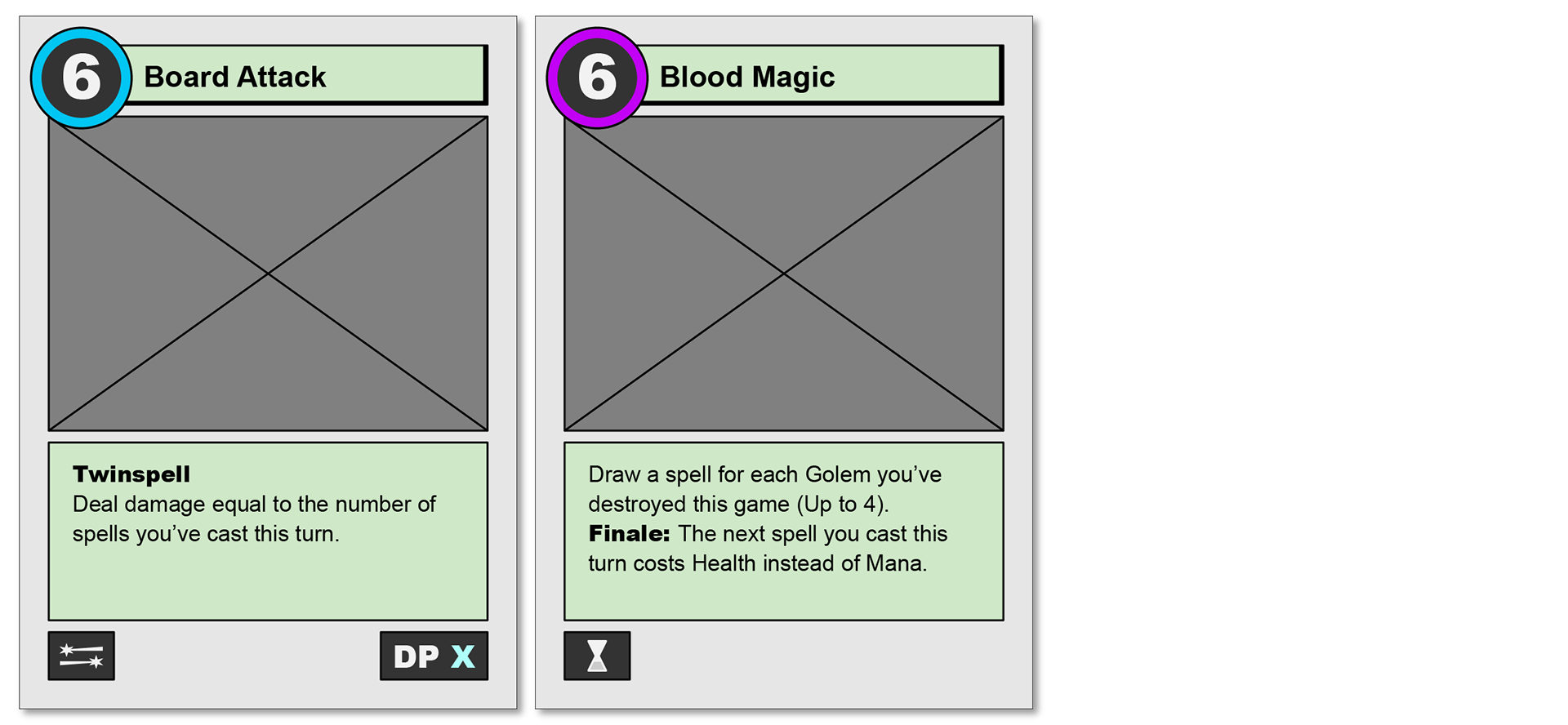
Payoff & Conversion Systems
Converts long-term setup, sequencing investment, and historical interaction tracking into high-impact turns. Rather than generating immediate standalone value, the payoff systems reward sustained strategic planning, resource discipline, and successful recursive sequencing over time.
Core System Synergies
• Golem generation supports recursive spell loops through sacrifice-based resource conversion
• Historical Golem destruction tracking converts long-term setup into explosive payoff turns
• Reactive spell acquisition expands sequencing flexibility while reinforcing control identity
Resurrection & Swarm Reinforcement Design
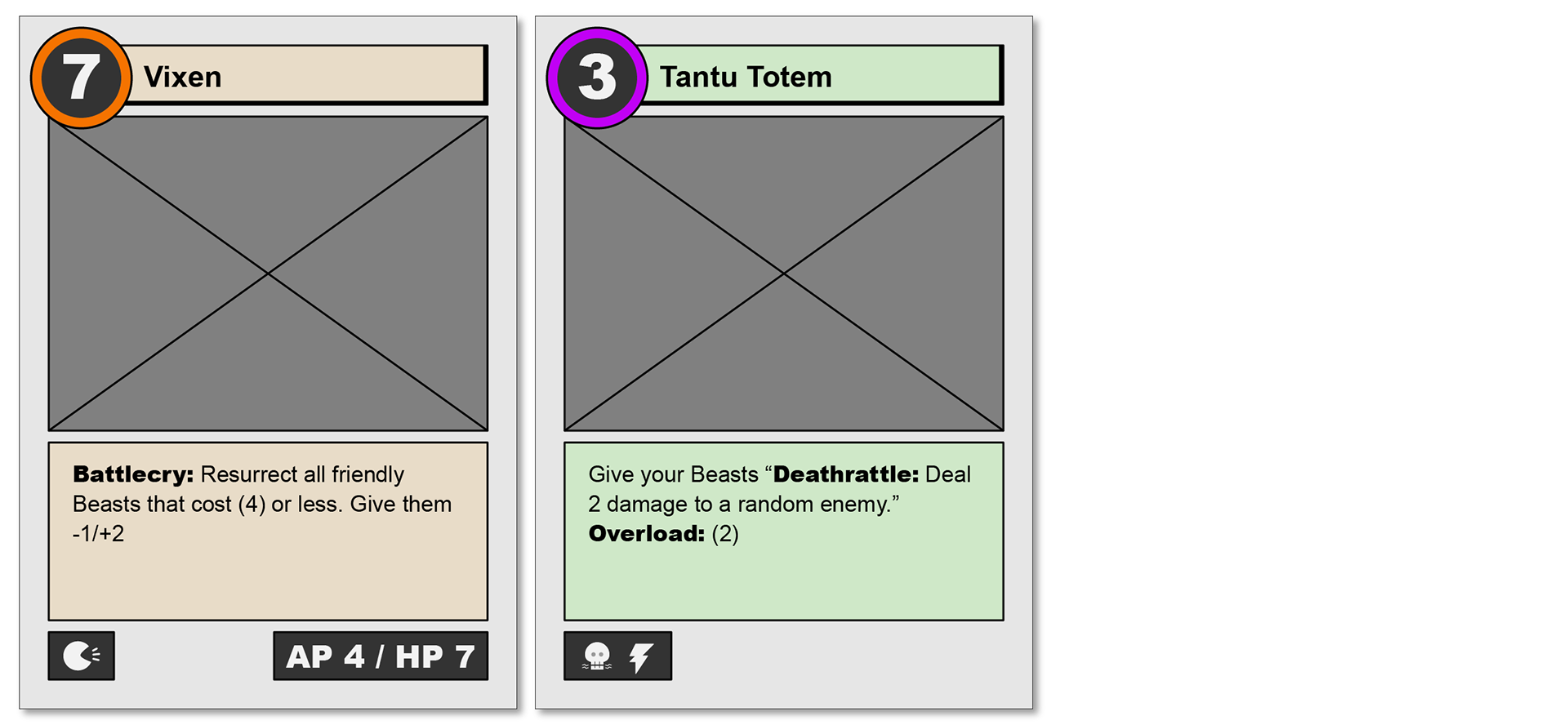
Vixen’s Shaman package emphasizes Beast resurrection, swarm reinforcement, and death-trigger scaling, expanding the project’s class identity framework beyond Mage while preserving systemic cohesion.
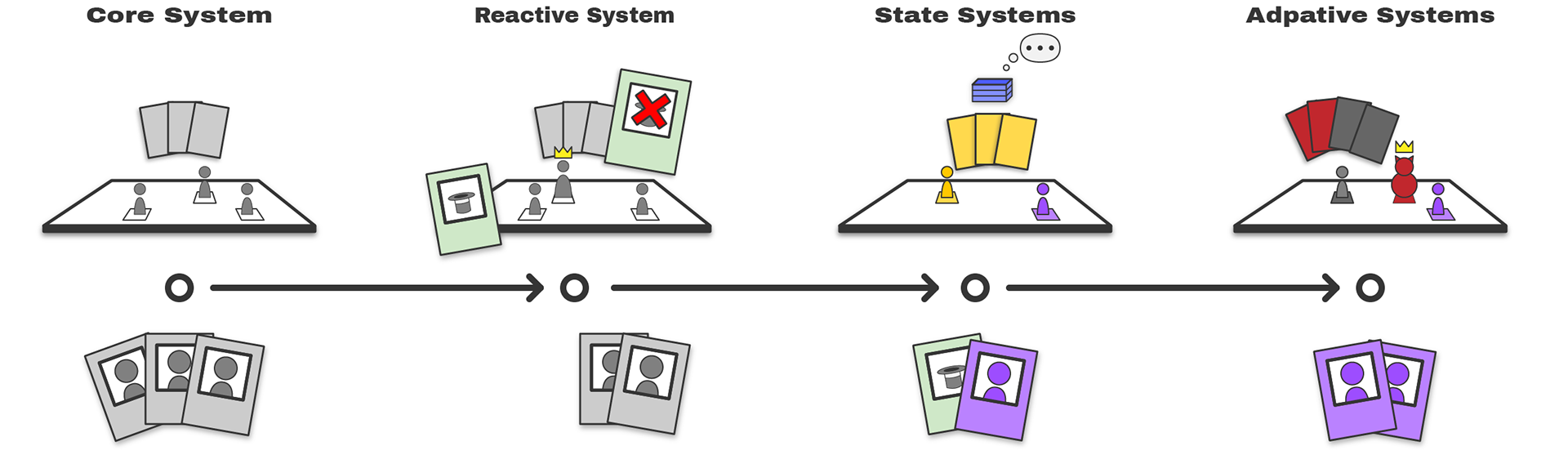
Progressive Encounter Onboarding
This PvE structure was designed as a progressive onboarding framework introducing players to increasingly complex reactive systems, encounter behaviors, and strategic pressures over time. Each encounter escalates interaction complexity through controlled mechanical layering, reinforcing system teachability while preserving strategic variety.
Adventure Structure
Encounter 1 - Foundational Interaction Readability
Introduces core combat flow, controlled board trading, and basic resource pacing within a low-pressure environment. The encounter focuses on establishing clear interaction expectations and reinforcing foundational strategic behaviors.
Encounter 2 - Reactive Pressure & Resource Constraints
Introduces disruptive reactive effects that challenge established play patterns and require players to adapt sequencing decisions under tighter resource limitations. The encounter increases strategic pressure while reinforcing interaction timing awareness.
Encounter 3 - Multi-State Pressure Escalation
A multi-phase encounter featuring corrupted heroes that shifts between defensive stabilization and aggressive offensive pressure. The encounter tests the player’s ability to reassess priorities, adapt pacing strategies, and respond to escalating interaction demands.
Final Boss - Adaptive State Management Encounter
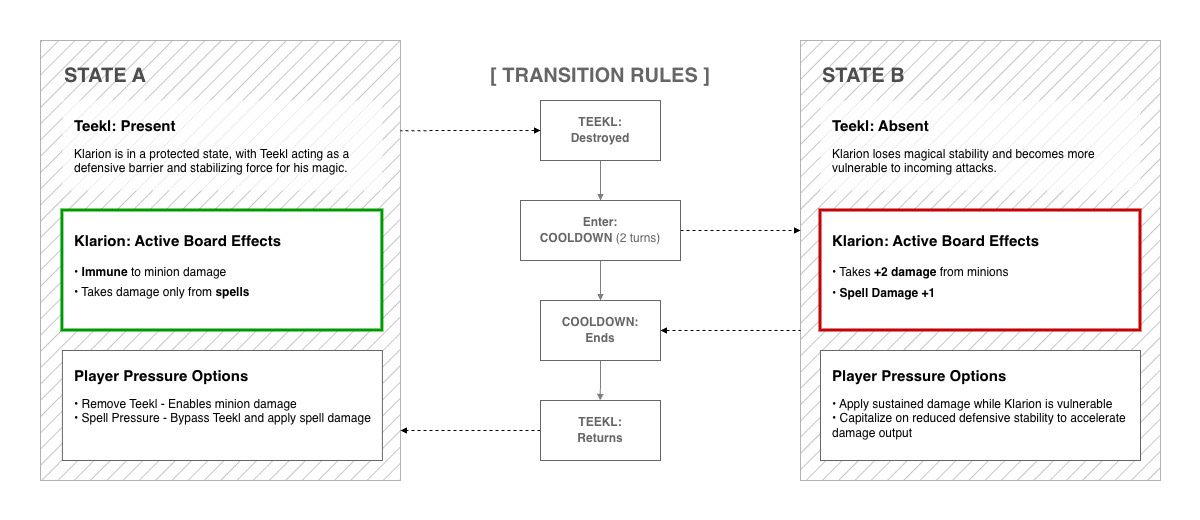
Klarion and Teekl’s dual-state encounter introduces evolving immunity conditions, shifting vulnerability states, and adaptive damage-routing decisions. Players must identify behavioral cycles, manage pacing windows, and dynamically adjust strategic pressure routes throughout the encounter.
Klarion was selected as the final encounter due to his strong thematic identity and suitability for a climactic multi-state interaction framework emphasizing volatility, adaptation, and evolving strategic interpretation.
Adaptive State Encounter Design
The final encounter introduces a dual-state interaction system in which Teekl dynamically alters Klarion’s defensive behavior and vulnerability conditions. Players must interpret evolving state changes, adapt pacing strategies, and identify optimal pressure windows while balancing multiple interaction routes.
The encounter was designed to discourage static optimization patterns by introducing disruptive state volatility, reinforcing behavioral adaptation and strategic reassessment throughout the fight.
KLARION ENCOUNTER
Dual-State System
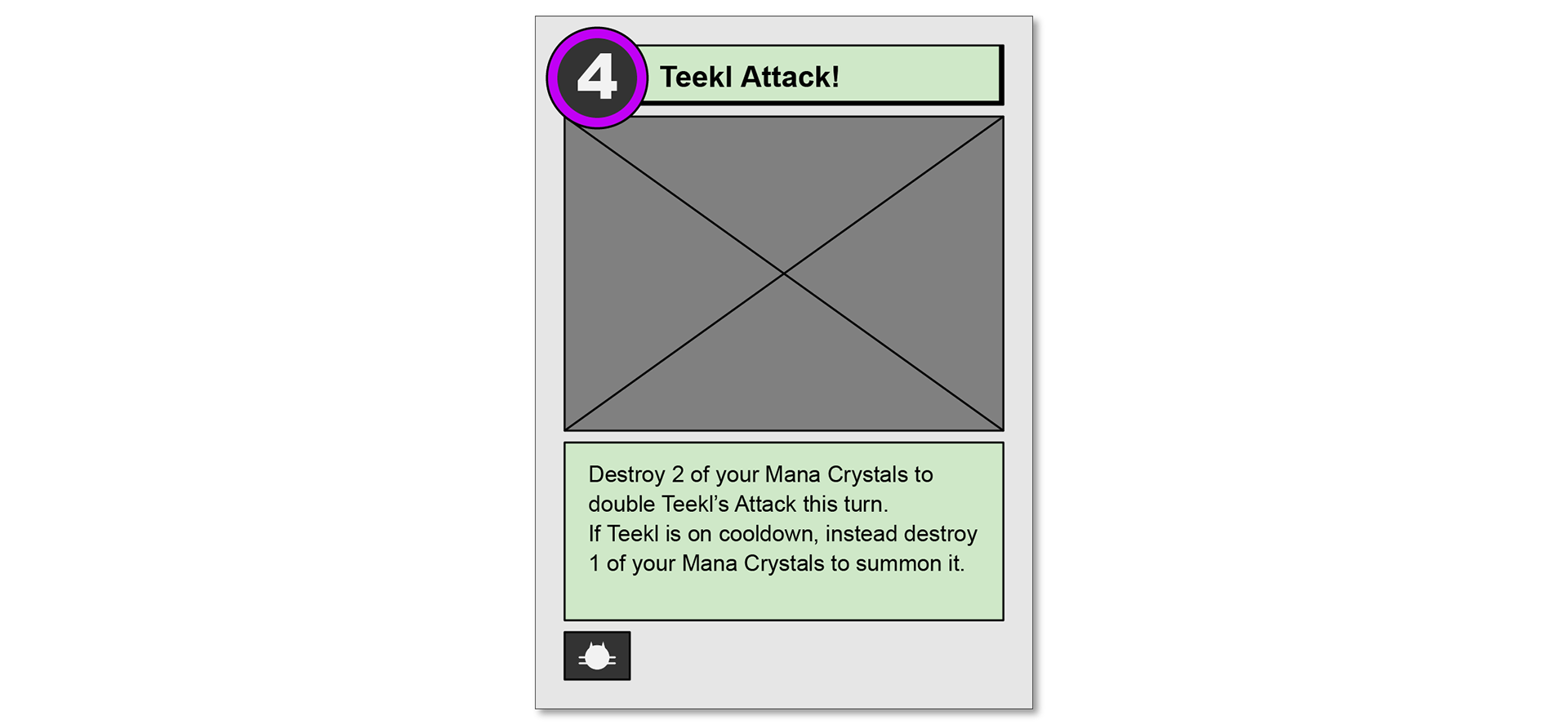
Teekl Attack! functions as a disruptive pressure tool within Klarion’s dual-state encounter, forcing players to continuously adapt their strategy rather than overcommitting to a single damage route. The card destabilizes player pacing, reinforces state volatility, and prevents static optimization of encounter patterns.
CONSTRAINTS & TRADEOFFS
Reactive play permissions vs resource commitment
Allowing players to act during an opponent’s turn introduces dynamic counterplay, but is constrained by limited Mana availability. This creates tension between committing resources to develop board state or conserving them for reactive responses, reinforcing strategic pacing and opportunity cost in turn planning.
Determinism vs swing outcomes
The set balances high-variance effects with controlled conditional scaling. Golem Wave introduces unpredictable outcomes where Overkill depends on excess damage from a random target, though this can be influenced through board setup. In contrast, tracking-based effects provide more stable value over time. This creates tension between immediate uncertainty and cumulative payoff, reinforcing timing, pacing, and strategic planning.
Immediate comprehension vs systemic depth
Zatanna’s Mage set distributes power across interacting deck-level systems, where value emerges through sequencing rather than single-card evaluation. This increases strategic depth while shifting understanding toward system familiarity over immediate comprehension.