Systems Design & Combat UX Case Study
Role: Game Systems Design / Interaction Design
Focus: Risk-driven combat systems, combat readability, player decision-making, and psychological pressure
Team: Solo
OVERVIEW
Dollhouse Delirium is a solo systems and combat UX case study exploring how risk-driven mechanics, information visibility, and feedback systems influence player behavior under pressure. The project investigates how combat structure, party roles, and psychological escalation can support readable decision-making within high-stress interactive environments.
Players navigate a life-size, horror-adjacent dollhouse, deciphering clues while fighting animated plush monsters and managing their party’s mental state. Combat systems reinforce psychological instability, forcing players to trade safety for control.
Design Pillars
• Risk-reward decision-making
• Psychological pressure as systemic feedback
• Role clarity through mechanical asymmetry
• Readability under escalating cognitive load
combat interaction framework
Combat flow was structured around readable state transitions, escalating psychological pressure, and multi-turn decision planning. Systems were intentionally designed to expose risk states clearly while preserving tension and uncertainty.
Turn Base Structure
1. State check - Status effects, Madness changes, passive triggers
2. Player decision - Attack, skill, item, guard, delay
3. Resolution -Damage, buffs, counters
4. Enemy response - Enemy action or queued reaction
5. End-of-turn escalation - Environmental or psychological pressure increase
Party Composition Logic
Urumi Wielder
Front-loaded pressure role emphasizing momentum, risk escalation, and player restraint. Designed to reward proactive decision-making while punishing overcommitment through self-inflicted instability.
Medicinal Mage (Asclepius)
Sustained-control role focused on delayed outcomes, status layering, and long-term combat shaping rather than immediate output.
Siggy (Psychiatrist)
Information-support role centered on combat readability, surfacing hidden combat information and behavioral patterns, and psychological stabilization to improve player decision confidence.
Status Effects
Status effects were designed to disrupt predictable optimization loops and force adaptive decision-making. Rather than functioning purely as debuffs, they create cognitive pressure by introducing uncertainty, resource tension, and shifting combat priorities across multiple turns.
Madness System
The Madness system functions as both a gameplay mechanic and a player-state feedback system, intentionally destabilizing decision-making under prolonged pressure.
• In combat - Provides short-term performance advantages while increasing the likelihood of unstable or self-destructive outcomes.
• In world - Higher Madness increases the frequency of aggressive encounters and hostile events.
Risk-Forward Damge Dealer
Role Definition - Urumi Wielder
High-risk momentum role designed around commitment, escalation, and player restraint.
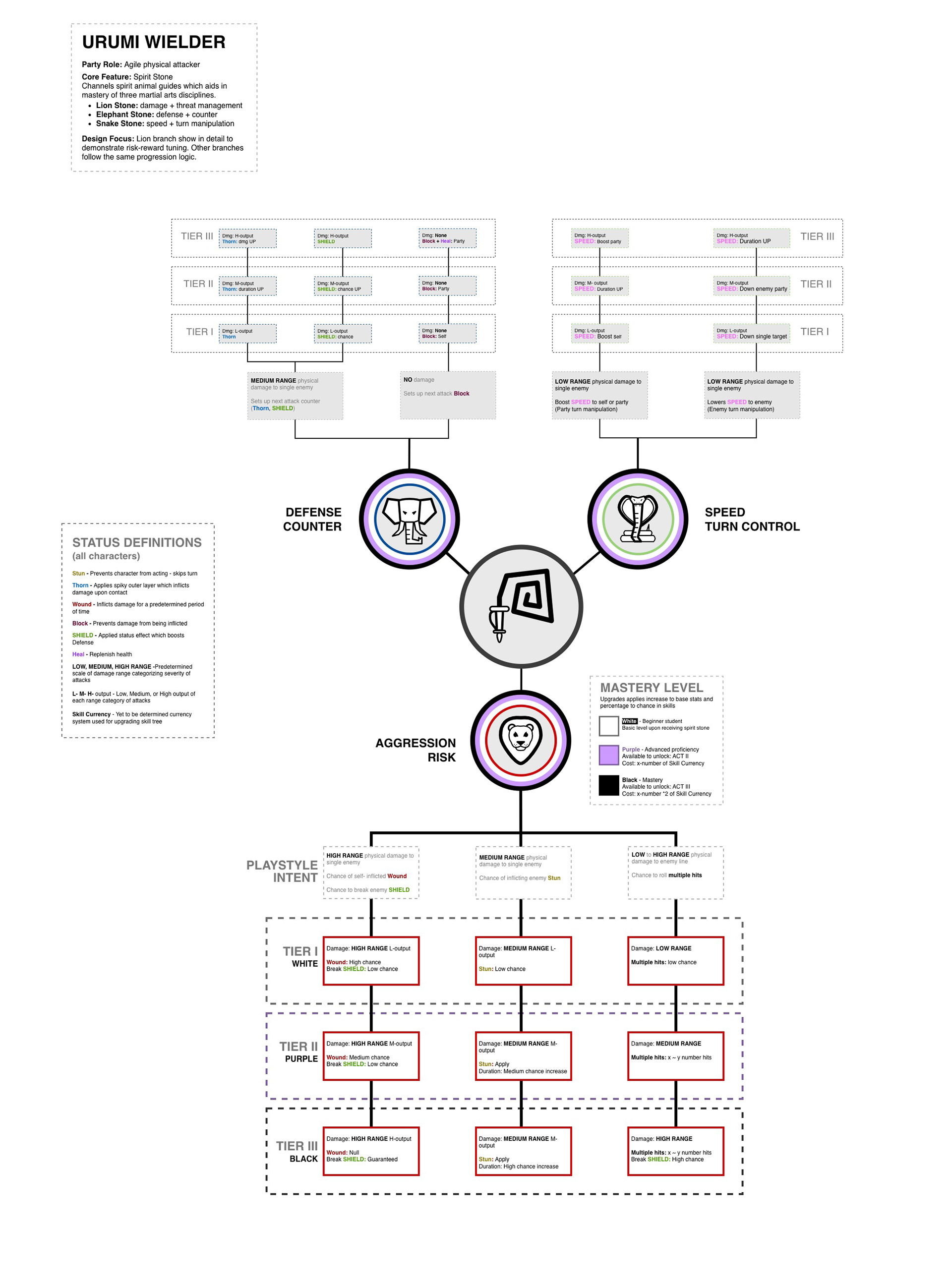
Core Mechanic
The progression structure was designed to support long-term decision planning while communicating escalating specialization paths and associated behavioral tradeoffs.
• Lion - Damage, threat management, turn setup
• Elephant - Defense, counter-based retaliation
• Snake - Speed, turn order manipulation
Design Intent
The Lion branch frames strength as mastery over raw power. Without preparation, uncontrolled aggression introduces systemic instability.
Takeaway
The Urumi Wielder balances power and strategy, teaching players when to take risks and when to restrain them. As the driving force of combat, the Urumi Wielder can also devastate the party if Madness is not carefully managed.
indirect pressure & sustain
Role Definition - Medicinal Mage
Persistent pressure through status effects and controlled recovery rather than direct damage. Combat influence emerges gradually through layered status interactions and delayed outcomes..
Core Mechanic
The magic system is divided into three medicinal disciplines, reflecting real-world medicinal practices.
Eastern Medicine - Natural Magic
Natural magic draws from environmental resources to restore balance and enhance allies.
Reality reference: herbal medicine, chi flow, balance
In-game function: team buffs, restoration, sustain
In-game function: team buffs, restoration, sustain
Western Medicine - Alchemic Magic
Alchemic magic applies medicinal theory and technology to disrupt enemy systems through controlled status effects.
Reality reference: chemistry, medicine, technology
In-game function: inflicted statuses (poison, paralysis, sleep)
In-game function: inflicted statuses (poison, paralysis, sleep)
Shamanism - Spirit Magic
Spirit magic invokes belief-driven forces to manipulate enemy behavior, often at personal cost.
Reality reference: ritual, belief, spirits
In-game function: charm, madness, mind-altering states
In-game function: charm, madness, mind-altering states
Magic System
Each medicinal practice counters another based on real-world belief conflicts rather than abstract elemental rules.
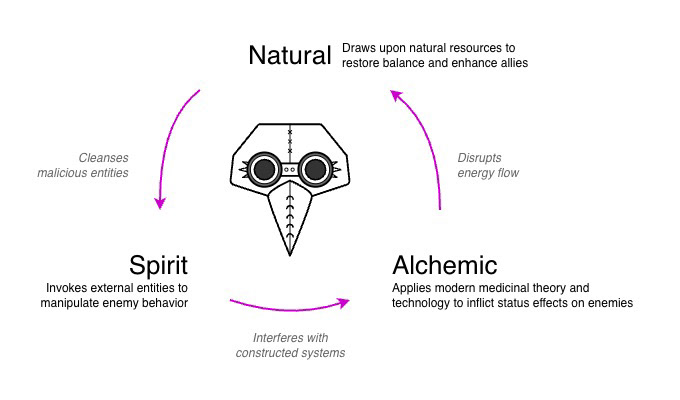
• Alchemy > Natural
Modern medicinal practices are believed to disrupt chi flow.
Modern medicinal practices are believed to disrupt chi flow.
• Spirit > Alchemy
Spiritual forces interfere with constructed systems and technology.
Spiritual forces interfere with constructed systems and technology.
• Natural > Spirit
Balanced energy cleanses spiritual interference.
Balanced energy cleanses spiritual interference.
Visual Identity
The magic user visually evokes all three medicinal traditions through a 17th-century plague doctor design - a historical figure positioned between science, ritual, and superstition.
Design Intent
Asclepius contrasts the Urumi Wielder’s volatility. Rather than relying on high-impact actions, Asclepius applies multi-turn behavioral pressure through status effects that influence multiple turns and reshape combat flow.
Takeaway
Asclepius rewards strategic commitment and timing, accelerating or denying outcomes through layered effects rather than singular actions.
information control & stabilization
Role Definition - Siggy
Information-control role focused on improving combat readability, reducing cognitive overload, and stabilizing player decision-making under escalating pressure.
Core Mechanic
Siggy identifies enemy traits, resistances, and behavioral patterns while mitigating the party’s psychological instability.
• Enemy stat and element identification
• Madness reduction and paranoia mitigation
• Limited intervention during critical mental states
Madness Meter
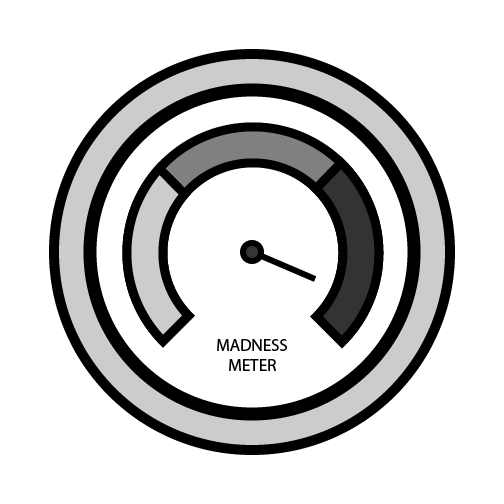
The Madness meter provides emotional feedback rather than numerical optimization, prioritizing readability under stress. It teaches players to recognize combat patterns and environmental threats to avoid instability-inducing exposure.
Specialized enemy attacks and surprise encounters accumulate Madness.
Cleansing
Siggy’s progression allows players to deliberately manage Madness. While cleansing reduces the risk of Paranoia, maintaining higher Madness enables temporary power spikes at significant cost.
Design Intent
Siggy is intentionally mechanically understated. Their “value emerges through improved system readability and decision support rather than direct output.
Takeaway
Siggy reframes combat as a mental exercise. By stabilizing the party and revealing hidden information, the character enables safer decision-making without directly resolving encounters.
Behavioral PRessure Encounter
Role Definition - Boss Plush
The boss monster destabilizes the party by exploiting Madness, punishing passive play, and resisting burst damage. Rather than acting as a damage sponge, it functions as a systems check on risk management, information use, and pacing.
Core Mechanic
The plush body is animated by Spirit magic, allowing it to continuously absorb damage without immediate consequence. Visible stitching, patchwork repairs, and self-mutilation communicate its unnatural persistence.
• Can sustain repeated damage without standard stagger
• Uses detached body parts as weapons
• Generates minions using its own insides as temporary vessels
• Needle weapon used to add to Madness meter
Combat Flow
Turn-Based Structure (Boss Encounter)
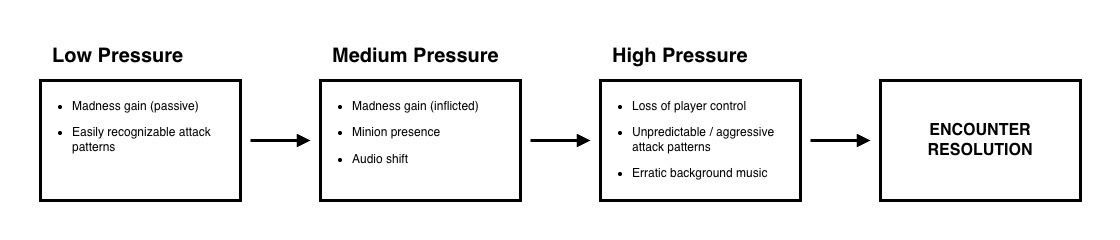
1. State Check – Madness escalation, minion count, boss activity
2. Player Decision – Risk-taking vs stabilization
3. Resolution – Damage, status effects, reactive triggers
4. Boss Response – Attacks, counters, or minion generation
5. Escalation – Increased psychological pressure and audio distortion
Escalation Diagram
Boss Encounter
behavioral constraint design
Encounter systems were intentionally structured to discourage dominant strategies and encourage adaptive player behavior across multiple turns.
Anti-Turtling Logic
Prolonged defensive play accelerates Madness buildup and increases minion hostility, forcing players to engage rather than stall.
Anti-Burst Logic
Large damage spikes trigger reactive behaviors, preventing the boss from being defeated through single-turn burst strategies.
Party Role Alignment
The boss is intentionally structured so no single role can dominate the encounter.
• Urumi Wielder - Applies pressure and manages momentum but risks self-harm if overcommitting
• Asclepius - Shapes combat flow through persistent status effects and denial of minion advantages
• Siggy - Identifies boss behaviors and mitigates Madness escalation to preserve player control
Audio & Feedback Design
Grotesque body-horror sound signals minion creation, serving as both atmospheric reinforcement and gameplay feedback. Audio distortion intensifies as Madness rises, signaling escalating loss of control. Drumming background music implies Spirit magic through Shamanism symbolism.
Audio and visual feedback systems are used to communicate escalating instability, reinforce state transitions, and maintain readability during high-pressure combat states.
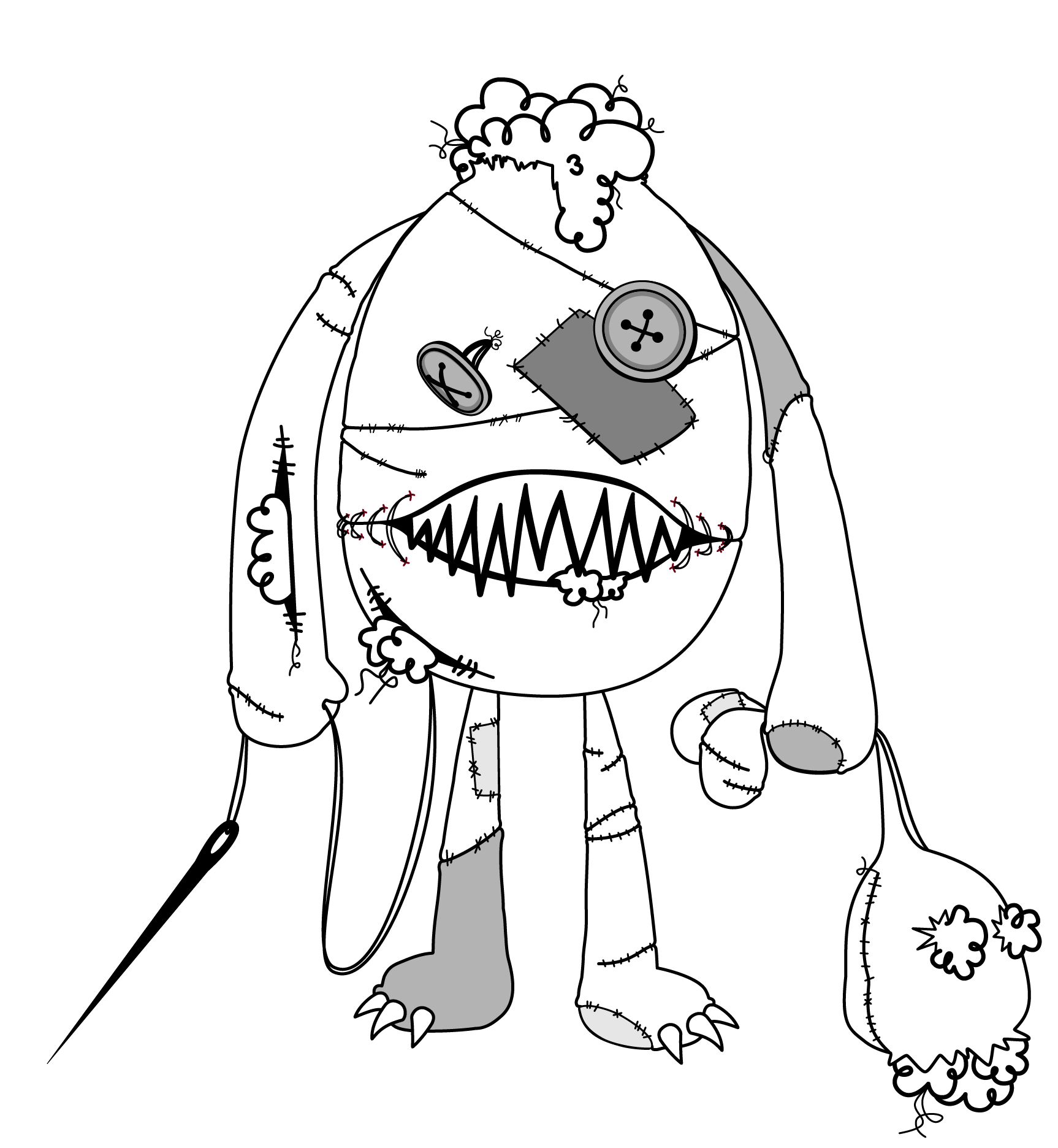
Boss enemy concept — form and silhouette study
Design Intent
The boss tests the player’s understanding of Dollhouse Delirium’s core systems. Victory requires balancing aggression, information, and psychological stability rather than relying on raw damage or defensive stalling.
Takeaway
This encounter reinforces Dollhouse Delirium’s central thesis: power without control is unstable. The boss acts as a culmination of the party’s mechanics, ensuring that combat mastery is defined by system literacy rather than output.
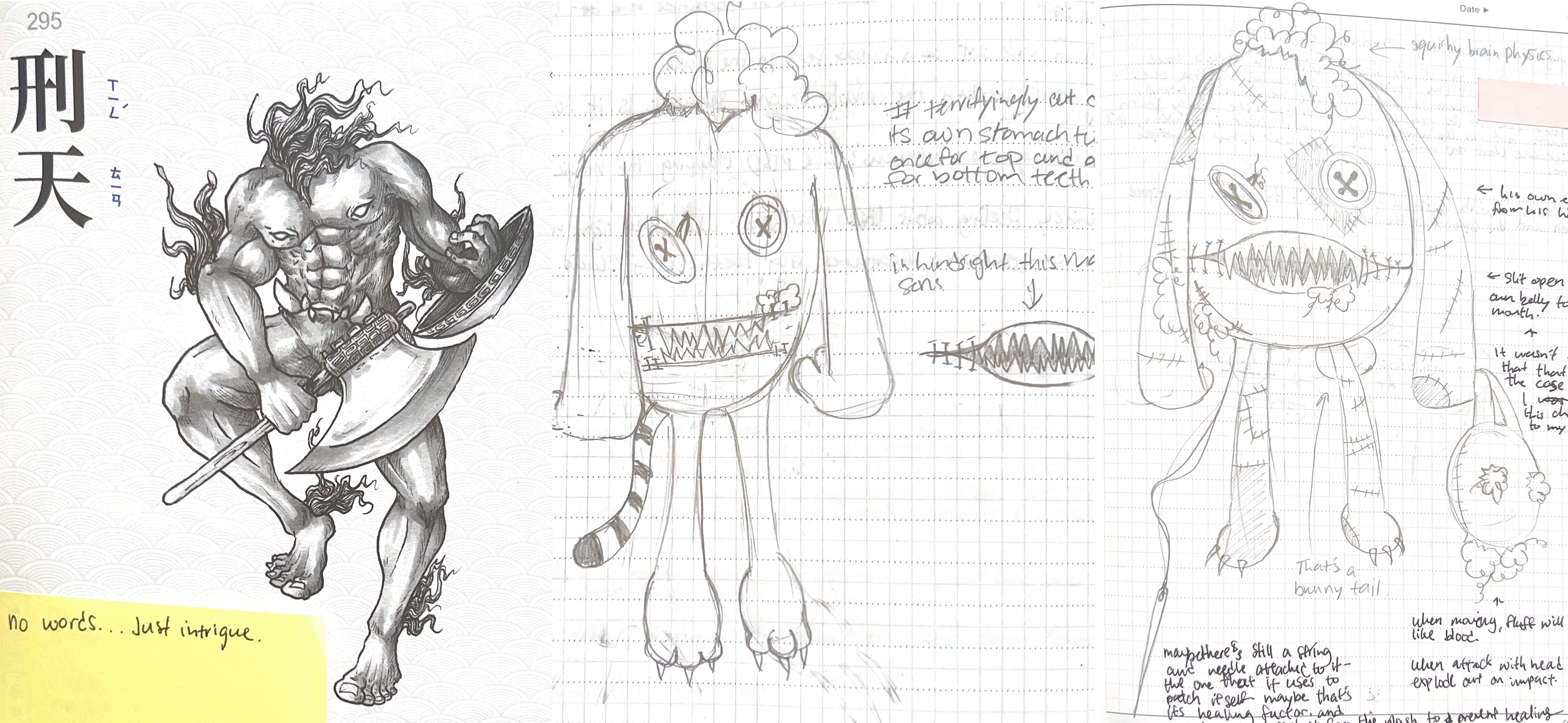
Plush boss concept evolution, informed by ancient Asian mythology
Combat information architecture
UI layouts prioritized rapid state readability, threat visibility, and reduced cognitive load during multi-actor combat encounters.
Combat UI
Left: Madness meter, turn order bar
Center (top): Enemies - boss taking up majority of the screen demanding dominance, its health bar above and minions on its flank.
Center (bottom): Party - members and status
Right: Combat menu
Target Selection
Upon choosing an action, select the target to apply action to. Grayed out icons one turn order bar cannot be targets of an action.
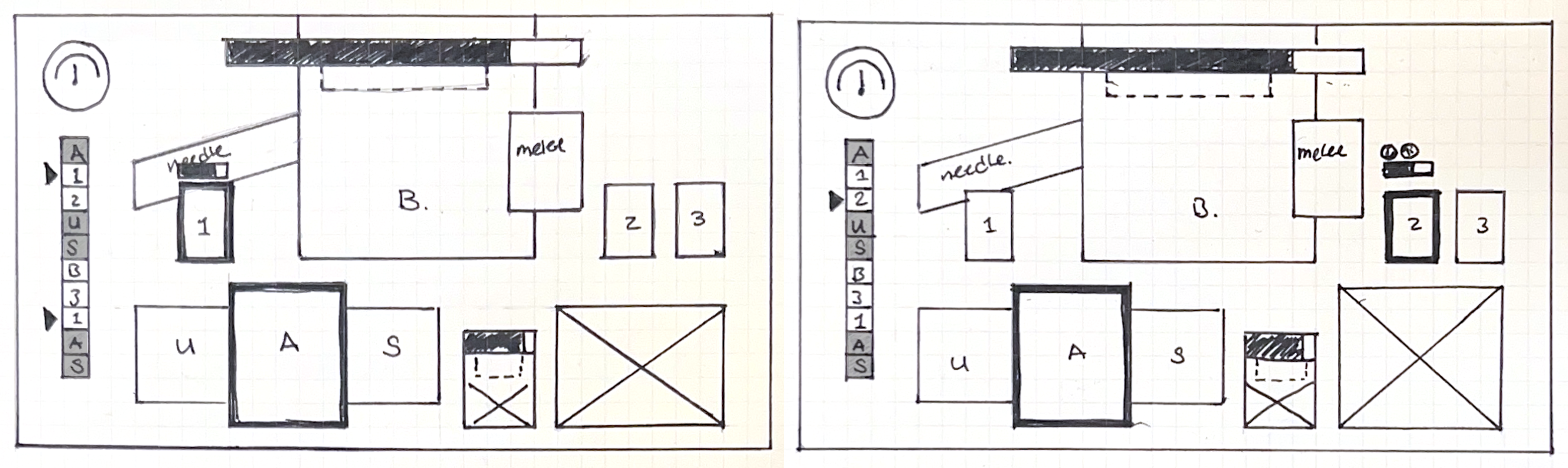
Visual feedback of targets selected.
Melee Attack + Stat Change
Visual signal provided to allow players to plan counters against heavy attacks. Party and enemy health bars reflect applied buffs and debuffs.
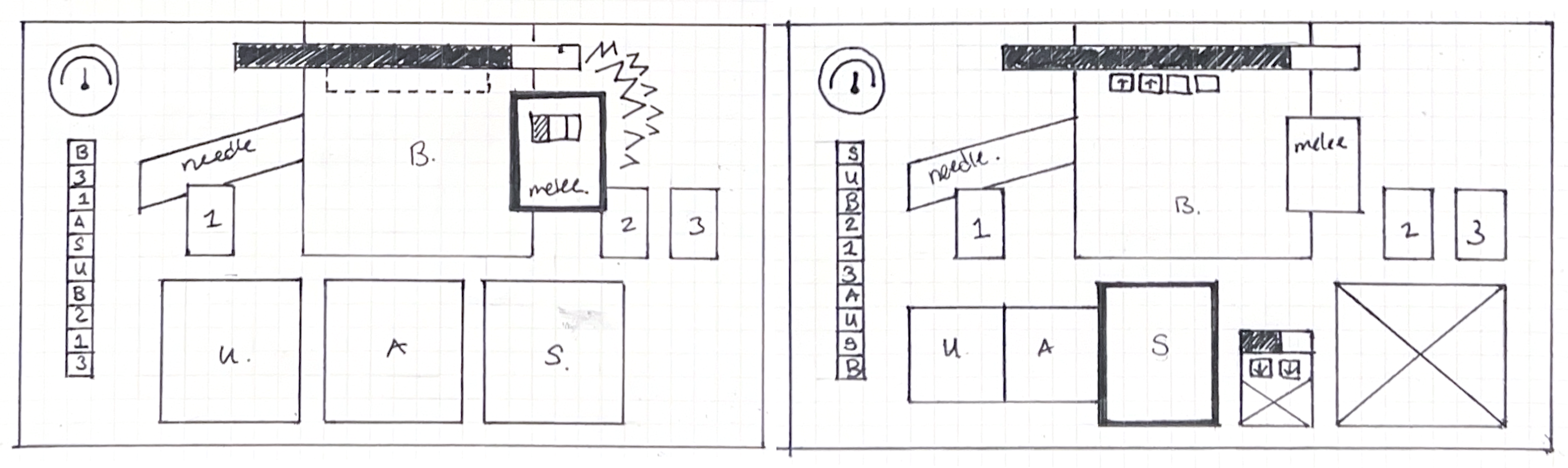
Melee attacks deal large damage to party but takes time to charge.
Madness Meter
The Madness UI intentionally prioritizes emotional readability over precise optimization, using motion distortion, instability cues, and interface disruption to communicate loss of control under pressure.
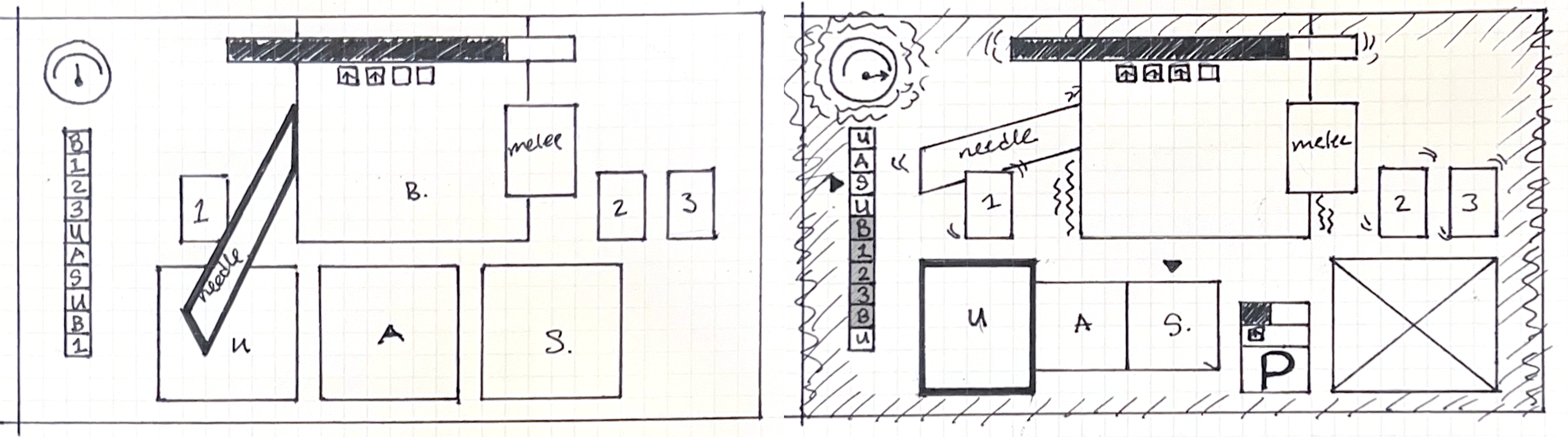
Visual feed depicting the chaotic nature of Paranoia state.
CONSTRAINTS & TRADEOFFS
• Only the Lion branch is fully mapped to demonstrate progression depth while preventing progression complexity from overwhelming player comprehension.
• Presentation scope was intentionally constrained to prioritize system readability and interaction clarity.
• Boss encounters resist burst damage to emphasize strategic planning over single-turn optimization.
WHAT I WOULD VALIDATE NEXT
• Clarity thresholds for Madness escalation feedback
• Player comprehension of combat-state transitions
• Information density versus decision readability during high-pressure encounters
• Behavioral responses to anti-turtling and anti-burst systems
• Long-term learnability of role asymmetry and risk mechanics
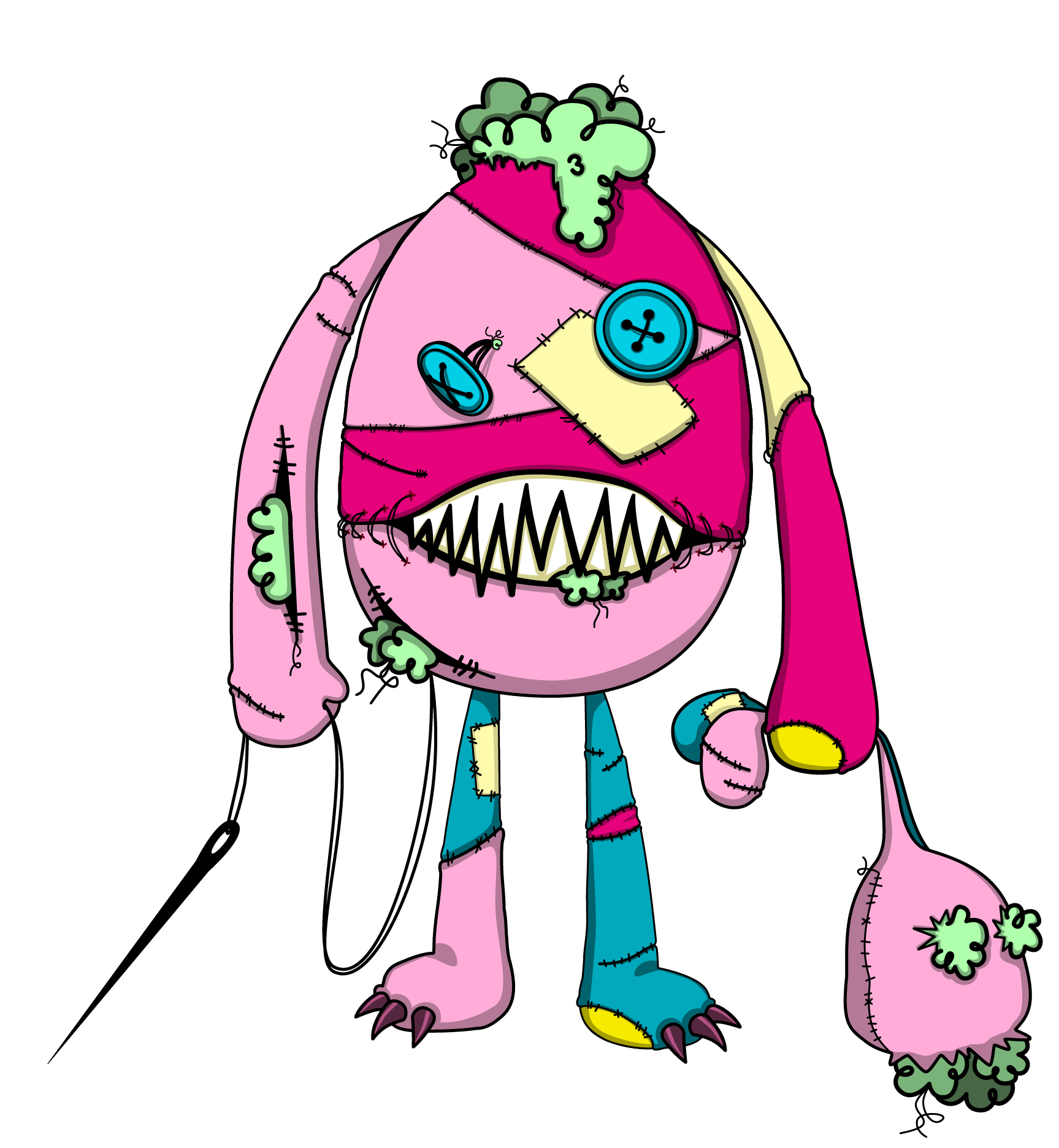
Color pass exploring material contrast and tone