Modular Character Systems Design
Role: Game Systems Designer / Interaction Design
Focus: Character systems, combat readability, progression architecture, and player decision-making
Team: Solo project
Focus: Character systems, combat readability, progression architecture, and player decision-making
Team: Solo project
overview
A prototype fighting game featuring Mimikyu variants inspired by iconic Pokémon, designed to explore how character identity, progression systems, and engagement structures influence player learning, decision-making, and long-term replayability. Each variant demonstrates a distinct playstyle through both mechanics and presentation.
DESIGN GOALS
Gameplay Identity
Each character variant should offer a distinct playstyle and gameplay role.
Visual Communication
Character and weapon designs should communicate gameplay intent through form, silhouette, and motion.
Meaningful Tradeoffs
Strengths are balanced by weaknesses to encourage different approaches to combat.
Player Expression
Characters, weapons, and progression paths allow players to develop unique playstyles.
CORE SYSTEM STRUCTURE
CHARACTER IDENTITY FRAMEWORK
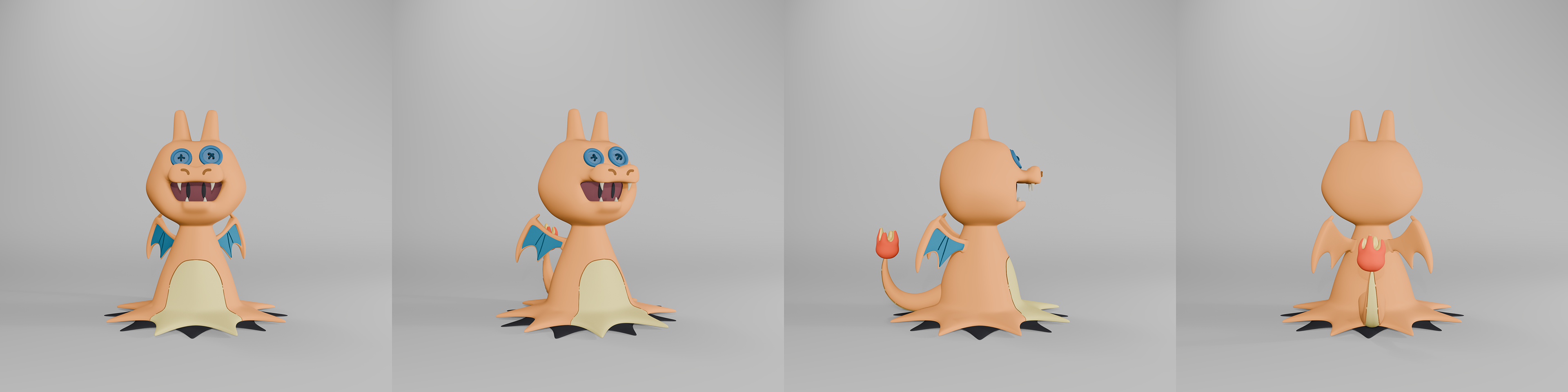
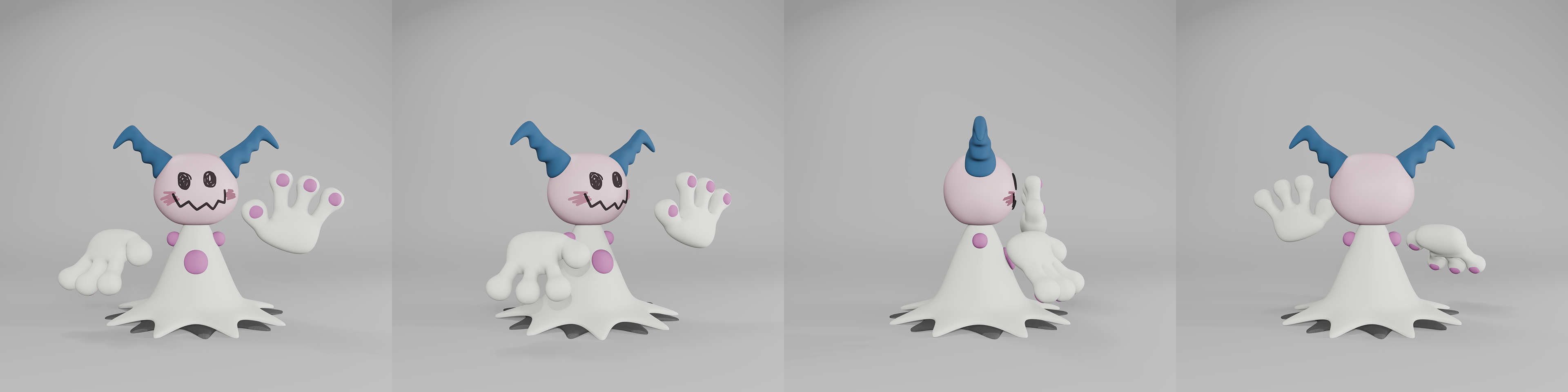
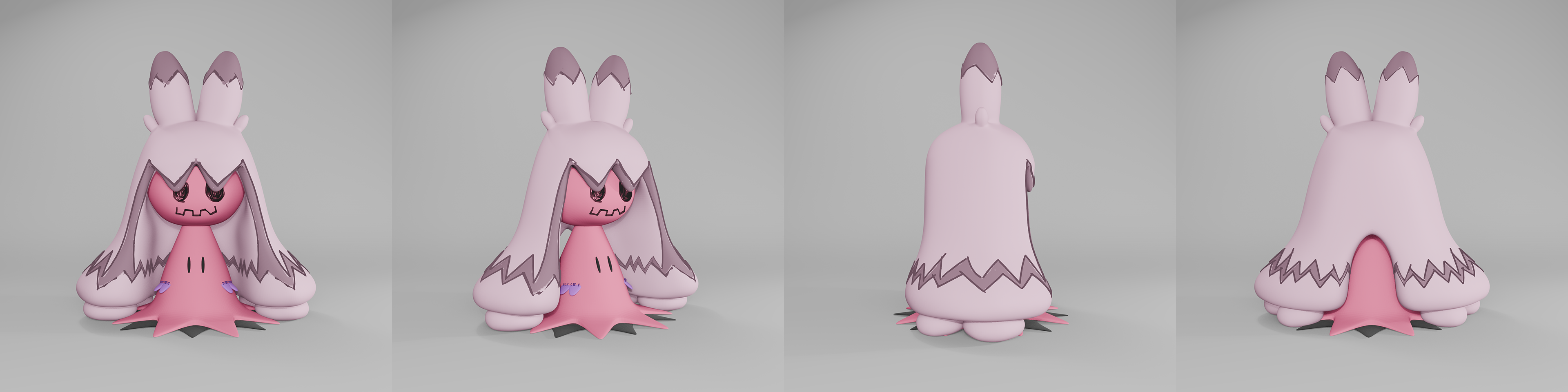
Combat Mimic explores how gameplay identity can be communicated through distinct character archetypes. Each variant is built around a specific combat role, creating meaningful tradeoffs that influence player choice, strategy, and progression throughout a run.
CHARACTER ARCHETYPE MATRIX
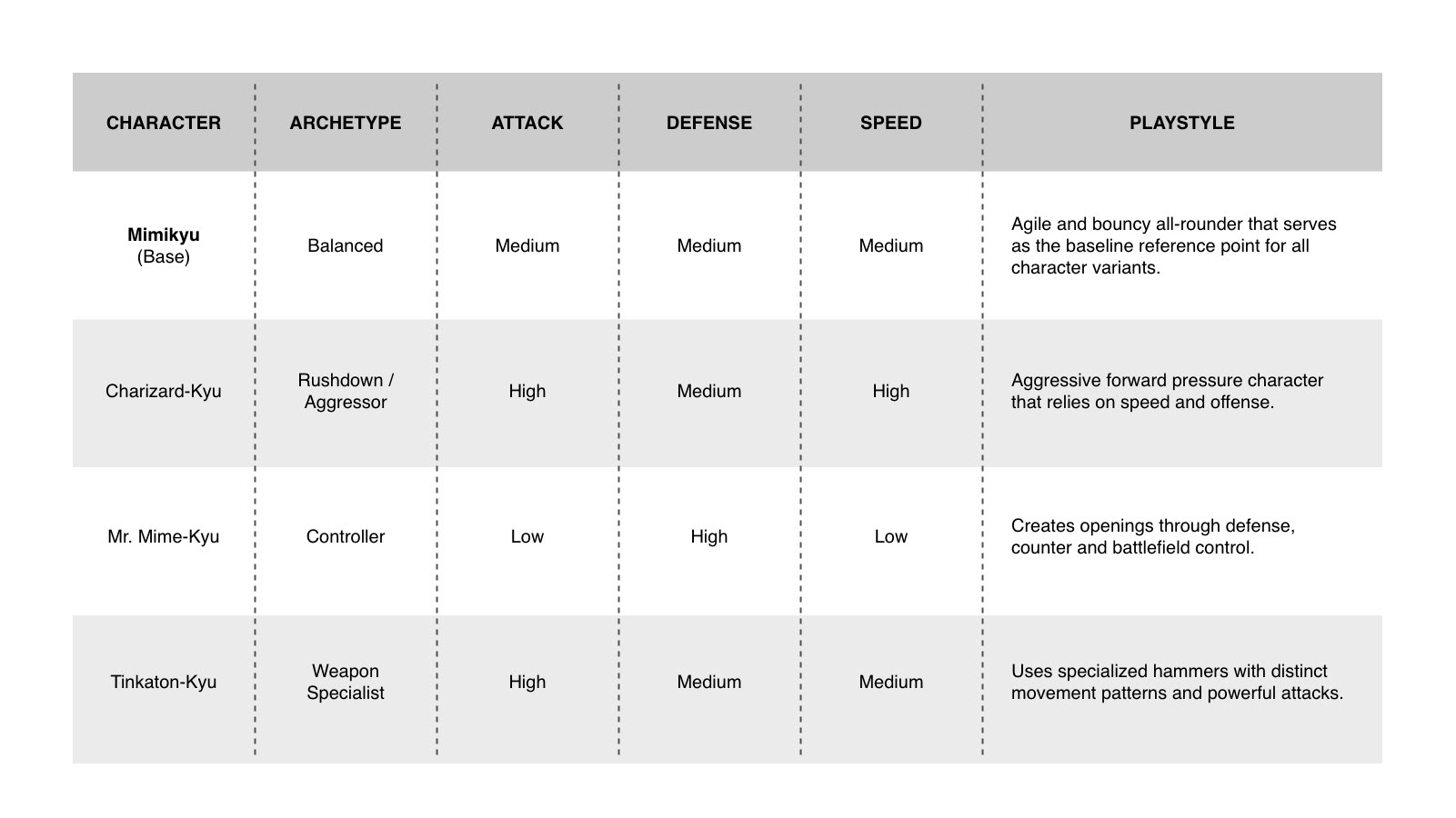
Charizard-Kyu
Mr. Mime-Kyu
Tinkaton-Kyu
Hammer Identity Framework
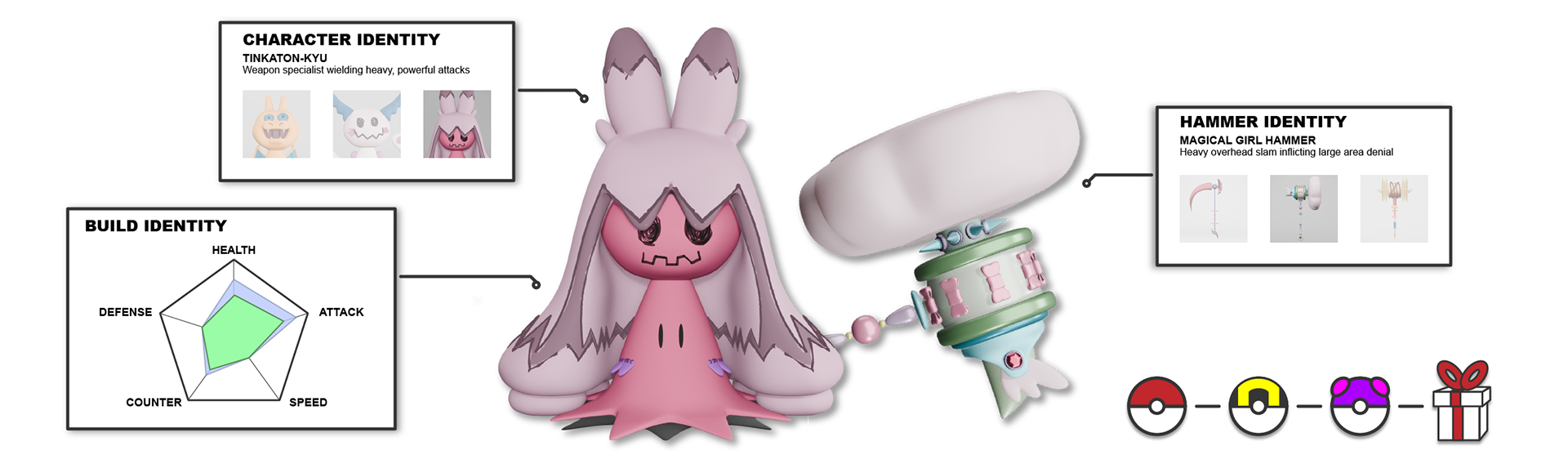
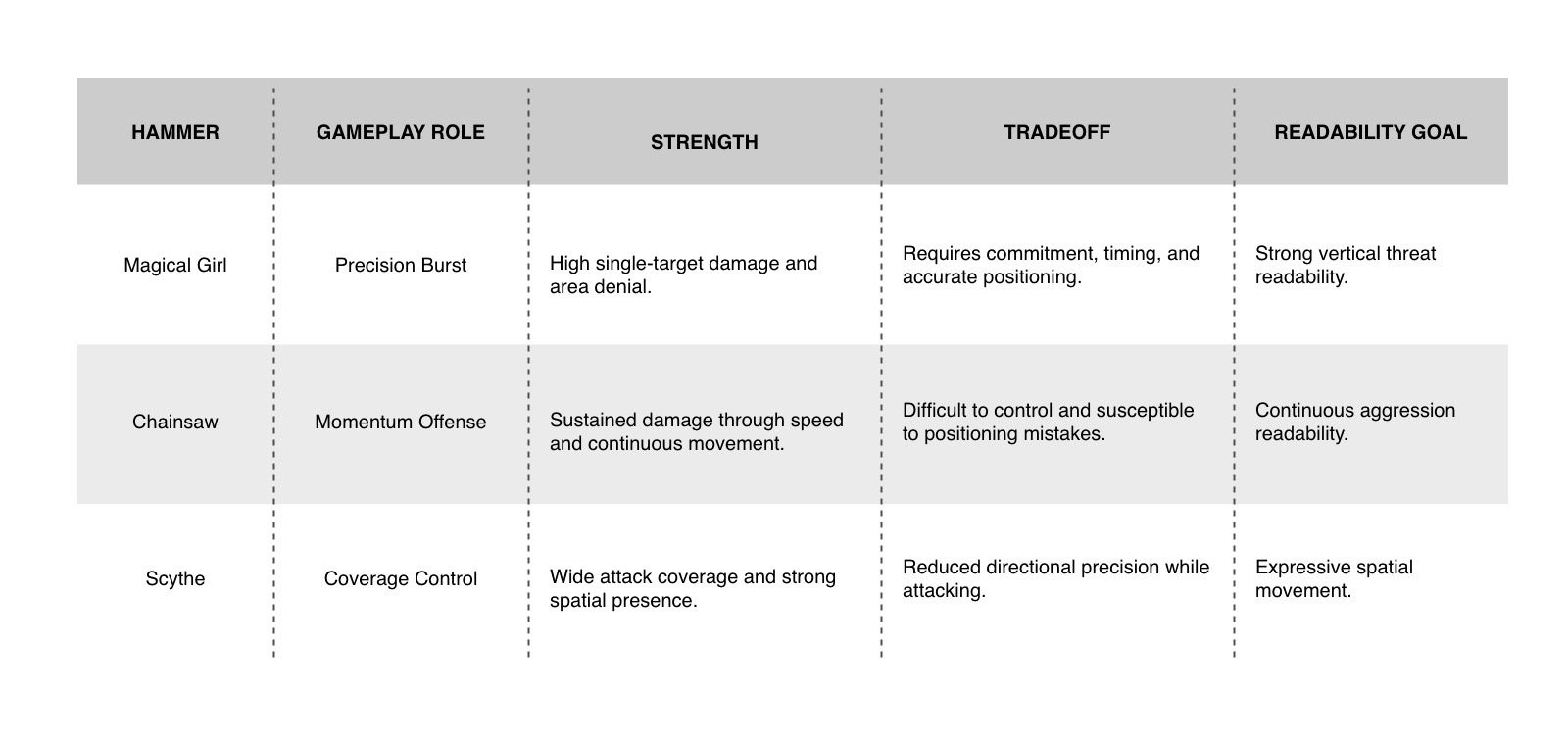
Hammer variants explore how movement and visual presentation can communicate gameplay intent. Each weapon is designed around a distinct combat behavior, using silhouette, animation, and visual effects to reinforce player expectations and improve readability during combat.
Hammer Identity Matrix
VISUAL LANGUAGE & PLAYER EXPECTATIONS
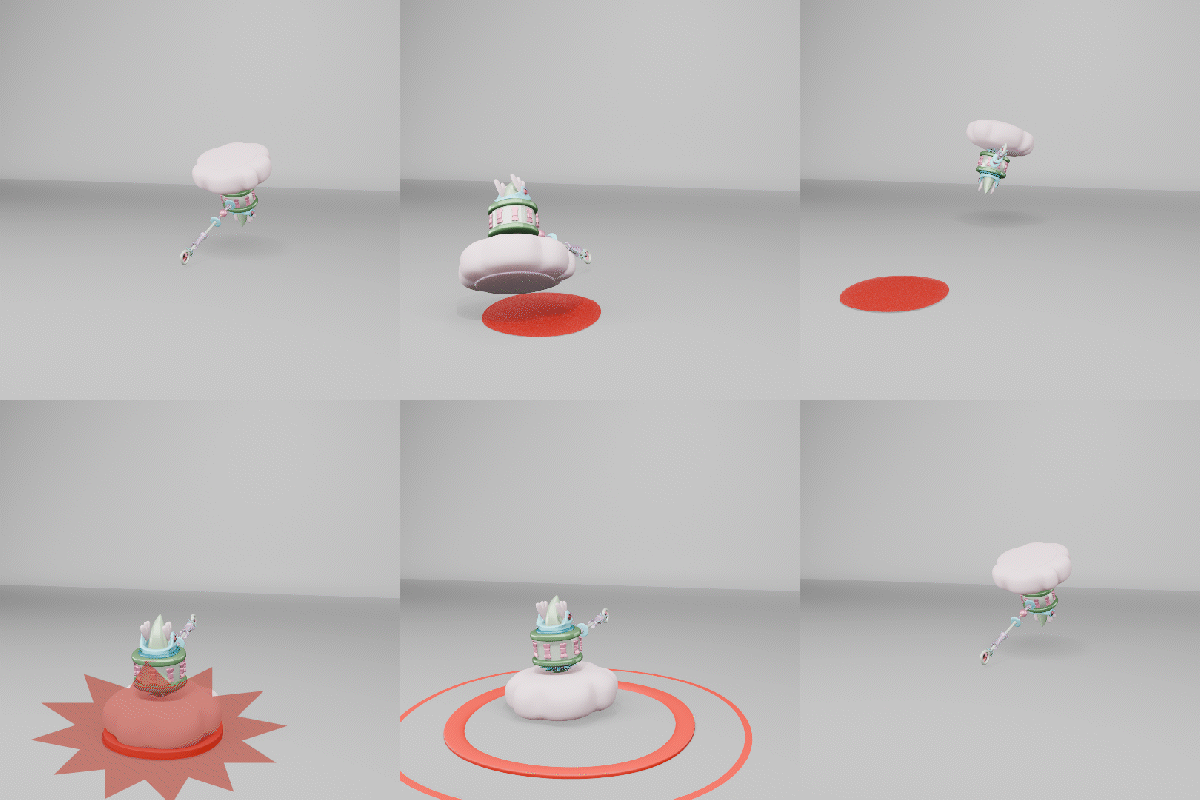
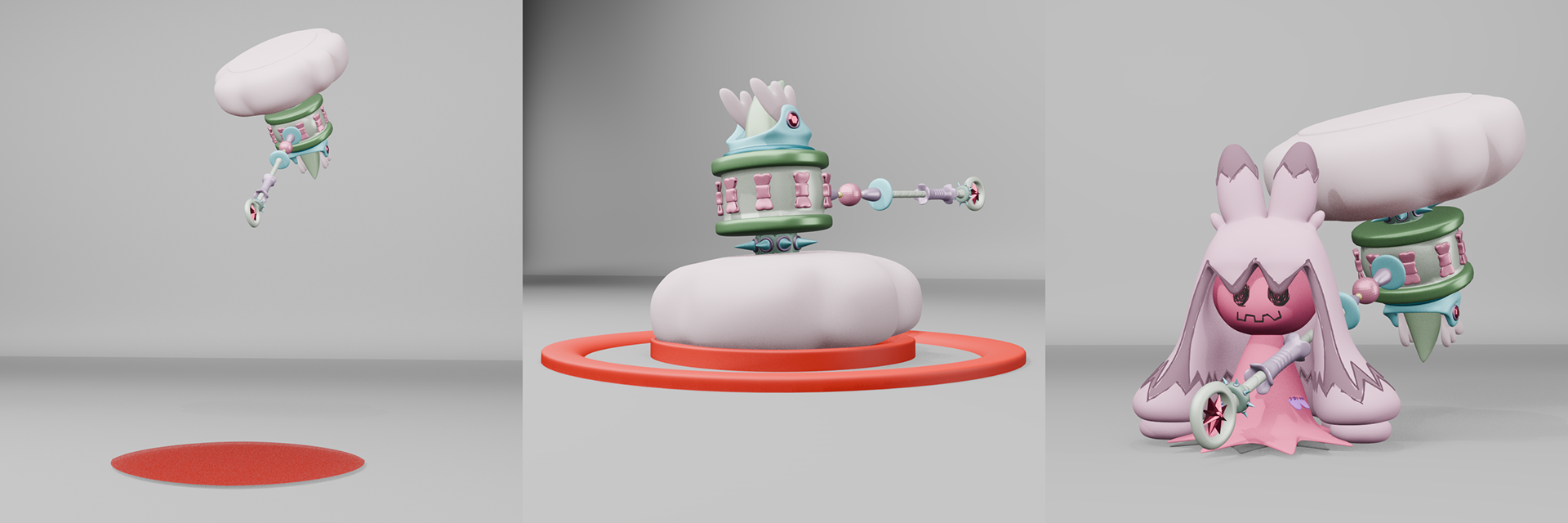
MAGICAL GIRL HAMMER

Player Expectation
Large overhead slam suggests forgiving targeting and broad impact coverage.
System Reality
Despite the large animation, successful impact requires precise target placement and timing.
UX Tension
Visual scale communicates accessibility, but the mechanic demands accuracy closer to a targeted skill shot.
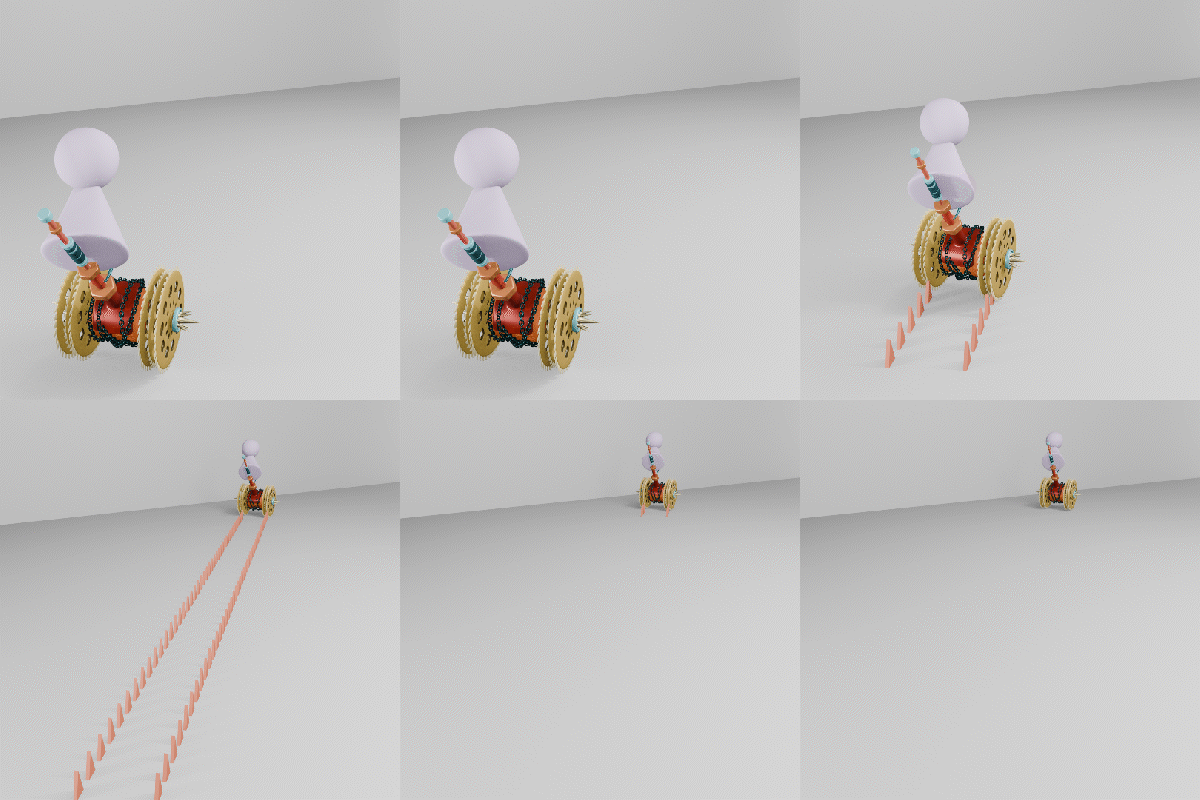
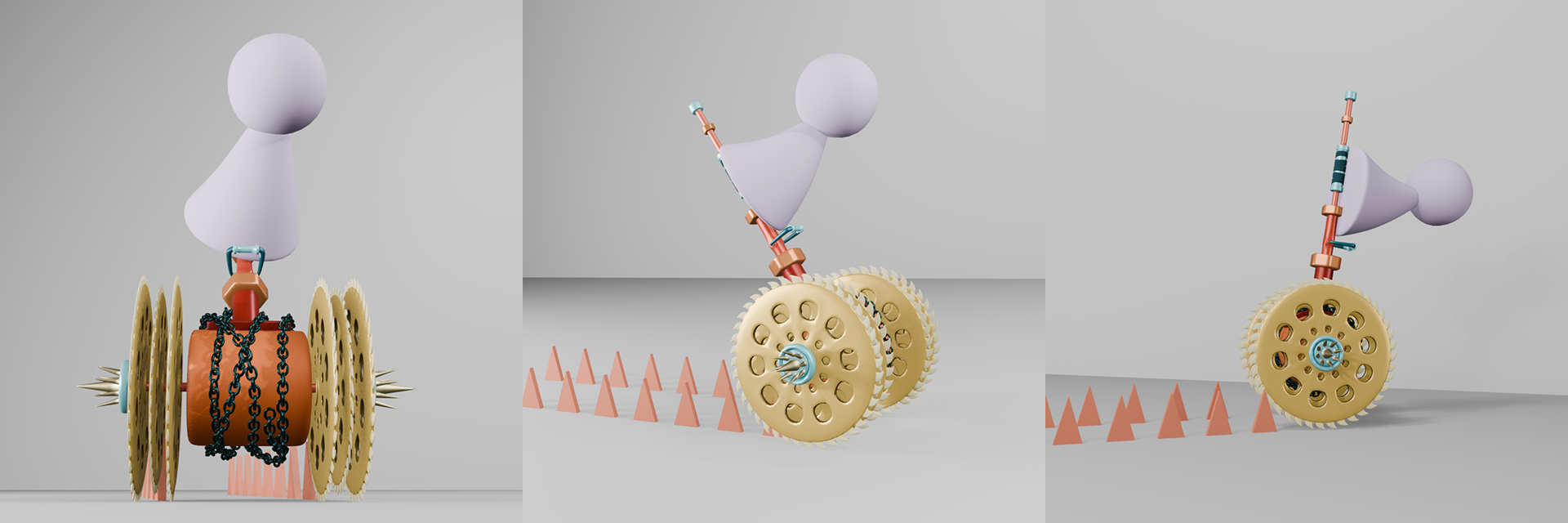
CHAINSAW HAMMER
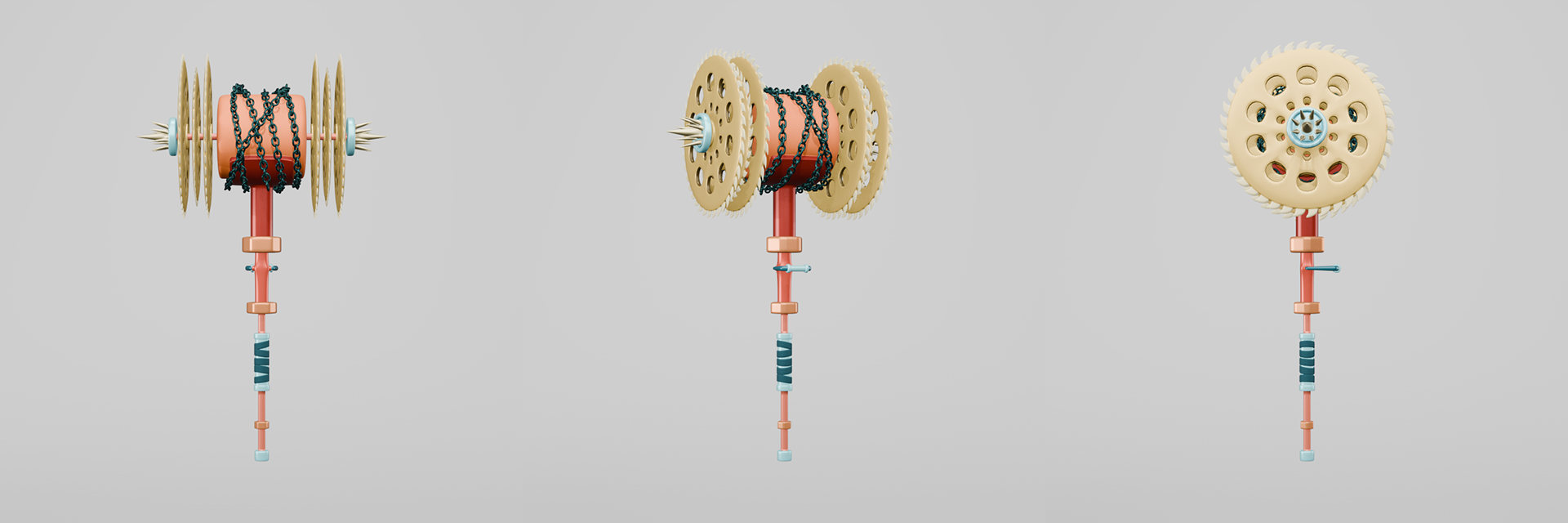
Player Expectation
Forward momentum attack appears self-stabilizing and safe for sustained movement.
System Reality
Players must manually disengage or reposition, otherwise the attack can carry them off ledges due to rotational movement.
UX Tension
The weapon visually communicates stability and continuous pressure, while mechanically introducing positional risk and movement commitment.
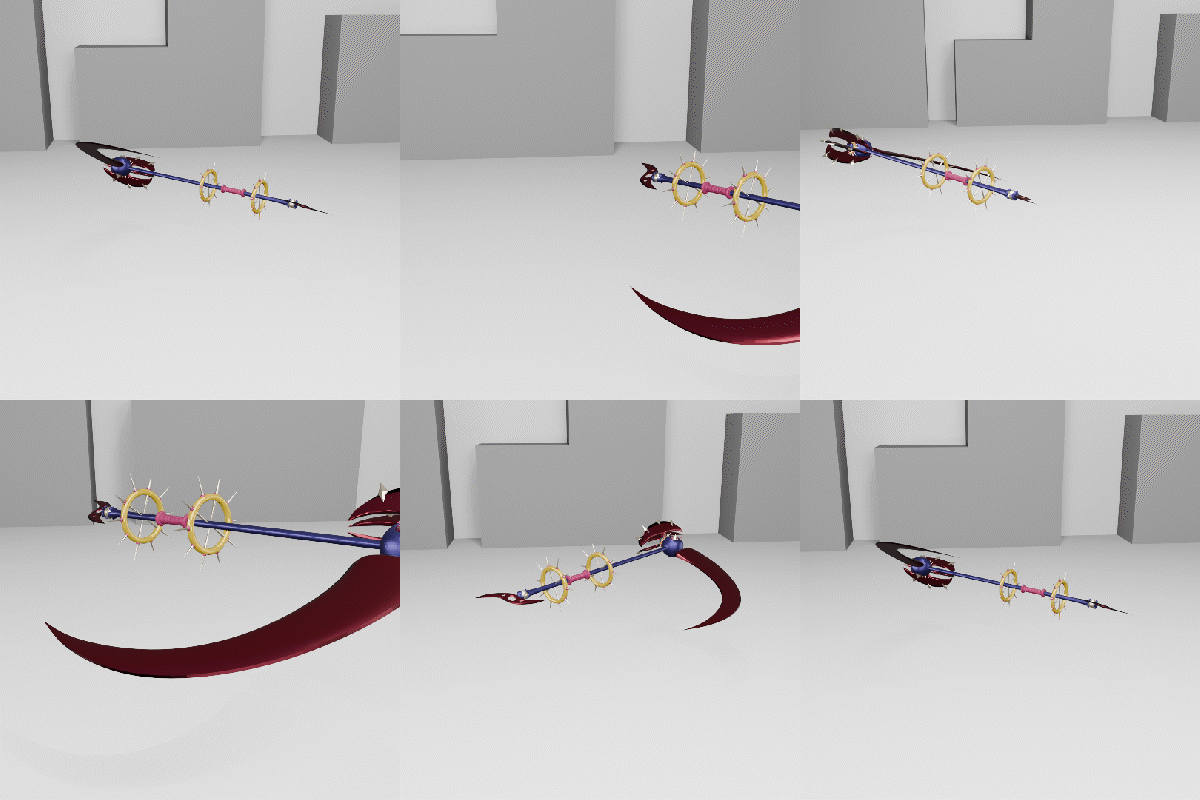
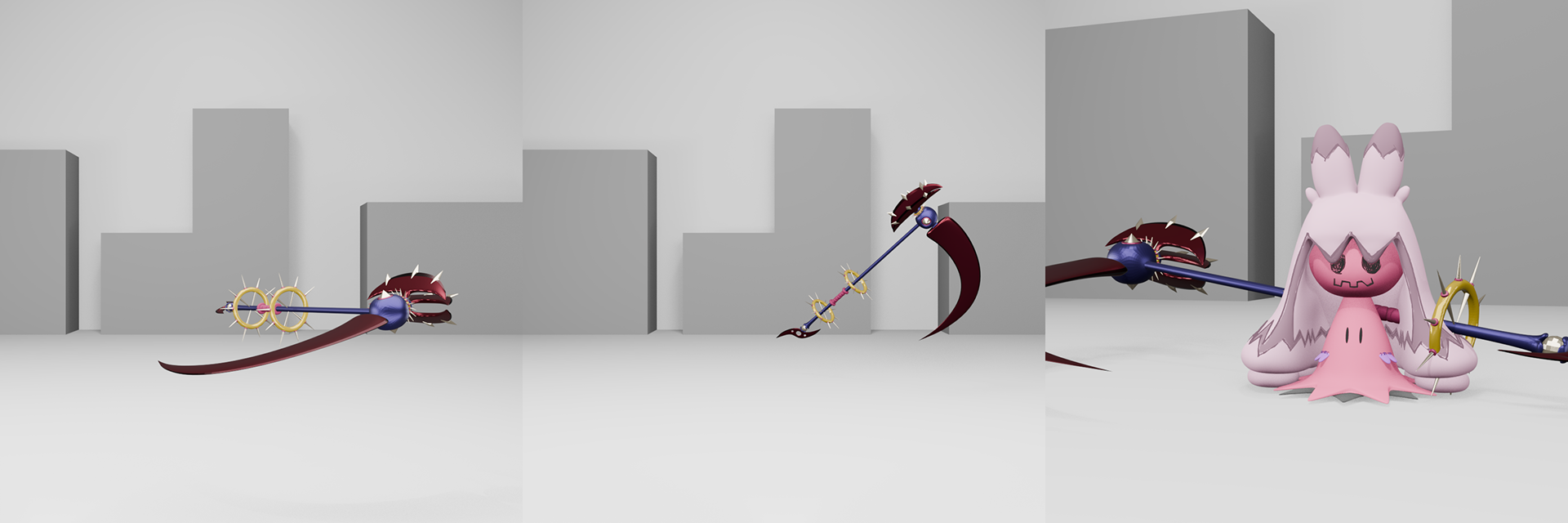
SCYTHE HAMMER
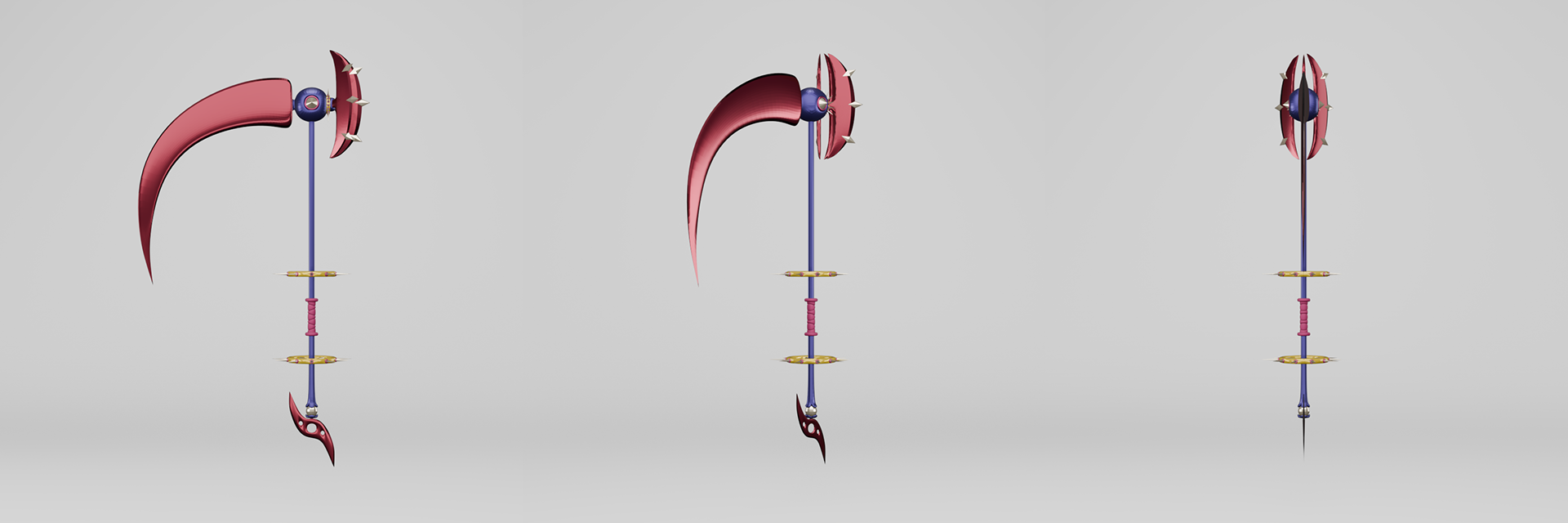
Player Expectation
Wide spinning motion implies high directional freedom and responsive movement control.
System Reality
Directional influence becomes partially constrained during active spin frames, reducing precise control once momentum begins.
UX Tension
The form suggests responsive movement, but the mechanic prioritizes momentum and area coverage over precise player control.
SIGNATURE MOVEMENT
MAGICAL GIRL HAMMER
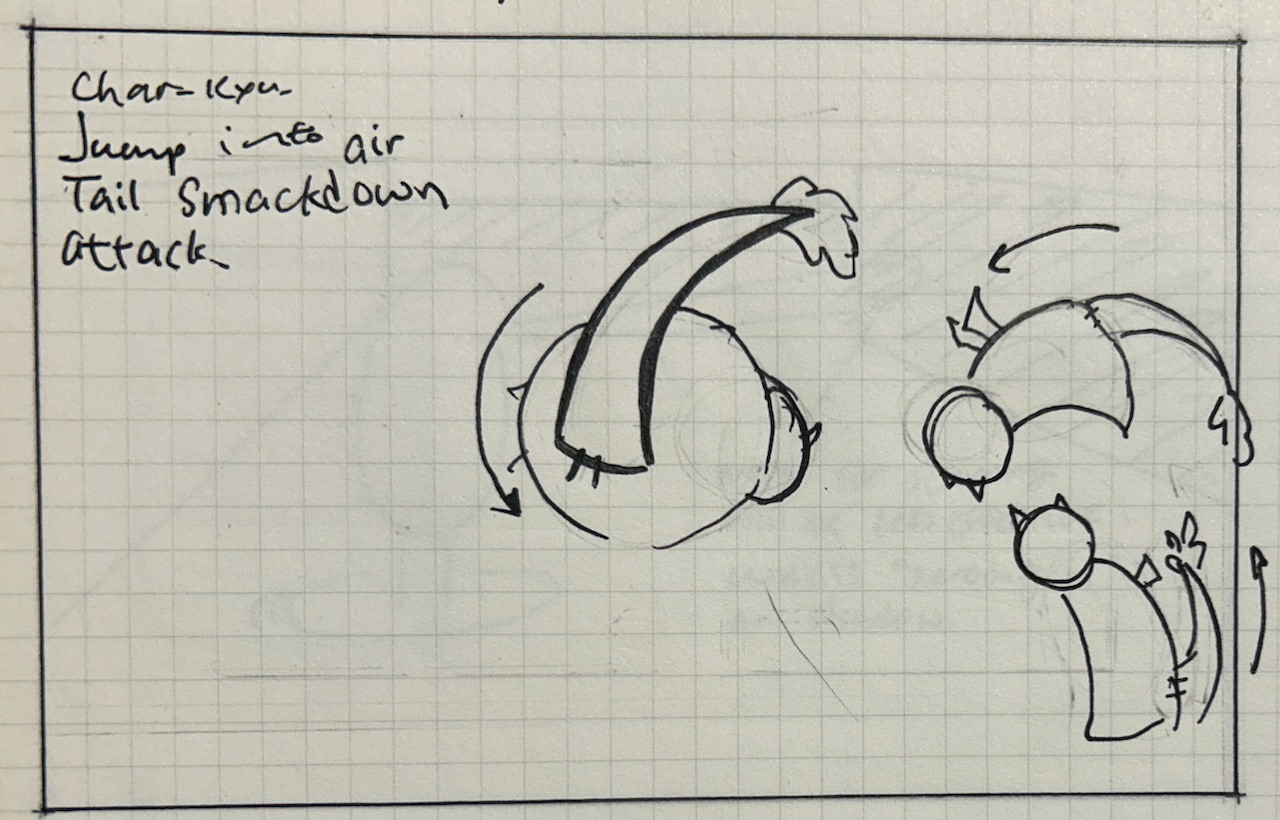
A targeted overhead smash that demands precise aim and timing, trading commitment for high damage and advantage on hit.
CHAINSAW HAMMER
A high-speed linear attack that converts momentum into sustained offensive pressure.
SCYTHE HAMMER
A wide 360° attack that trades player control for speed and area coverage.
DESIGN CONSIDERATION
• Additional targeting feedback may be needed to reduce mismatch between perceived and actual hit reliability.
• Current model material treatment remains intentionally lightweight while the project focuses on gameplay identity, modular weapon systems, and rapid iteration workflows. Future iterations may revisit shader complexity and rendering polish.
• The scythe-hammer successfully explored hybrid silhouette concepts, but readability became inconsistent from certain gameplay angles. Future iterations would focus on clarifying silhouette hierarchy while preserving the asymmetrical identity.
engagement system design
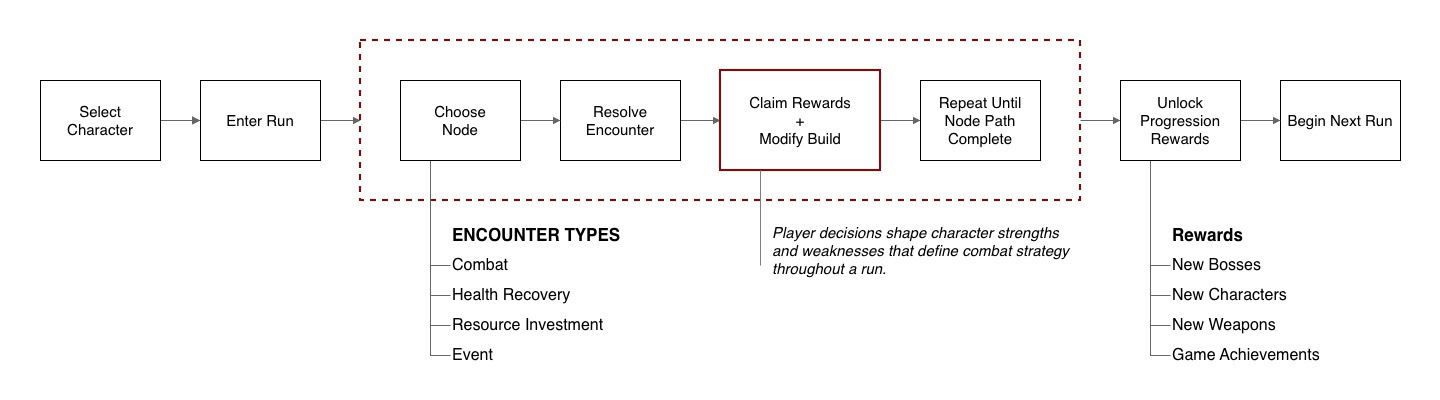
Staged encounter progression reduces onboarding complexity, while layered multi-timescale systems sustain long-term engagement through continuous variation across runs and encounters.
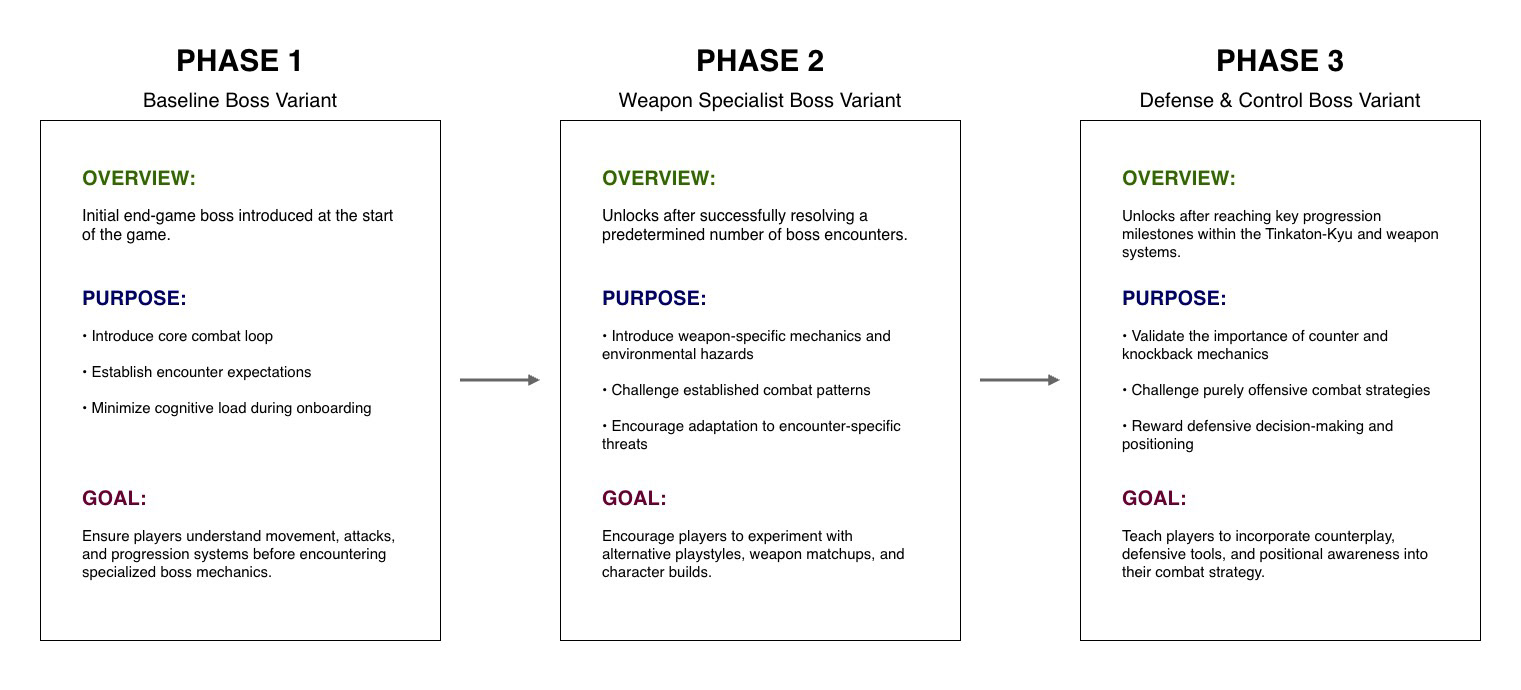
Learning Progression
Rather than exposing all mechanics immediately, Combat Mimic introduces new encounter archetypes over time. Each new encounter type serves as an onboarding milestone that progressively teaches core combat concepts while increasing replay variety.
Encounter-Based Onboarding Model
Learning system (controlled exposure)
Engagement Retention
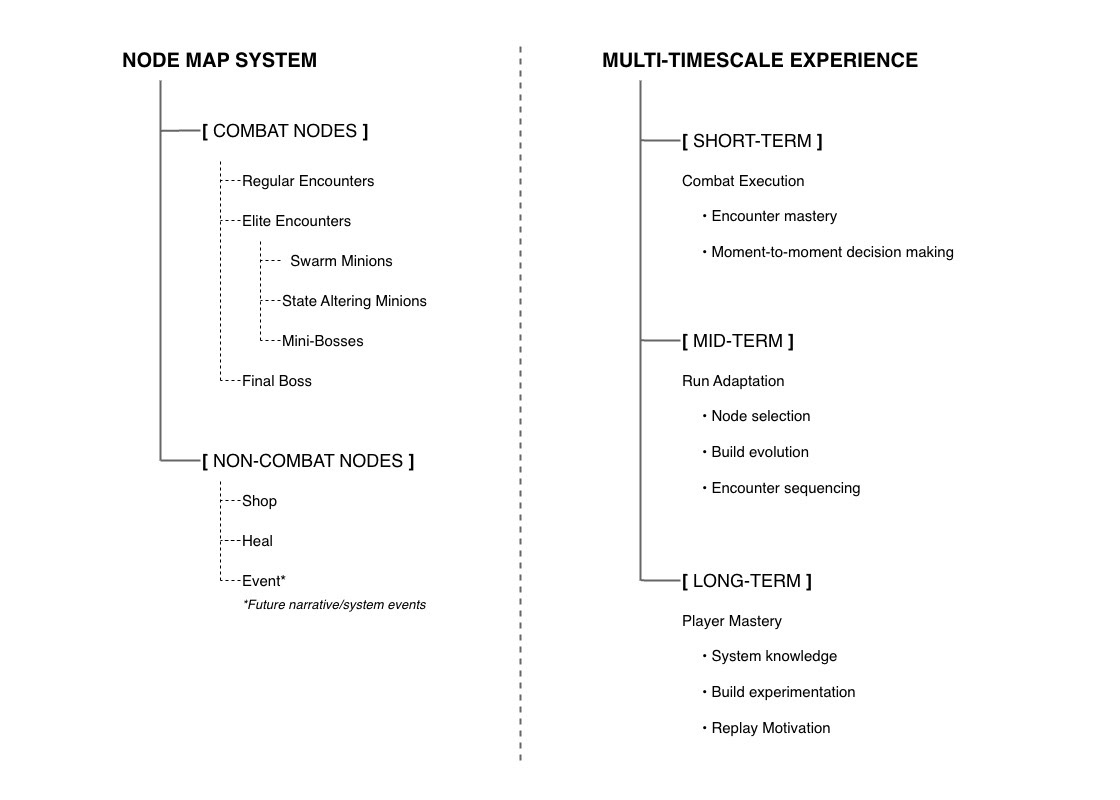
Engagement retention is structured through a branching node-based run system that introduces controlled variability across encounter paths, combat archetypes, and post-encounter build rewards. This ensures each run produces a distinct gameplay trajectory through divergence in both combat scenarios and player build evolution.
Node-Based Engagement Model
Retention system (controlled variability)
PLAYER-FACING INTERFACE SYSTEMS
INFORMATION ARCHITECTURE

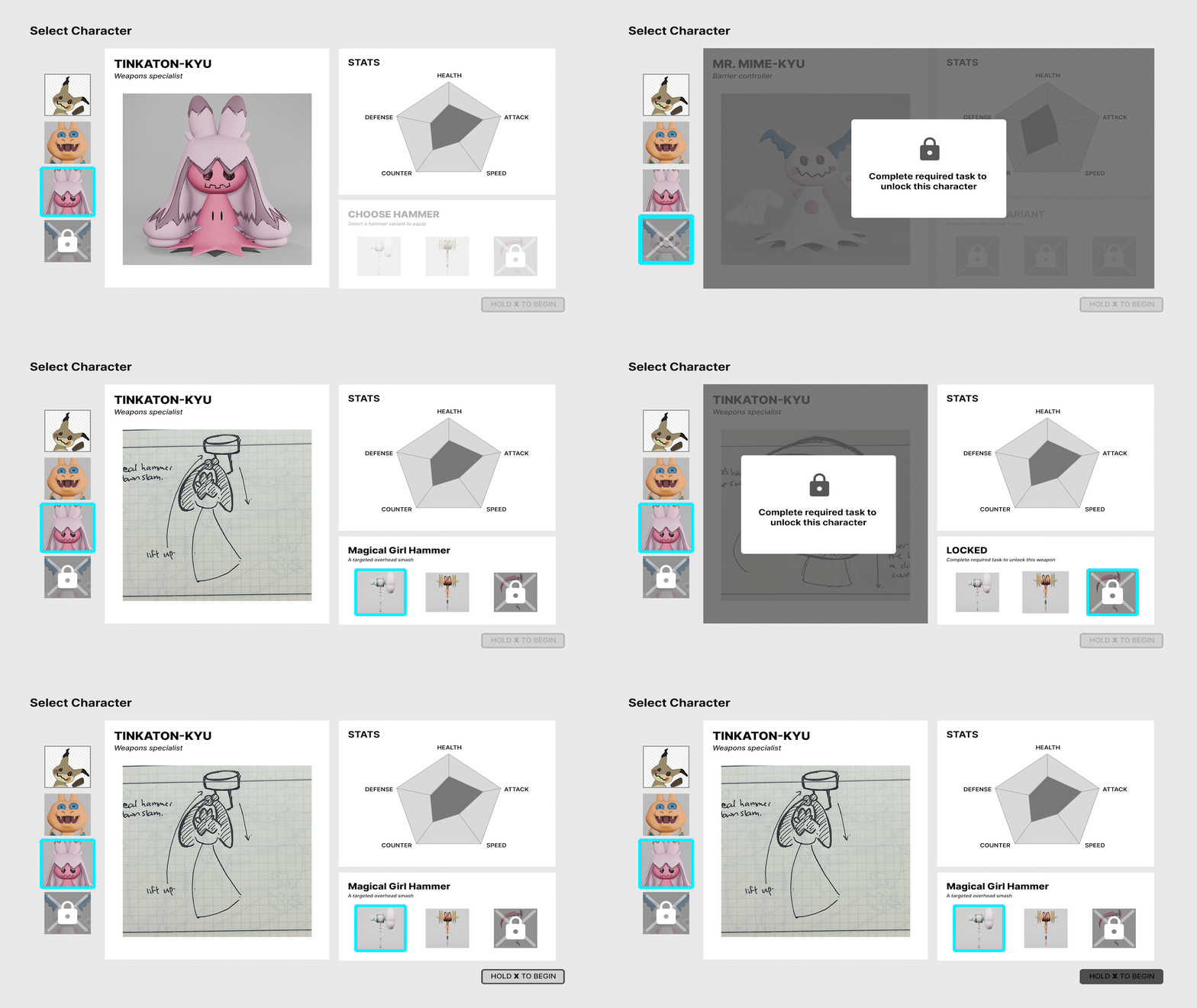
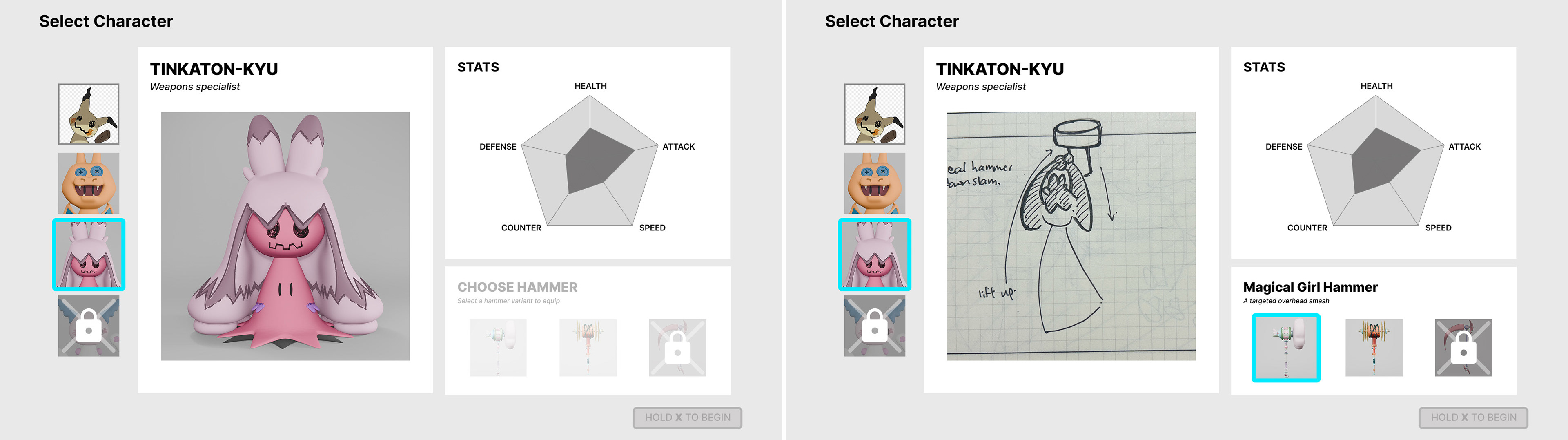
CHARACTER CONFIGURATION USER FLOW
Progressive Character Configuration
Character selection reveals character-specific loadout options only after a character has been chosen, reducing initial decision complexity while preserving build depth.
Meta Progression
Locked characters and loadouts create long-term progression goals that extend beyond individual runs.
Hold-to-Confirm
Hold-to-confirm prevents accidental run starts and reinforces commitment to a selected build before entering a run.

Distinct Character Identities
Each character begins with a unique stat profile and combat identity, encouraging players to explore different playstyles through character-specific strengths.
Counter as a Core Build Axis
Counter is surfaced alongside Attack and Defense as a primary character attribute, supporting reactive playstyles focused on timing, deflection, and opportunity creation.
BUILD IDENTITY DASHBOARD
The dashboard bridges long-term progression and run-specific customization, allowing players to evaluate their build at a glance.
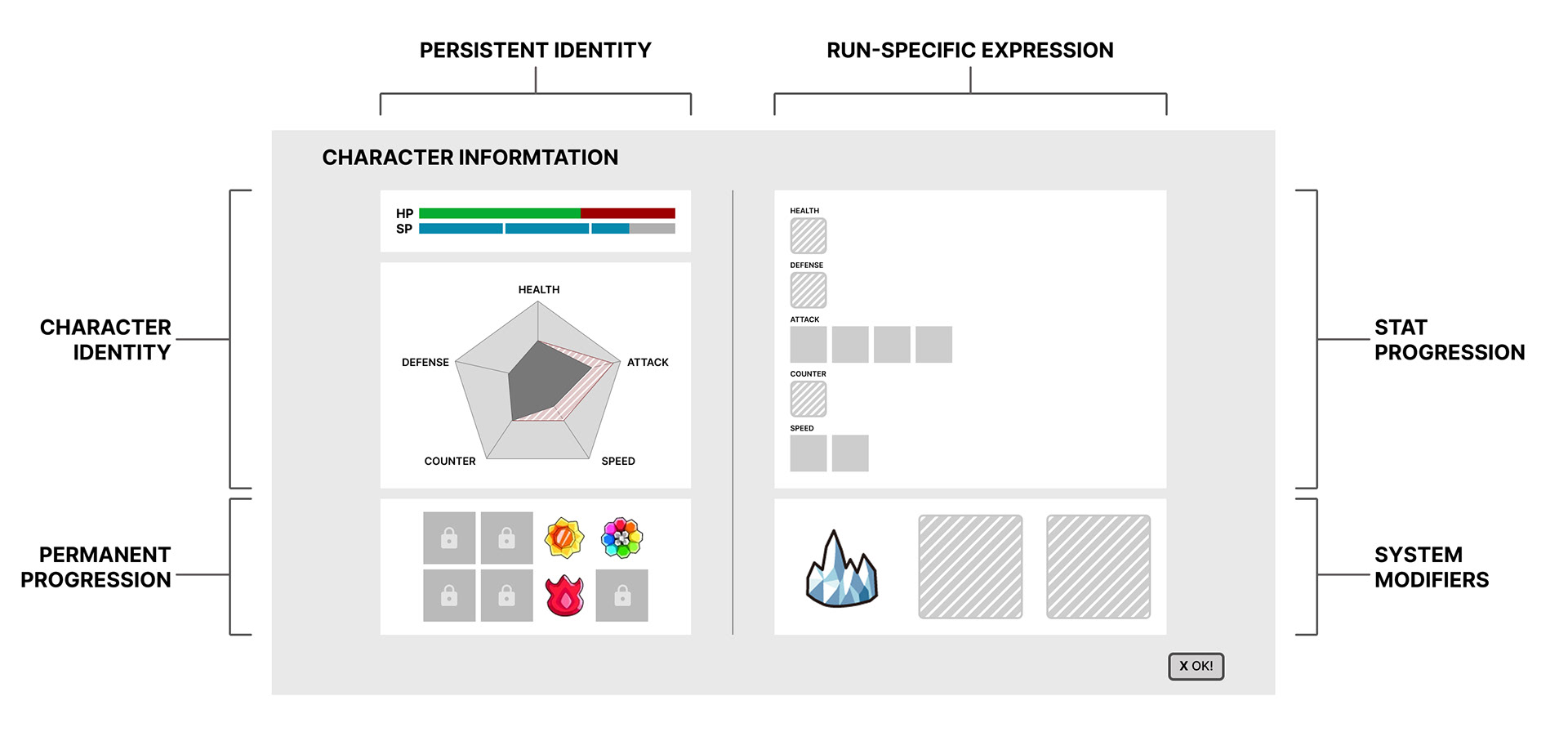
PERSISTENT IDENTITY
Information that persists across runs and defines the player's long-term progression.
Character Identity
HP/SP communicates current combat readiness, while the spider graph visualizes how a build has evolved relative to a character's baseline attributes.
Permanent Progression
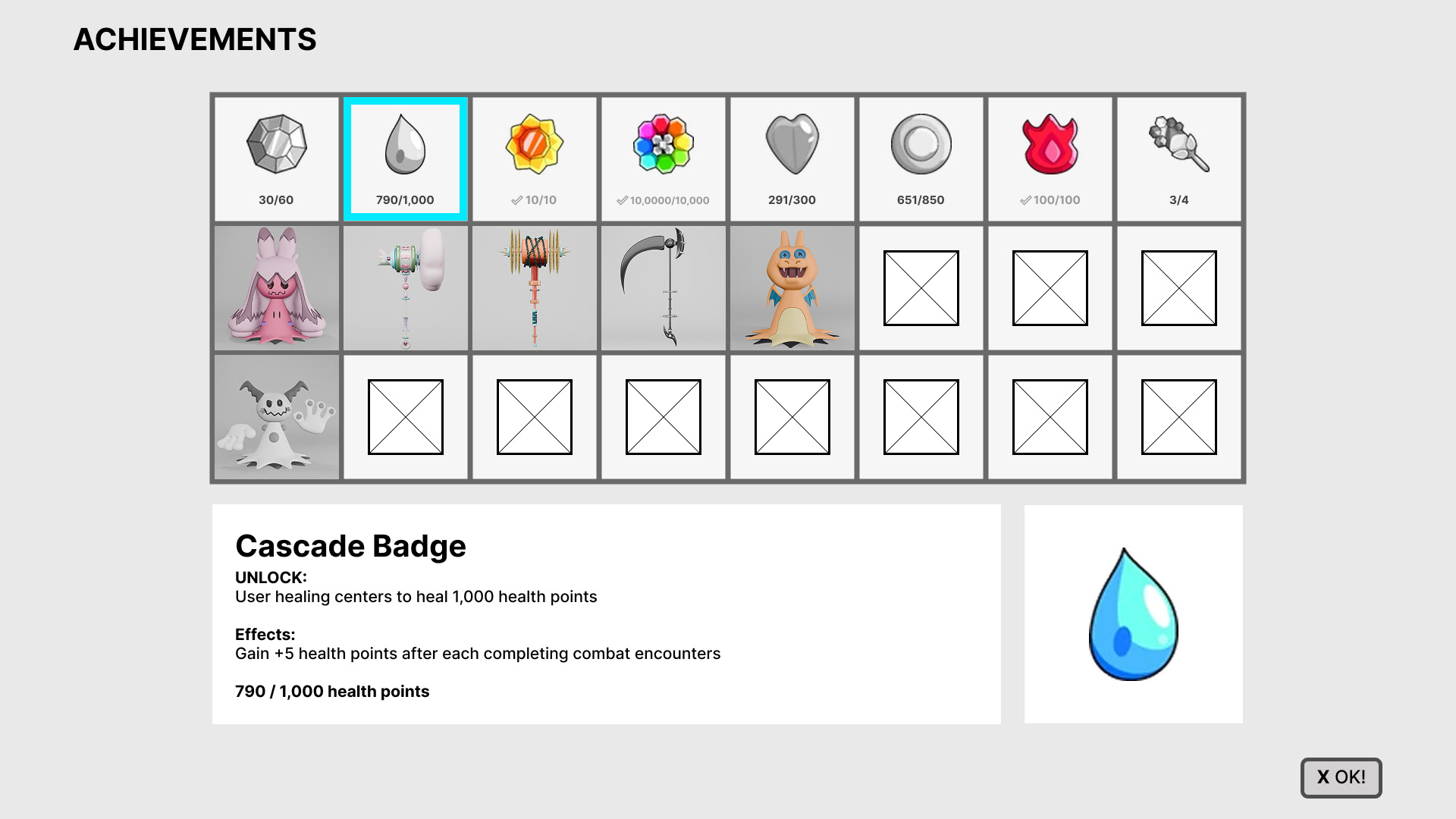
Gym Badges represent account-level progression earned across multiple runs.
Example: Rainbow Badge
• Unlock Condition: Spend $10,000 at shops
• Effect: 10% discount at all future shop
RUN-SPECIFIC EXPRESSION
Choices made during a specific run that shape build expression and strategy.
Stat Progression
Powerups are categorized by the attribute they affect, allowing players to quickly understand how individual decisions contribute to their overall build identity.
Held items introduce rule-changing effects that alter gameplay behavior independently from stat growth, creating additional build expression beyond numerical scaling.
NODE PROGRESSION MAP
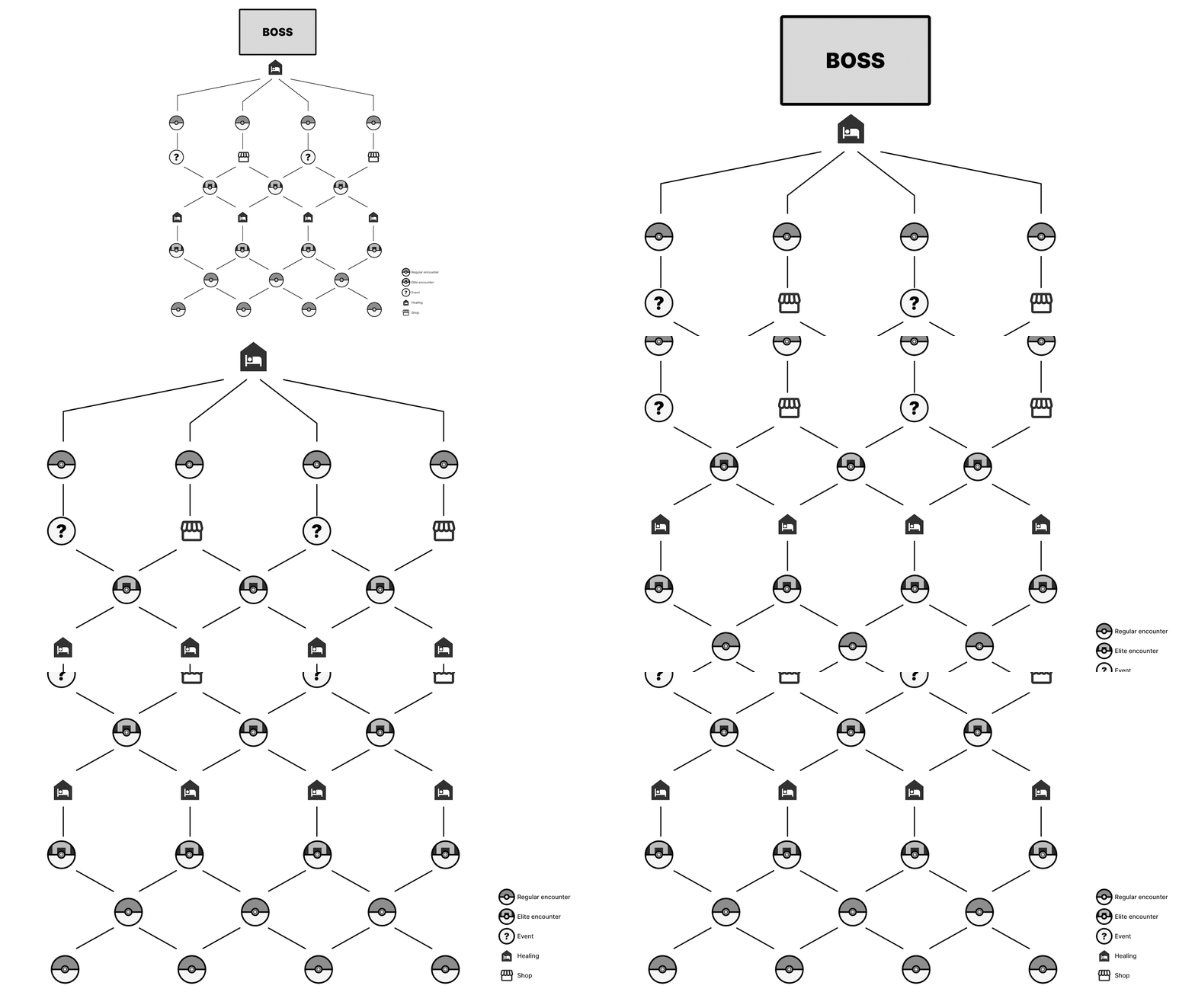
Node Paths
Four path archetypes encourage different build directions:
• Attack - aggressive combat growth
• Defense - control and counter-focused progression
• Speed - mobility and agility
• Random - unpredictable progression opportunities
Encounter Distribution
Controlled encounter placement prevents extreme node sequences and maintains consistent progression pacing throughout a run.
Adaptive Boss Encounters
Boss encounters are selected to challenge established player strategies, encouraging adaptation beyond a single dominant playstyle.
RECOVERY SYSTEMS
Structured recovery moments preserve player agency by enabling adaptation and build reconfiguration throughout the map.
Path Recovery
Intersecting routes allow players to pivot between path types as their build evolves.
Inventory Recovery
Shops provide opportunities to remove or replace unwanted powerups and held items, helping players recover from suboptimal build decisions.
Encounter UX
Different encounter types require different information architectures to balance readability, cognitive load, and situational awareness during combat.
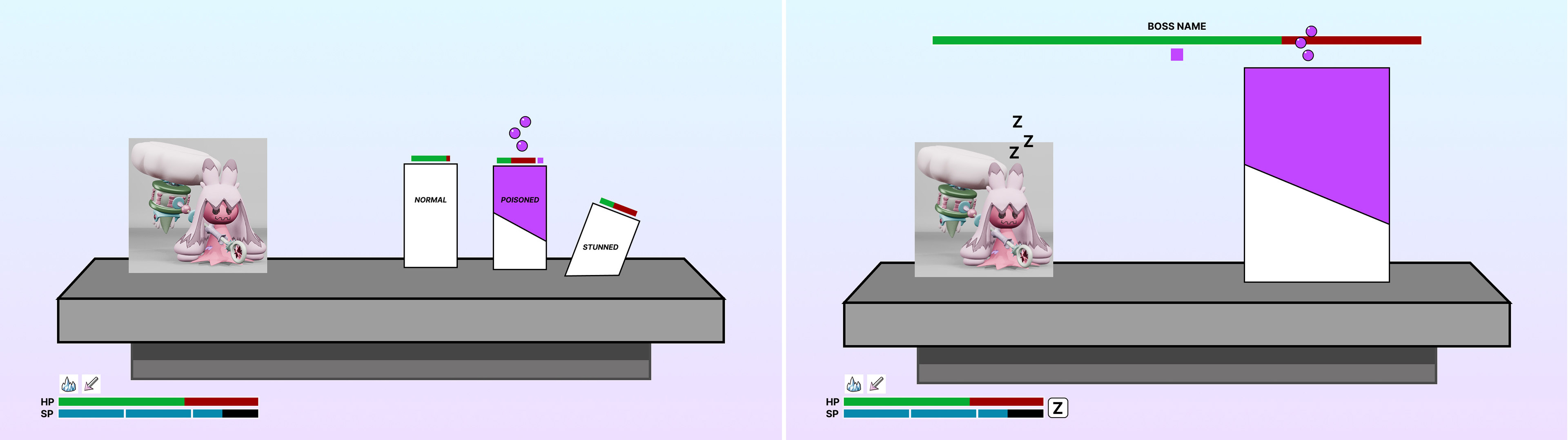
Combat State Visibility
Swarm encounters easily overwhelm the interface when multiple enemies require simultaneous tracking. Health and ailment information is attached directly to enemies, reducing the need for players to visually match characters to separate interface elements. During boss encounters, health information is promoted to a dedicated interface region to reflect the boss's importance and screen presence.
Status Communication
Status effects are communicated through a combination of interface elements and character animation. Whenever possible, states are conveyed through character behavior rather than additional icons, reducing interface clutter while preserving readability. For example, stunned enemies visibly sink into the ground to communicate vulnerability without requiring a dedicated status indicator.
Reward Distribution
At the end of each encounter, players select from a randomized reward pool to modify and specialize their build.
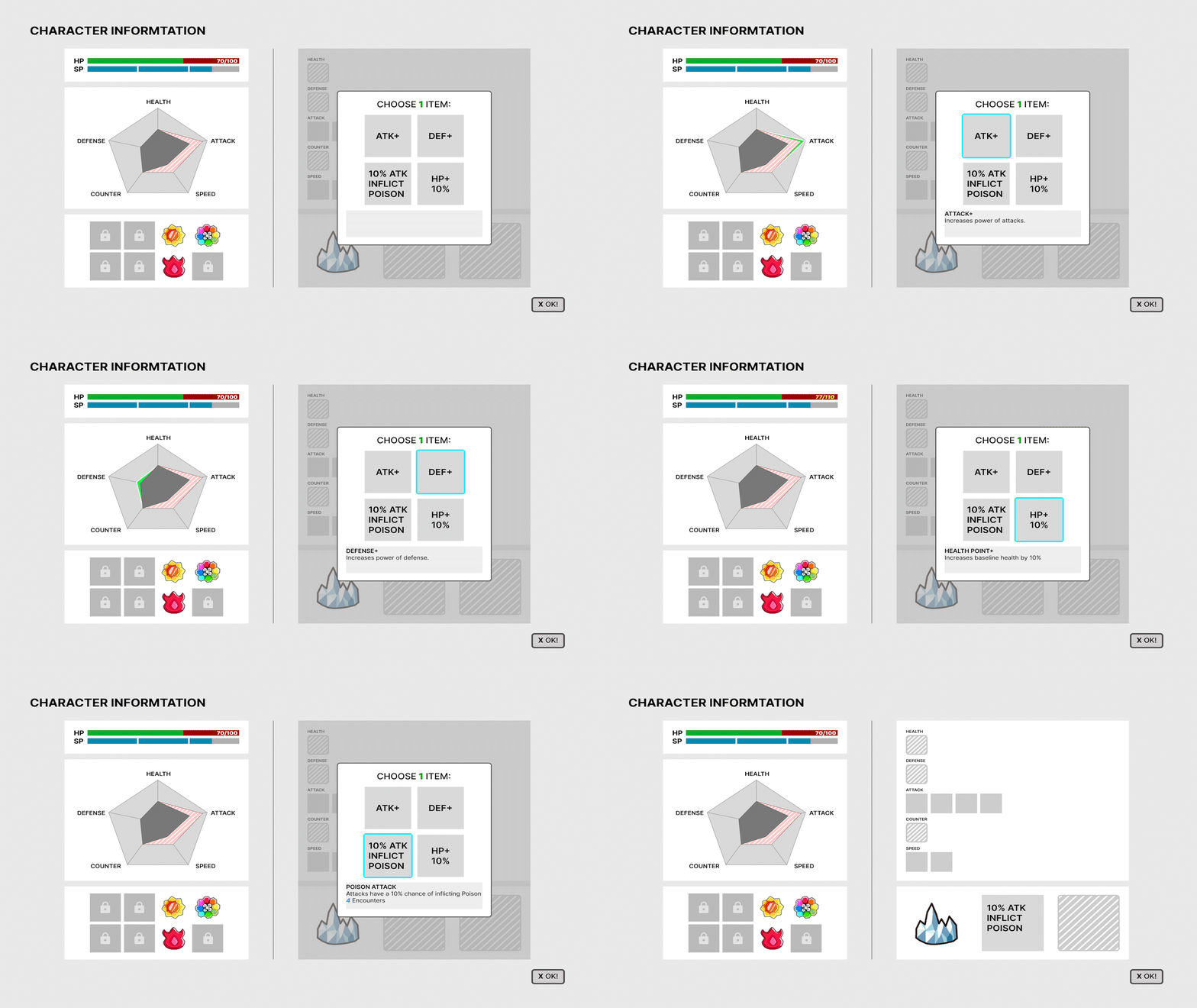
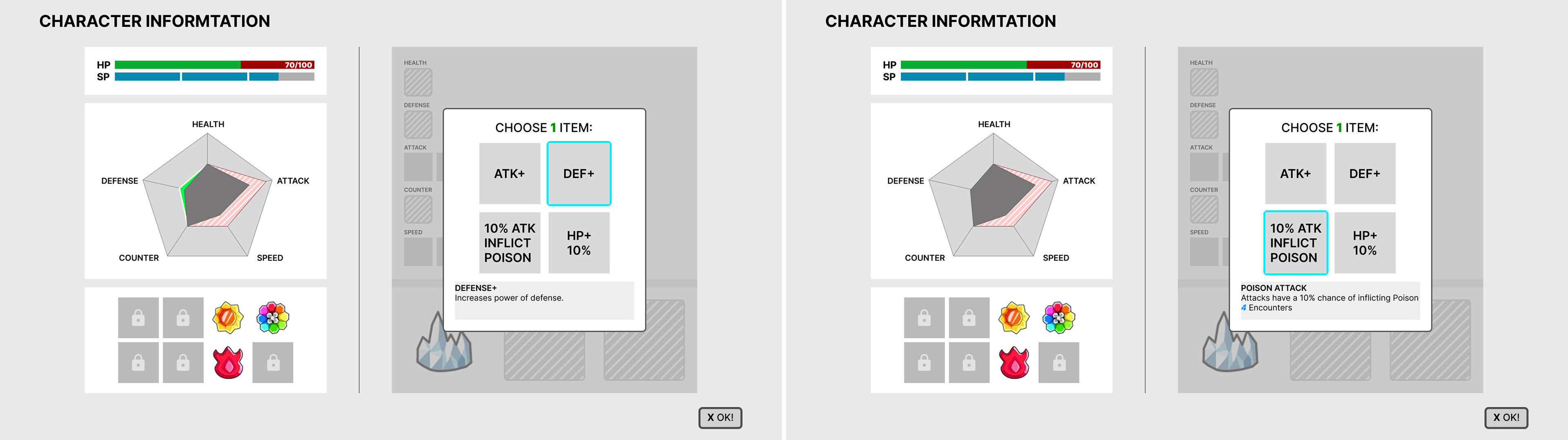
Immediate Build Feedback
Stat-based rewards update the Build Identity Dashboard in real time, allowing players to immediately visualize how a reward changes their build.
Rule-Changing Modifiers
Held Items modify combat behavior rather than character attributes. As a result, their effects are communicated through gameplay rather than the dashboard's numerical progression systems.
META PROGRESSION
Achievement rewards persist across future runs, unlocking new characters, weapons, and permanent modifiers that expand build possibilities while providing long-term progression goals.
NEXT STEPS
With the progression and interface architecture established, the next phase of Combat Mimic focuses on gameplay implementation and validation.
Gameplay Validation
• Prototype the Counter attribute as a primary build axis
• Evaluate risk-reward tradeoffs between offensive, defensive, and reactive playstyles
• Test combat readability during high-density encounters
• Validate recovery systems through playtesting and build experimentation
Visual Implementation
• Animate character and weapon assets for gameplay integration in Unity
• Explore parallax background implementation in Unity to strengthen environmental depth